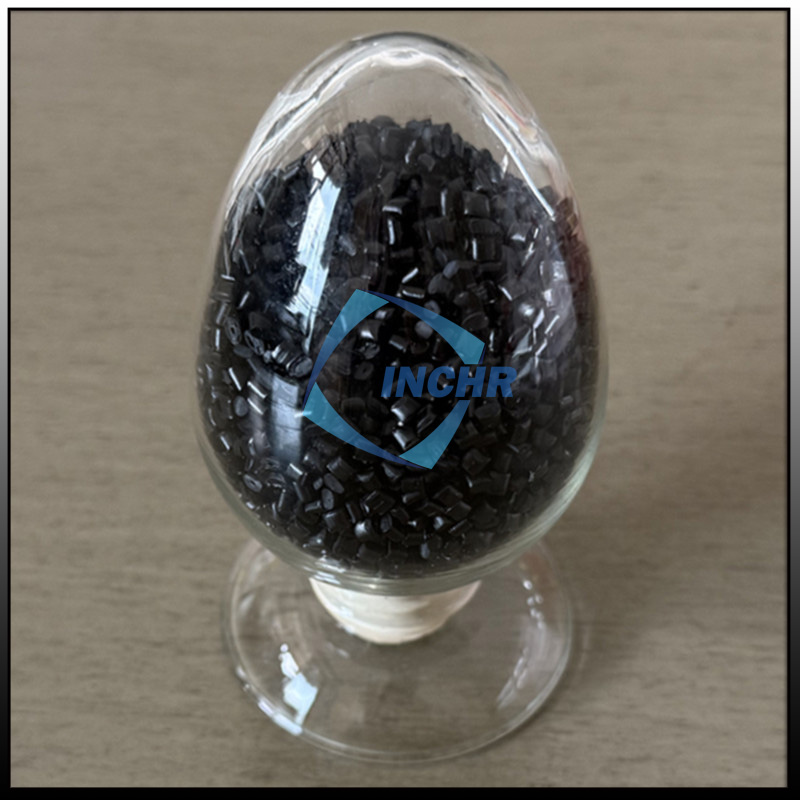
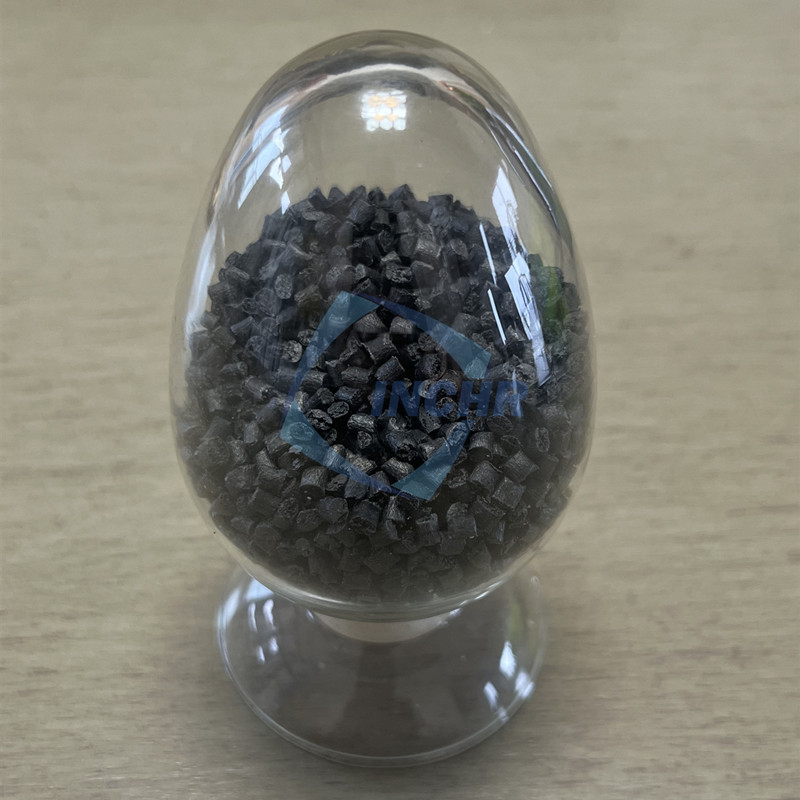
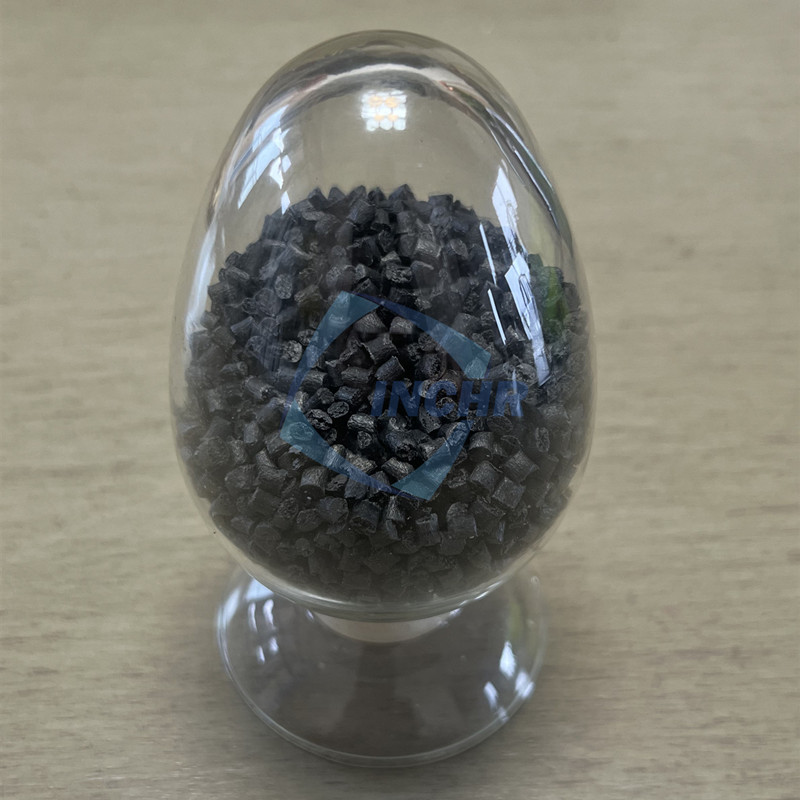
Why Engineers Consider Carbon Fiber Reinforced Polycarbonate
Designing a lightweight component is not simply a matter of reducing wall thickness. Engineers must maintain rigidity, control deformation, and ensure that the part continues to fit and function throughout its service life.
Polycarbonate (PC) is widely used in engineering applications because of its toughness and impact resistance. Reinforcing it with carbon fibers can increase stiffness and help control deformation in appropriately designed components. This makes carbon fiber reinforced polycarbonate worth considering when conventional PC does not provide the required mechanical performance.
The final result depends on fiber content, orientation, formulation, molding conditions, and component geometry. Engineers evaluating reinforced materials can review INCHR’s carbon fiber reinforced PC compound as a reference when comparing available formulations and technical specifications.
How Reinforcement Affects Component Design
Carbon fiber reinforcement can help improve selected mechanical properties, but the actual result depends on the grade and manufacturing process.
| Design requirement | Potential benefit | What to evaluate |
|---|---|---|
| Structural rigidity | Increased stiffness compared with suitable unreinforced PC grades | Load direction and component geometry |
| Dimensional control | Reduced deformation in certain designs | Shrinkage, fiber orientation, and mold design |
| Lightweight construction | Potential to reduce structural weight through optimized design | Component density and required wall thickness |
| Impact performance | May suit selected impact-related applications | Grade-specific impact test results |
| Electrical performance | Carbon fibers may change electrical resistance | Measured resistivity and application requirements |
| Surface quality | Can provide a technical appearance for functional parts | Fiber visibility and cosmetic requirements |
These benefits are not guaranteed for every formulation. Higher stiffness does not necessarily mean better impact resistance, and carbon fiber reinforcement does not automatically make a material suitable for every ESD application.
Managing Dimensional Accuracy in Molded Parts
Dimensional accuracy is especially important for components that must align with other parts, accommodate fasteners, or maintain consistent assembly clearances.
During injection molding, carbon fibers may align with the direction of melt flow. This can produce different shrinkage and mechanical behavior in different directions. Large flat surfaces, thin walls, ribs, and uneven thickness transitions may therefore require additional design attention.
To improve dimensional consistency:
- Review gate placement and expected fiber orientation during mold design.
- Maintain consistent wall thickness where practical.
- Evaluate shrinkage and warpage using representative molded samples.
- Measure critical dimensions after the part reaches the relevant environmental condition.
- Confirm that the selected grade meets the actual assembly tolerances.
For components where moisture, static electricity, or environmental conditions influence performance, engineers should also consider the broader material formulation. INCHR explains its approach to ESD-modified plastics and material solutions, which may help readers understand the differences between standard engineering polymers and materials developed for electrostatic-control applications.
Carbon Fiber Reinforced PC vs. Standard Polycarbonate
The choice between reinforced and standard PC should be based on the part’s functional requirements, not on the assumption that reinforcement is always better.
| Comparison factor | Standard polycarbonate | Carbon fiber reinforced polycarbonate |
|---|---|---|
| Stiffness | Suitable for many general engineering designs | Often selected when greater rigidity is required |
| Impact behavior | Known for good impact resistance | Depends on fiber content and formulation |
| Dimensional behavior | Depends on grade and part geometry | Fiber orientation may affect directional shrinkage |
| Appearance | Available in a variety of finishes | Fiber visibility may influence surface quality |
| Processing | Established molding options | Requires attention to fiber-related flow and orientation |
| Cost | Often more economical | Material and processing costs may be higher |
Standard PC may remain the better choice for applications where impact resistance, appearance, or cost is the main priority. Reinforced PC is worth investigating when the component needs additional stiffness or improved dimensional control.
For additional background on the role of carbon fiber in engineering plastics, read INCHR’s article on carbon fiber reinforced polycarbonate. Use the technical information alongside grade-specific datasheets rather than treating general material descriptions as performance guarantees.
Applications and Material Selection
Carbon fiber reinforced polycarbonate may be considered for:
- Electronic housings: Functional structures requiring increased rigidity.
- Industrial equipment: Brackets, covers, fixtures, and supporting components.
- Precision assemblies: Molded parts that need controlled deformation and reliable fit.
- Automotive components: Selected functional parts where the grade meets relevant operating requirements.
- Specialized enclosures: Applications requiring mechanical performance alongside verified electrical properties.
Before selecting a grade, define the operating temperature, loading conditions, environmental exposure, dimensional tolerances, and surface requirements. If electrical performance is important, specify the target resistance range and request supporting test data.
For general plastics testing information, visit ASTM International and identify standards appropriate to the properties being measured.
Processing and Quality Verification
Material performance depends on manufacturing consistency as well as resin formulation. Before mass production, review the supplier’s processing recommendations and confirm that the molding equipment and tooling are suitable for the selected grade.
Polycarbonate is moisture-sensitive during processing, so follow the grade-specific drying requirements. Also evaluate melt flow, mold temperature, cooling conditions, and fiber orientation where relevant.
A practical validation plan should include:
- Material verification: Review the technical data sheet and confirm the grade matches the specification.
- Prototype evaluation: Test representative components under expected loading conditions.
- Dimensional inspection: Measure critical features and check for warpage.
- Functional testing: Evaluate impact, thermal behavior, and electrical properties where applicable.
- Production consistency: Establish inspection criteria and material-handling procedures.
Testing the finished part is essential because material data alone cannot predict every effect of component geometry and processing conditions.
Working With a Material Supplier
When requesting a material recommendation, provide the supplier with the intended application, manufacturing method, performance requirements, and expected production volume. Ask for grade-specific mechanical data, processing guidance, dimensional information, and electrical test results if needed.
INCHR, established in Dongguan, China, in 2012, focuses on ESD plastics and modified polymer materials, including carbon fiber reinforced compounds and ESD masterbatches. For projects requiring a specific combination of mechanical and electrical characteristics, discuss the application requirements and confirm the availability of a suitable grade.
Explore additional formulations through INCHR’s modified plastic material range, and request technical information for the grade that best matches your project.
Conclusion
Carbon fiber reinforced polycarbonate can help engineers develop rigid, lightweight components with carefully controlled dimensions. Its suitability depends on the formulation, fiber orientation, component geometry, and manufacturing process. By defining requirements early and validating representative molded parts, product teams can make better material decisions and reduce the risk of production problems.
Explore available material solutions at INCHR’s product center.
Frequently Asked Questions
1. What is carbon fiber reinforced polycarbonate?
It is polycarbonate modified with carbon fibers to improve selected properties, particularly stiffness and dimensional behavior. Performance varies by grade and processing conditions.
2. Is carbon fiber reinforced polycarbonate stronger than standard PC?
It often offers greater stiffness, but overall strength and impact performance depend on the formulation, fiber orientation, and testing conditions. Compare the technical data for the specific grades.
3. Is carbon fiber reinforced PC electrically conductive?
Some formulations may be conductive or dissipative, but this is not guaranteed for every grade. Verify the required surface or volume resistivity before using it in an ESD-sensitive application.
4. Can carbon fiber reinforced polycarbonate be injection molded?
Yes, suitable grades can be injection molded. Drying, melt conditions, mold design, fiber orientation, and cooling should follow the material supplier’s recommendations.
5. How should engineers select the right grade?
Start with mechanical requirements, operating temperature, dimensional tolerances, appearance, electrical performance, and production method. Request grade-specific data and validate samples under representative conditions.
6. Is carbon fiber reinforced PC suitable for every lightweight component?
No. The material may be unnecessary where standard PC already meets the requirements. Compare stiffness, impact behavior, manufacturing complexity, and total cost before making a final decision.