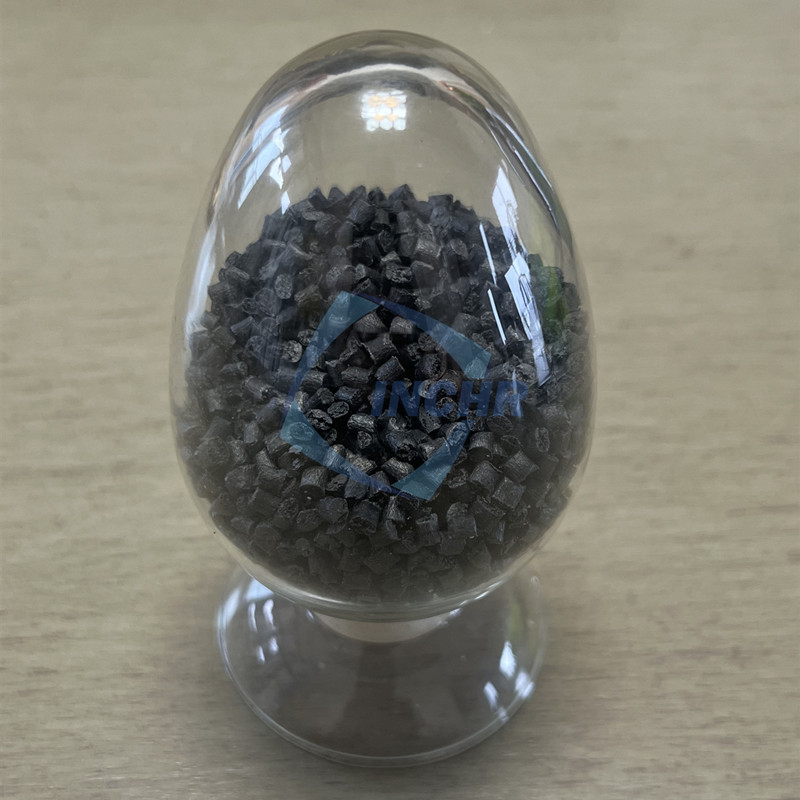
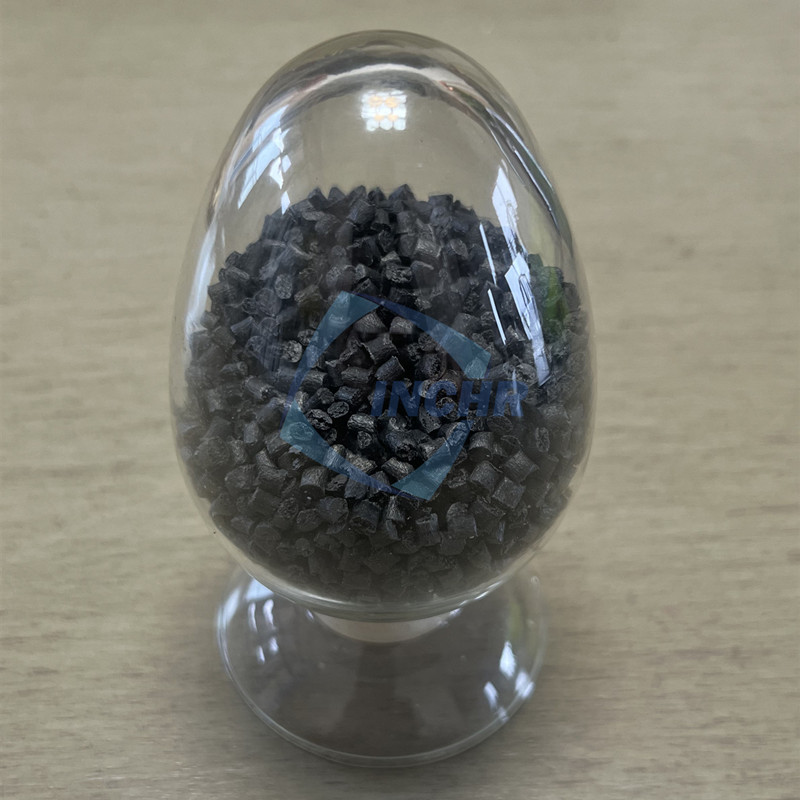
Why Use Carbon Fiber Reinforced PEEK?
When engineering components operate under elevated temperatures, repeated mechanical loads, or demanding chemical conditions, conventional plastics may not provide the required performance. PEEK, or polyether ether ketone, is a high-performance thermoplastic known for its heat resistance, chemical resistance, and mechanical properties.
Adding carbon fiber can further improve stiffness, reduce creep under suitable conditions, and enhance wear behavior in selected applications. Carbon fiber reinforced PEEK is therefore considered for precision components where dimensional control and mechanical performance are important.
However, reinforcement does not automatically improve every property. Performance depends on the PEEK grade, fiber content, component design, manufacturing process, and operating environment. Engineers should evaluate the complete material system rather than selecting a grade based on one headline specification.

Key Performance Factors to Evaluate
Carbon fiber reinforced PEEK is often chosen for demanding applications, but the right grade must match the actual service conditions.
| Performance factor | Potential advantage | What engineers should verify |
|---|---|---|
| High-temperature performance | PEEK retains useful properties at elevated temperatures | Continuous service temperature and load-dependent performance |
| Stiffness | Carbon fiber can increase rigidity | Directional properties and component geometry |
| Creep resistance | Reinforcement may reduce deformation under sustained loads | Long-term loading, temperature, and test duration |
| Wear behavior | Some grades perform well in friction-related applications | Counterface material, lubrication, pressure, and speed |
| Chemical resistance | PEEK has broad chemical resistance | Compatibility with the actual chemicals and exposure conditions |
| Dimensional stability | Reinforcement may reduce deformation in suitable designs | Fiber orientation, thermal expansion, and manufacturing tolerances |
Actual results vary by formulation and test conditions. Always use grade-specific technical data and application testing to confirm suitability.
Where Can Carbon Fiber Reinforced PEEK Be Used?
The combination of a high-performance polymer matrix and carbon fiber reinforcement makes this material worth considering for components exposed to demanding operating conditions.
- Aerospace engineering: Selected structural and mechanical components where low weight and performance are priorities.
- Industrial machinery: Precision parts, fixtures, and components exposed to heat or continuous loading.
- Chemical processing: Components requiring a combination of chemical resistance and mechanical stability.
- Semiconductor equipment: Specialized parts where dimensional control and material cleanliness requirements must be carefully evaluated.
- Energy and automotive systems: Selected components that need heat resistance, stiffness, or wear performance.
Suitability depends on the component’s load, temperature, chemical exposure, applicable regulations, and required service life. High-performance materials should not be assumed to meet every application requirement without validation.
Injection Molding, Machining, and Design Considerations
Carbon fiber reinforced PEEK requires more than simply substituting one resin for another. Processing and part design influence the final component’s performance.
Thermal processing: PEEK requires processing conditions appropriate to its high melting temperature. Equipment capability, material preparation, and supplier-recommended processing parameters should be reviewed before production.
Fiber orientation: In molded components, fibers can align with the flow direction. As a result, stiffness, strength, shrinkage, and thermal expansion may differ by direction. Critical dimensions should be evaluated in the finished part.
Tooling and machining: Reinforced PEEK can affect tool wear and machining behavior. Manufacturers should select suitable tooling and cutting parameters and account for fiber-related surface characteristics.
Design validation: Test components under representative temperatures, loads, chemical exposures, and operating cycles. For wear applications, reproduce the contact conditions as closely as practical.
For general information on polymer testing and material standards, visit ASTM International and identify standards applicable to the specific property being measured.
Carbon Fiber Reinforced PEEK vs. Other Engineering Plastics
PEEK is not always the most economical solution. Material selection should consider the severity of the operating environment and the cost of the finished component over its service life.
| Selection criterion | Standard engineering plastics | Carbon fiber reinforced PEEK |
|---|---|---|
| Material cost | Often lower | Generally higher |
| High-temperature capability | Varies widely by polymer | Suitable for demanding high-temperature applications, subject to grade limits |
| Rigidity | Depends on the base resin | Carbon fiber can improve stiffness |
| Chemical resistance | Highly dependent on polymer type | Broad resistance, but chemical compatibility must be confirmed |
| Processing requirements | Vary by material | Requires equipment and conditions suitable for PEEK |
| Best selection approach | Use when requirements and environment permit | Consider when performance requirements justify the added cost |
The most effective choice is the material that meets the component’s requirements with an acceptable safety margin and total lifecycle cost. A less expensive polymer may be sufficient for moderate conditions, while carbon fiber reinforced PEEK may justify its cost in more demanding environments.
How to Choose a Reliable Material Supplier
Before committing to a material, ask suppliers for the technical information needed to assess performance and manufacturing feasibility.
- Available grades and carbon fiber content.
- Mechanical and thermal data, including test methods.
- Wear or friction data where relevant.
- Chemical compatibility information for the intended environment.
- Processing recommendations and dimensional guidance.
- Quality documentation, sample availability, and batch consistency controls.
INCHR, established in Dongguan, China, in 2012, specializes in ESD plastics and modified polymer materials, including carbon fiber reinforced compounds and ESD masterbatches. For a project requiring a specific combination of thermal, mechanical, and electrical properties, discuss the application requirements with the supplier and confirm whether a suitable grade is available.
For additional material options, visit the INCHR engineering plastics product center.
Conclusion
Carbon fiber reinforced PEEK can be a valuable option for components exposed to high temperatures, sustained loads, wear, or demanding chemical environments. Its suitability depends on the grade, design, processing method, and service conditions. By validating the finished component and comparing performance against total application cost, engineers can make more informed material decisions.
Frequently Asked Questions
1. What is carbon fiber reinforced PEEK?
It is PEEK, a high-performance thermoplastic, reinforced with carbon fibers to improve selected properties such as stiffness and creep resistance. Performance depends on the specific formulation and application.
2. Can carbon fiber reinforced PEEK withstand high temperatures?
PEEK is known for high-temperature capability, but the maximum suitable operating temperature depends on the grade, load, exposure duration, and surrounding environment. Consult the supplier’s technical data.
3. Is carbon fiber reinforced PEEK suitable for wear applications?
Some grades are used in friction and wear-related applications. Performance depends on contact pressure, sliding speed, lubrication, counterface material, temperature, and component design.
4. Is carbon fiber reinforced PEEK electrically conductive?
Carbon fiber may change the electrical properties of PEEK, but conductivity is not guaranteed for every formulation. Request measured surface or volume resistivity data if electrical performance is required.
5. Is carbon fiber reinforced PEEK better than carbon fiber reinforced nylon?
Not in every situation. PEEK is generally considered for more demanding temperature and chemical environments, while reinforced nylon may offer a more economical solution for less severe conditions. Compare actual grade data and lifecycle requirements.
6. What should be checked before selecting a grade?
Evaluate service temperature, mechanical loading, wear, chemical exposure, dimensional tolerances, processing capabilities, electrical requirements, and total cost. Validate the material using representative components whenever possible.