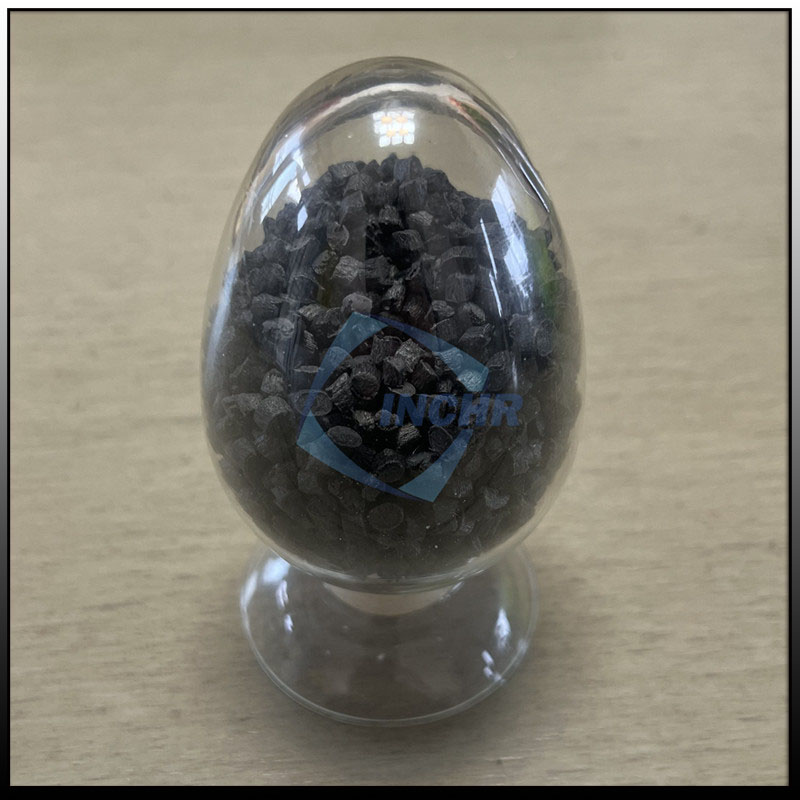
Engineers constantly look for materials that cut weight without cutting strength. Standard nylon (PA6, PA66) is tough and easy to mold, but it can flex, creep, or wear faster than metal under heavy load. Adding chopped carbon fiber to the nylon matrix changes that equation. The result — carbon fiber reinforced nylon pa — is a composite that borrows the light weight and processability of plastic while approaching the stiffness and dimensional stability of light metals like aluminum.
This guide walks through what the material actually is, how it performs, how it’s made into parts, and where it fits best in real engineering projects.
What Is Carbon Fiber Reinforced Nylon PA?
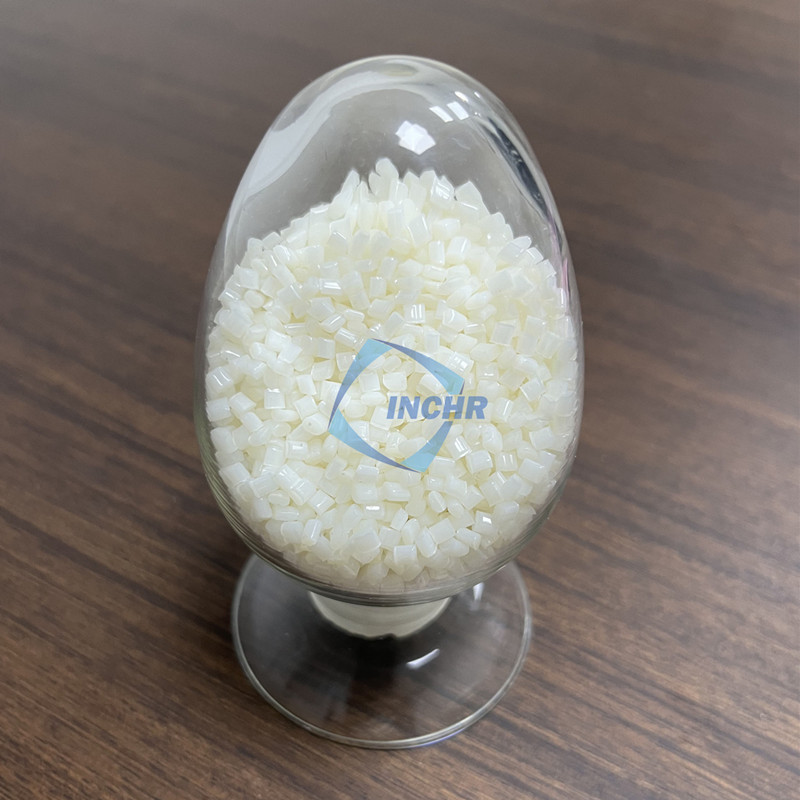
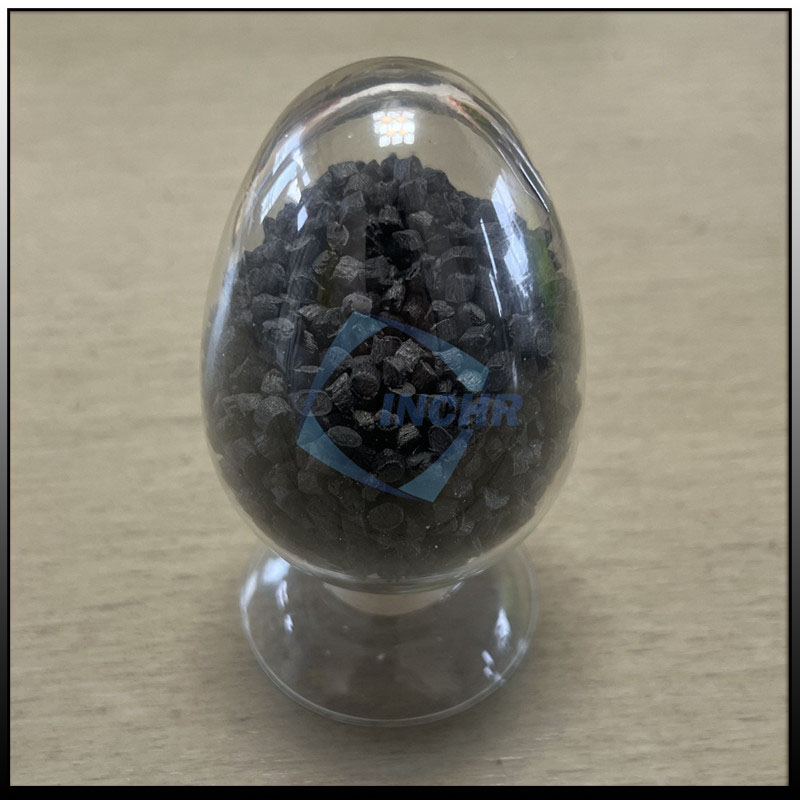
Carbon fiber reinforced nylon PA is a nylon resin (most commonly PA6 or PA66) compounded with chopped carbon fibers, typically in the 10% to 40% range by weight. The fibers act as a rigid skeleton inside the softer nylon matrix, resisting stretching and bending forces that would otherwise deform unfilled plastic.
A well-known formulation in this family blends 30% carbon fiber with PA66 resin, producing a compound engineers reach for when they need a metal-replacement plastic that still molds like a thermoplastic. Because the fiber content is tunable, suppliers can dial the compound toward higher stiffness (more fiber) or better flow and surface finish (less fiber), depending on the part’s function.
Why Engineers Choose It Over Standard Nylon or Metal
Unfilled nylon is affordable and easy to process, but it lacks stiffness under sustained load and can absorb moisture, which shifts its dimensions over time. Metal solves the stiffness problem but adds weight, cost, and machining time. Carbon fiber reinforcement bridges that gap.
| Property | Unfilled Nylon (PA66) | Carbon Fiber Reinforced Nylon | Aluminum |
|---|---|---|---|
| Density (g/cm³) | ~1.14 | ~1.28–1.35 | ~2.70 |
| Tensile Strength | Moderate | High | High |
| Stiffness (Rigidity) | Low–Moderate | High | Very High |
| Dimensional Stability | Sensitive to moisture | Improved, low warpage | Excellent |
| Electrical Conductivity | Insulating | Can be tuned (semi-conductive to conductive) | Conductive |
| Machinability | Easy | Easy (molds or machines well) | Requires cutting tools |
| Typical Use | Light-duty parts | Structural, wear, and ESD parts | Heavy structural parts |
This balance is why carbon fiber reinforced nylon shows up so often in metal-replacement projects — it keeps roughly half the weight of aluminum while holding shape under load, resisting creep, and often costing less to finish into a final part.
Key Mechanical and Thermal Properties
Carbon fiber loading changes several material behaviors at once, not just stiffness. Engineers should evaluate the full property set before substituting it for metal or unfilled plastic.
| Property | Effect of Carbon Fiber Addition |
|---|---|
| Tensile & Flexural Strength | Increases significantly, often 2–3x over unfilled resin |
| Impact Resistance | Can decrease slightly versus unfilled nylon; toughened grades offset this |
| Coefficient of Thermal Expansion | Drops sharply, improving dimensional stability across temperature swings |
| Heat Deflection Temperature | Rises, allowing use in warmer operating environments |
| Wear & Friction Behavior | Fiber orientation reduces surface wear against metal counterfaces |
| Moisture Uptake | Lower than unfilled nylon, reducing dimensional drift |
| Weight | Far lighter than steel or aluminum at similar stiffness |
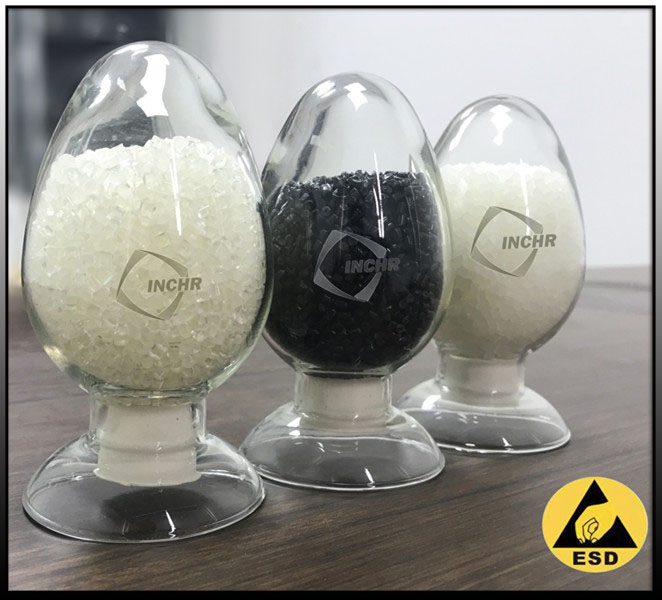
Because carbon fiber itself conducts electricity, compounds with enough fiber loading can also dissipate static charge — a property plastics engineers exploit deliberately in ESD-sensitive environments such as electronics handling equipment or cleanroom fixtures.
Common Processing Methods
Carbon fiber reinforced nylon PA is processed using the same core techniques as standard engineering plastics, though a few adjustments matter:
- Injection Molding — The most common method for medium-to-high volume parts. Fiber orientation during flow affects strength direction, so gate placement and mold flow analysis matter more than with unfilled resin.
- Extrusion — Used for producing rod, sheet, or profile stock that is later machined into finished parts, common for wear plates, rollers, and structural components.
- CNC Machining — Extruded or molded blanks can be machined into precise components; carbon fiber is abrasive, so tooling wear should be accounted for.
- 3D Printing (FFF/FDM) — Carbon fiber filled nylon filaments are increasingly used for functional prototypes and low-volume jigs, offering stiffness closer to production-grade parts.
Drying the resin before processing is essential, since nylon is hygroscopic and residual moisture can cause voids or reduced mechanical properties in the final part.
Typical Applications
Carbon fiber reinforced nylon PA fits use cases that sit between “plastic isn’t strong enough” and “metal is overkill.”
| Industry | Example Applications |
|---|---|
| Automotive | Structural brackets, under-hood components, gears |
| Industrial Automation | Rollers, guide rails, wear pads, conveyor components |
| Electronics Manufacturing | ESD-safe trays, fixtures, and handling tools |
| Aerospace Ground Support | Lightweight jigs and structural housings |
| Robotics | Arm segments, housings, and load-bearing brackets |

Design Considerations
When designing a part in this material, a few practical points reduce trial and error:
- Fiber orientation matters. Strength is highest along the direction of fiber flow, so orient ribs and load paths with mold-flow simulation in mind.
- Wall thickness should stay uniform. Uneven walls can cause warping, since fiber-filled resins shrink differently than unfilled plastic.
- Surface finish is naturally matte and slightly rougher than unfilled nylon due to exposed fiber ends; this is normal and rarely affects function.
- Fastener design should avoid self-tapping into thin sections, since the abrasive fiber can wear at threads over repeated cycles.
Cost and Sustainability Notes
Carbon fiber reinforced nylon costs more per kilogram than unfilled nylon, but the comparison engineers should actually run is against metal part cost, including machining, finishing, and assembly weight savings. In many structural and wear-part redesigns, the total installed cost — and the resulting weight reduction — favors the composite even with a higher raw material price. Because it is a thermoplastic, scrap and runners from molding can often be reprocessed, which is not possible with thermoset composites.
Frequently Asked Questions
Q1. Is carbon fiber reinforced nylon PA stronger than aluminum?
A:Not in absolute strength, but it offers a much better strength-to-weight ratio for many applications, along with lower cost for complex geometries that would require machining in metal.
Q2. Does carbon fiber reinforced nylon conduct electricity?
A: Depending on fiber loading and formulation, it can range from insulating to electrically conductive, which is why certain grades are used for ESD-safe components.
Q3. Can carbon fiber reinforced nylon PA be recycled?
A: As a thermoplastic composite, it can generally be reground and reprocessed, though repeated reprocessing may shorten average fiber length and slightly reduce mechanical properties.
Q3. What is the main downside compared to unfilled nylon?
A: Reduced impact resistance and higher material cost are the two most common trade-offs, along with a more abrasive surface that increases tool wear during machining.
Q4. Which industries use this material most?
A: Automotive, industrial automation, electronics manufacturing, and robotics are the most common adopters, largely due to the combination of light weight, stiffness, and dimensional stability.