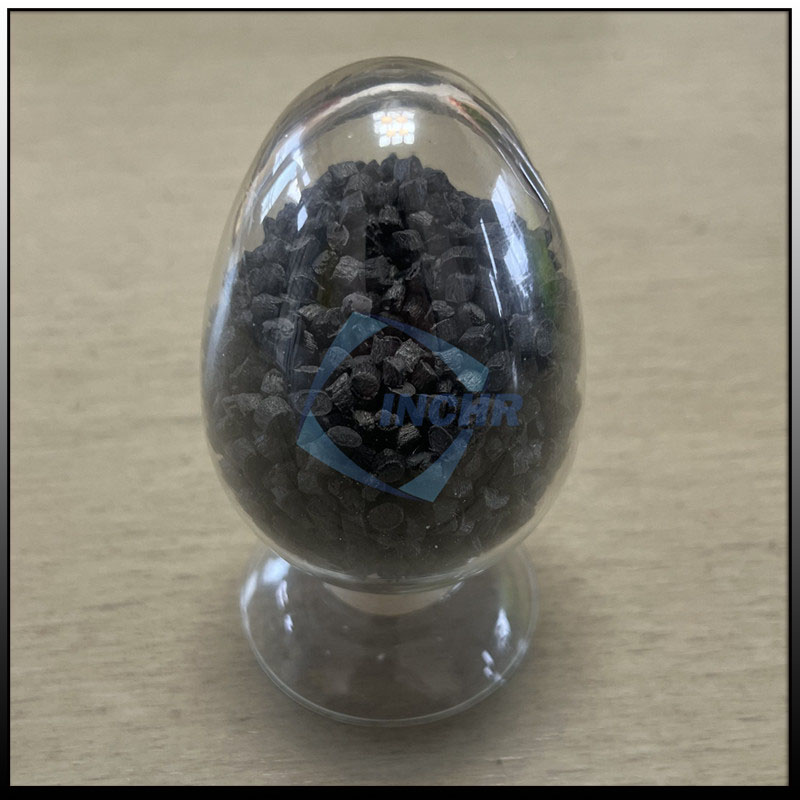
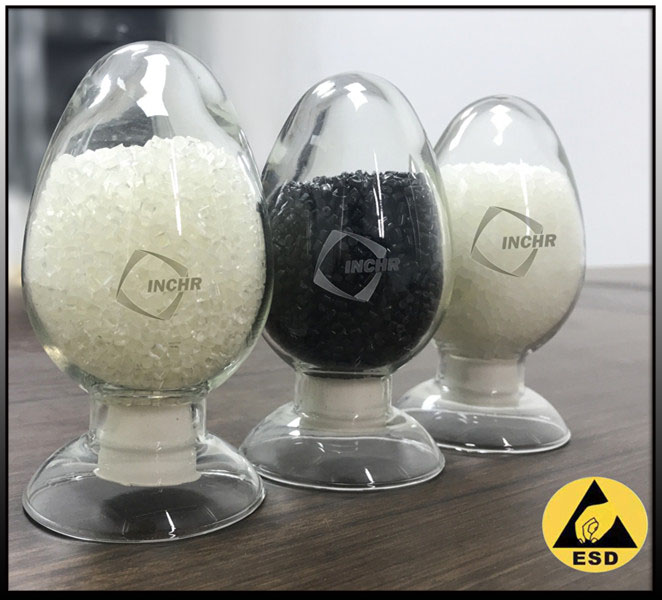
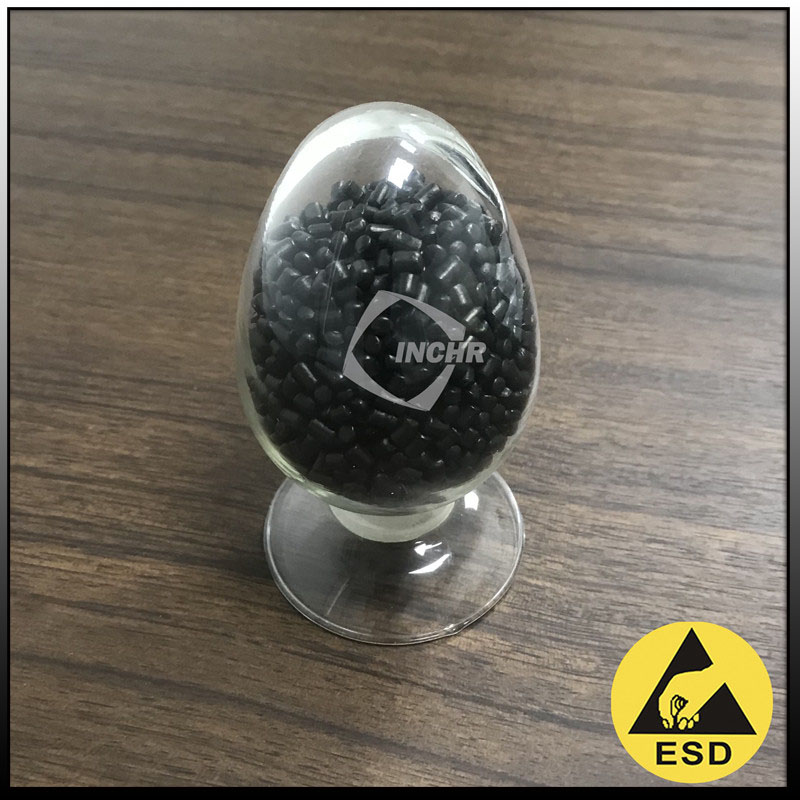
Manufacturers increasingly need plastic materials that deliver more than basic strength and durability. Industrial components may require improved stiffness, dimensional stability, reduced weight, or specific electrical characteristics. Carbon fiber reinforced plastic offers a flexible approach to meeting these demands.
Carbon fiber reinforced plastic (CFRP) combines carbon fibers with a polymer matrix to create a material whose properties differ from those of the unreinforced resin. Carbon fibers help carry mechanical loads, while the polymer matrix binds the reinforcement and determines many processing and environmental characteristics.
Depending on the formulation, CFRP can be developed for structural components, precision molded parts, industrial equipment, and specialized electronic applications.
For plastic manufacturers, the key is not simply adding carbon fibers. It is selecting the appropriate fiber structure, resin system, and processing conditions to achieve consistent performance in the finished component.
What Determines the Performance of Carbon Fiber Reinforced Plastic?
The performance of a carbon fiber reinforced plastic material depends on several interacting factors. Understanding them helps product designers avoid choosing a material based on fiber content alone.
Fiber Length and Distribution
Carbon fiber length influences how effectively the reinforcement transfers mechanical loads through the polymer. Longer fibers can offer advantages in certain applications, while shorter fibers may be more suitable for complex injection-molded geometries.
Uniform fiber distribution is also important. Poor dispersion can create inconsistent properties and local weaknesses in the finished component.
Polymer Matrix Selection
The base resin affects melt processing, chemical resistance, temperature capability, impact behavior, and compatibility with the intended manufacturing process.
For example, polypropylene and polyamide offer different processing and performance characteristics. The appropriate matrix depends on the operating environment and component requirements.
Fiber Loading
Increasing carbon fiber content can improve selected mechanical properties, but the relationship is not always linear. Higher loading may also influence melt flow, surface finish, toughness, and processing stability.
The optimum formulation balances reinforcement with the practical requirements of manufacturing.
Processing Conditions
Compounding and molding conditions influence fiber dispersion, fiber breakage, and final component consistency. Processing parameters should therefore be matched to the specific resin and carbon fiber system.
Carbon Fiber Reinforcement in Conductive Plastic Applications
Carbon fiber reinforced plastic is valued for mechanical performance, but carbon fibers can also contribute to electrical functionality.
Because carbon fibers can conduct electricity, they may create conductive pathways within a suitable polymer formulation. This makes carbon fiber reinforced compounds relevant to certain applications requiring electrical charge control or conductivity.
However, carbon fiber content alone does not establish whether a plastic component meets a particular ESD requirement. Electrical performance depends on fiber distribution, orientation, contact between fibers, the polymer matrix, and component geometry.
Before selecting a material for static control, manufacturers should define the required electrical properties and validate them through appropriate testing.
| Design Requirement | Important Material Consideration | Recommended Evaluation |
|---|---|---|
| Mechanical reinforcement | Fiber length, loading, and resin compatibility | Tensile and flexural testing |
| Dimensional stability | Matrix properties and fiber orientation | Dimensional measurements under relevant conditions |
| Static charge control | Electrical resistance and charge-dissipation behavior | Application-appropriate ESD testing |
| Moldability | Melt flow and fiber retention | Processing trials and molded-part inspection |
| Surface appearance | Fiber distribution and molding conditions | Visual and surface-quality inspection |
Carbon Fiber Reinforced Plastic Compared With Unreinforced Polymers
Choosing between reinforced and unreinforced plastic depends on the functional requirements of the finished product.
| Factor | Unreinforced Polymer | Carbon Fiber Reinforced Polymer |
|---|---|---|
| Mechanical stiffness | Depends primarily on the base resin | Can be increased through appropriate reinforcement |
| Weight | Often lightweight | Can offer favorable stiffness-to-weight performance |
| Flow behavior | Generally simpler to process | May require more carefully controlled processing |
| Surface finish | Often easier to achieve uniformly | May show fiber-related surface effects |
| Electrical properties | Commonly insulating, depending on resin | May provide conductive pathways, depending on formulation |
| Material cost | Often lower | Usually requires a higher material investment |
These are general comparisons rather than universal guarantees. Actual results depend on the resin, reinforcement type, fiber content, manufacturing method, and final component design.
Where Modified Carbon Fiber Plastics Create Value
Carbon fiber reinforced compounds are useful when a product needs a carefully balanced combination of mechanical and processing characteristics.
Industrial Equipment Components
Machine parts, brackets, supports, and selected equipment housings may benefit from increased stiffness and dimensional stability. Material selection should account for loading conditions, chemical exposure, and operating temperature.
Automotive and Transportation Components
Weight-conscious design can make carbon fiber reinforced thermoplastics attractive for selected brackets, housings, and functional components. The required durability, production volume, and manufacturing economics should guide material selection.
Electronic and Electrical Equipment
Certain electronic equipment components may require mechanical reinforcement alongside controlled electrical behavior. Carbon fiber reinforced compounds can be evaluated for these applications, provided their electrical properties meet the relevant specifications.
Custom Injection-Molded Products
Compounded carbon fiber materials can be used in injection molding when the resin, fiber form, and processing parameters are compatible with the part design. Mold geometry and processing conditions should be evaluated during product development.
How to Develop a Suitable Carbon Fiber Reinforced Plastic Formulation
A successful formulation starts with the finished component, not simply the raw material.
Step 1: Define the end-use conditions. Identify mechanical loads, operating temperatures, chemical exposure, dimensional tolerances, and any electrical requirements.
Step 2: Select the polymer matrix. Choose a resin that fits the manufacturing process and the product’s environmental requirements.
Step 3: Determine the reinforcement strategy. Evaluate fiber type, length, and loading against the required stiffness, strength, impact behavior, and processing performance.
Step 4: Conduct processing trials. Assess material flow, fiber retention, mold filling, surface quality, and dimensional consistency using representative production conditions.
Step 5: Verify the final component. Test molded samples against predefined specifications. If electrical charge control is required, include suitable resistance or resistivity measurements and application-specific validation.
This development approach helps manufacturers identify trade-offs before committing to large-scale production.
INCHR: Carbon Fiber Reinforced Compounds and ESD Plastic Solutions
Established in Dongguan, China, in 2012, INCHR specializes in ESD plastics and modified polymer materials. Its product range includes carbon fiber reinforced compounds, conductive compounds, antistatic compounds, permanent antistatic additives, ESD masterbatches, and other ESD-modified plastics, including graphene-reinforced materials.
INCHR’s R&D team receives support from East China University of Science and Technology, contributing to polymer research and formulation development.
The company operates polymerization equipment, twin-screw granulation units, single-screw processing equipment, and professional ESD testing equipment. These capabilities support material processing, product development, and evaluation of relevant electrical properties.
For customers evaluating carbon fiber reinforced plastic, material discussions can focus on the target resin, reinforcement requirements, processing method, mechanical specifications, and any conductivity or ESD targets. The suitability of a particular formulation should be confirmed through technical review and product testing.
INCHR carbon fiber reinforced compounds.
Frequently Asked Questions
1. What makes carbon fiber reinforced plastic different from standard plastic?
Carbon fiber reinforced plastic contains carbon fibers that reinforce the polymer matrix. This can improve stiffness and selected mechanical properties compared with the unreinforced resin, depending on the formulation.
2. Does a higher carbon fiber content always produce a better material?
No. Higher fiber loading may improve certain properties but can also affect toughness, flow behavior, surface finish, and processing stability. The best formulation depends on the intended application.
3. Can carbon fiber reinforced plastic be used for ESD protection?
Some formulations can support static control or conductive applications. However, suitability must be established through electrical testing because carbon fiber reinforcement alone does not guarantee a specific ESD performance level.
4. Which manufacturing processes can use carbon fiber reinforced compounds?
Suitable compounds may be processed through injection molding, extrusion, and other compatible thermoplastic manufacturing methods. Processing requirements depend on the resin and fiber format.
5. How can manufacturers improve the consistency of carbon fiber reinforced parts?
Consistency depends on stable raw materials, appropriate compounding, controlled processing conditions, equipment suitability, and product-level quality testing.
6. What information should buyers provide when requesting a carbon fiber reinforced plastic material?
Useful information includes the base resin, component application, required mechanical properties, processing method, operating environment, expected production volume, and any electrical performance targets.
7. Does INCHR offer carbon fiber reinforced compounds?
INCHR includes carbon fiber reinforced compounds in its modified polymer portfolio. Buyers can contact the company to confirm available formulations, technical specifications, and suitability for their intended applications.
Conclusion
Carbon fiber reinforced plastic provides manufacturers with a way to tailor polymer performance for demanding industrial applications. Its effectiveness depends on the interaction between fiber characteristics, polymer selection, processing conditions, and the finished component’s requirements.
For applications that combine mechanical reinforcement with electrical charge control, careful formulation and testing are particularly important. INCHR’s carbon fiber reinforced compounds and ESD-modified plastic portfolio offer a starting point for discussing application-specific material needs.