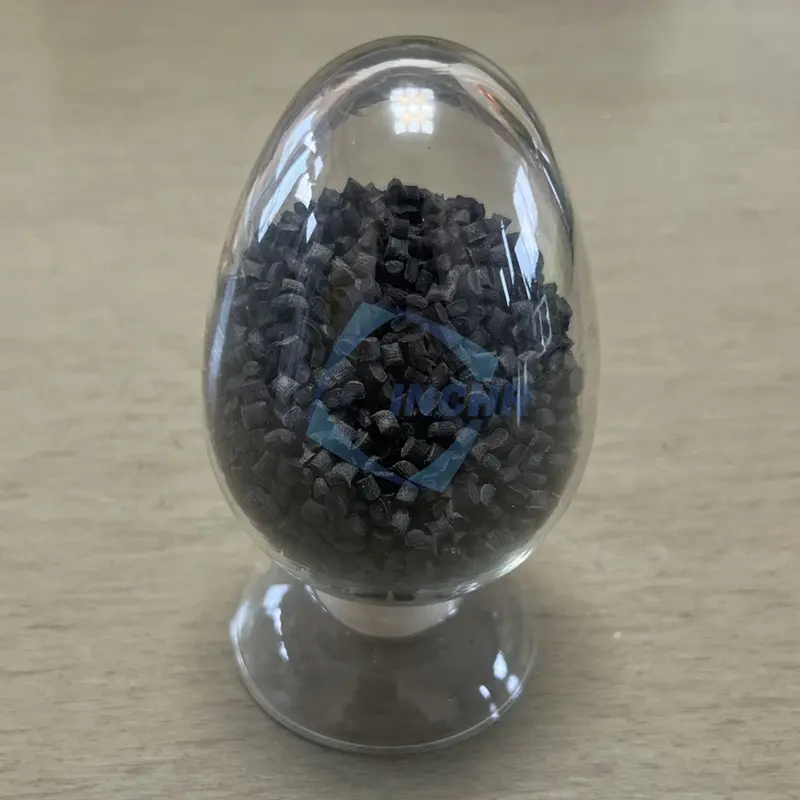
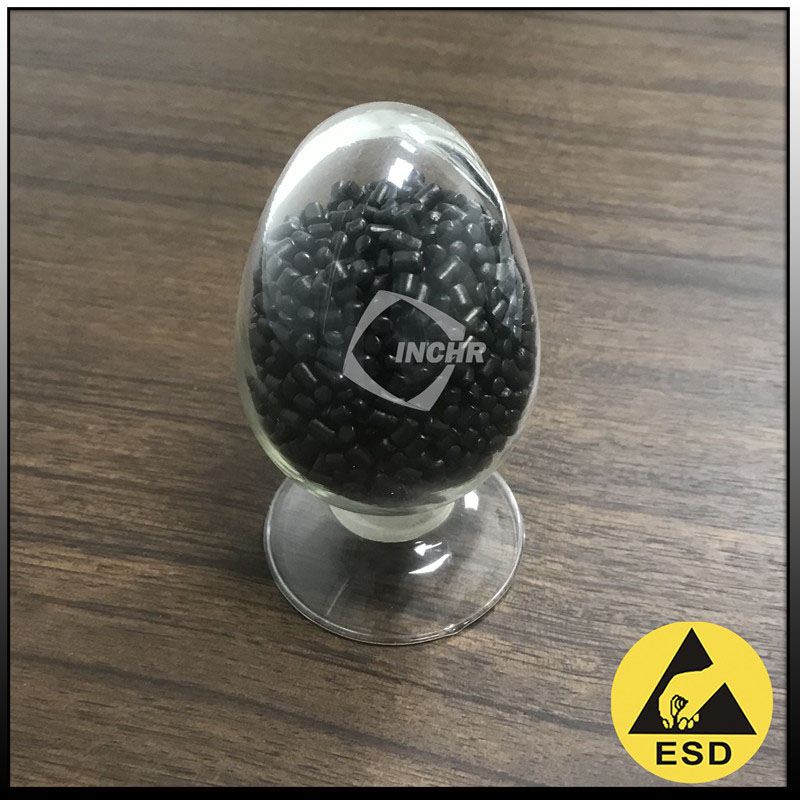
Carbon fiber reinforced PEEK (CF-PEEK) is a high-performance thermoplastic composite that combines the inherent advantages of PEEK resin with the exceptional mechanical reinforcement of carbon fibers. As an advanced engineering material, it fills the performance gap between traditional engineering plastics and metal alloys, offering an optimal balance of strength, light weight, corrosion resistance and processing flexibility. In recent years, it has rapidly become the preferred material solution for high-end industrial fields that demand extreme reliability under harsh working conditions.

The most prominent advantage of carbon fiber reinforced PEEK is its significantly improved mechanical properties. Compared with pure PEEK, the standard 30% carbon fiber filled grade can nearly double the tensile strength and triple the flexural modulus, reaching strength levels comparable to some aluminum alloys while maintaining only one fifth of the metal density. It also exhibits excellent creep resistance at elevated temperatures, maintaining stable dimensional accuracy and structural integrity under long-term load and high temperature environments. Unlike glass fiber reinforced alternatives, CF-PEEK delivers higher specific strength, better wear resistance and lower friction coefficient, making it ideal for dynamic moving components.
Beyond mechanical performance, carbon fiber reinforced PEEK retains the core chemical and thermal advantages of base PEEK resin. It maintains stable performance in continuous operating temperatures up to 260°C and can withstand short-term exposure to even higher temperatures. It shows excellent resistance to most acids, bases, organic solvents and industrial fluids, with almost no performance degradation after long-term immersion. It also features inherent flame retardancy without additional additives, low smoke emission and excellent electrical insulation properties, meeting strict safety standards for aerospace and electronic applications.
View full CF-PEEK material specifications and grades
Carbon fiber reinforced PEEK is widely adopted across multiple high-end industrial sectors. In aerospace and aviation, it is used to manufacture structural components, brackets, gears and fluid system parts. Its high strength-to-weight ratio helps reduce overall aircraft weight, improve fuel efficiency and replace traditional metal parts that are prone to corrosion. In medical and life science fields, it is suitable for surgical instruments, implantable components and dental devices due to its biocompatibility, sterilization resistance and radiolucent properties. It can withstand repeated autoclave sterilization without performance loss, which is critical for reusable medical equipment.
In semiconductor and electronic manufacturing, CF-PEEK serves as an ideal material for wafer carriers, test sockets and precision fixture components. Its excellent dimensional stability at high temperatures, low particle generation and electrostatic discharge control capabilities meet the strict requirements of cleanroom production environments. In general industrial machinery, it is commonly used for bearings, gears, pump components and sealing parts, extending service life and reducing maintenance costs in high-wear and high-temperature working conditions.
When selecting carbon fiber reinforced PEEK materials, manufacturers should pay attention to carbon fiber content and orientation. Standard commercial grades usually contain 10%, 20% or 30% carbon fiber, with 30% being the most widely used general-purpose grade. Higher fiber content delivers greater strength and stiffness but may increase processing difficulty and reduce impact toughness. For parts subject to frequent impact loads, manufacturers may choose intermediate fiber content grades or consider impact modified formulations. Processing method also affects final part performance; CF-PEEK is suitable for injection molding, extrusion and CNC machining, and each process requires corresponding parameter adjustment to achieve optimal material performance.
Compared with metal materials, carbon fiber reinforced PEEK offers significant comprehensive advantages in practical industrial applications. It eliminates the risk of corrosion and rust, reduces part weight by 70-80%, lowers noise and vibration during operation, and allows for more complex integrated part design through injection molding. Although the raw material cost is higher than ordinary engineering plastics, the total lifecycle cost is often lower due to longer service life, reduced maintenance and fewer replacement requirements.
In conclusion, carbon fiber reinforced PEEK represents a high-value material solution for demanding industrial applications. Its unique combination of mechanical strength, thermal stability, chemical resistance and light weight makes it an indispensable material in aerospace, medical, semiconductor and precision engineering fields. Working with a reliable material supplier can help manufacturers select the right grade and optimize processing parameters to fully unlock the performance potential of CF-PEEK components.