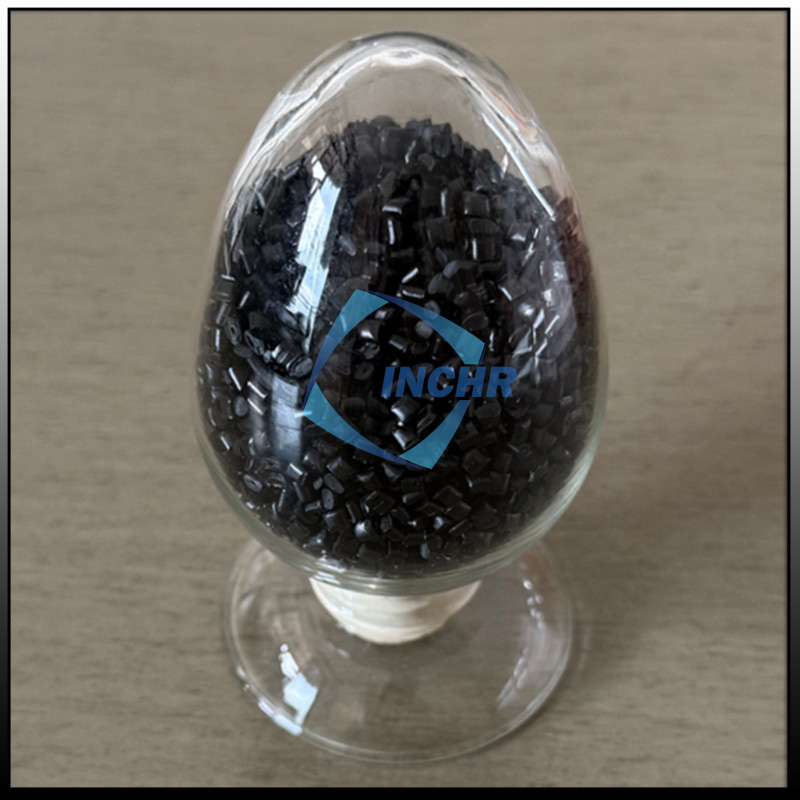
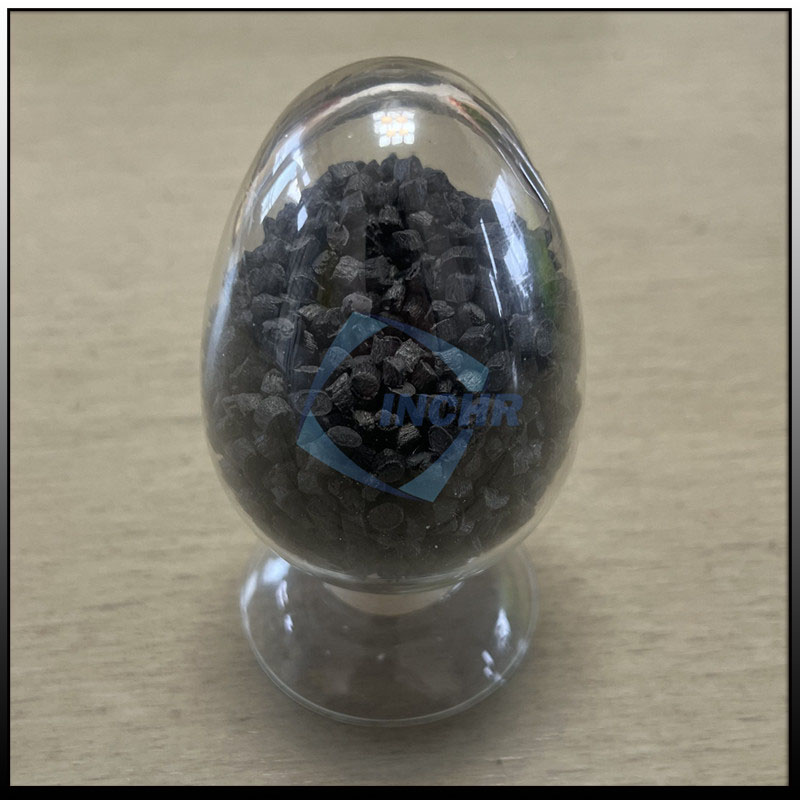
Introduction: Better Materials Need Better Design Decisions
Reducing component weight without sacrificing structural performance is a continuing challenge for manufacturers. Traditional metals offer strength and rigidity, but they can increase product weight, machining requirements, and corrosion-related maintenance.
Carbon fiber reinforced plastic (CFRP) offers another approach. By combining carbon fibers with a polymer matrix, manufacturers can develop lightweight components with improved stiffness and selected mechanical properties.
However, the benefits of CFRP depend on more than the reinforcement itself. Polymer selection, fiber content, component geometry, and processing conditions all influence the final result.
For manufacturers considering this material, the key question is not simply whether carbon fiber reinforced plastic is stronger than conventional plastic. It is whether the material can deliver the required performance in a component that can be produced consistently and economically.
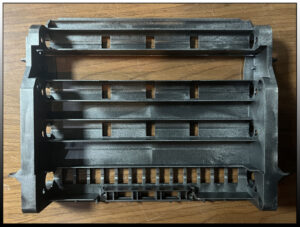
1. Understand the Two Main Material Systems
Carbon fiber reinforced plastic generally refers to a polymer matrix strengthened with carbon fiber. Its manufacturing route and performance depend significantly on the type of polymer used.
Two broad categories are commonly considered:
- Thermoset composites: Use resins such as epoxy that cure into a permanent structure. They are common in applications involving continuous fibers, laminates, and complex structural designs.
- Thermoplastic composites: Use polymers such as PA, PC, PP, or PPS. Many short-fiber thermoplastic grades can be processed using injection molding, making them suitable for repeatable production of complex components.
| Material system | Typical reinforcement form | Manufacturing consideration |
|---|---|---|
| Thermoset CFRP | Woven fabric, continuous or oriented fibers | Layup, curing, and tooling requirements |
| Thermoplastic CFRP | Short or continuous carbon fibers | Melt processing, fiber orientation, and molding conditions |
The right system depends on part size, production volume, structural requirements, and manufacturing capabilities.
2. Choose the Polymer Matrix According to the Application
Carbon fiber provides reinforcement, but the polymer matrix contributes many of the component’s other characteristics, including chemical resistance, temperature behavior, impact performance, and processing properties.
| Polymer matrix | Potential advantages | Example component applications |
|---|---|---|
| PA (Nylon) | Mechanical strength, wear resistance, and engineering versatility | Mechanical parts, connectors, and industrial components |
| PC | Impact performance and dimensional stability | Equipment housings and structural enclosures |
| PP | Low density and chemical resistance | Automotive and electrical components |
| ABS | Processing versatility and balanced mechanical properties | Housings and molded structural parts |
| PPS | Heat and chemical resistance | Selected demanding industrial components |
These are general material-selection considerations rather than guaranteed properties of every reinforced grade. Actual performance depends on the resin grade, fiber content, formulation, and processing conditions.
Read about engineering applications of carbon fiber reinforced plastic.
3. Fiber Content Is a Design Variable, Not a Competition
Increasing carbon fiber content can improve stiffness and strength in certain directions. However, higher reinforcement levels may also change impact behavior, melt flow, surface appearance, and processing difficulty.
The optimal fiber content should be selected according to the component’s actual loading conditions.
| Design priority | What to evaluate |
|---|---|
| High stiffness | Flexural modulus and deformation under load |
| Load-bearing performance | Tensile properties and structural geometry |
| Impact resistance | Impact strength and failure behavior |
| Thin-wall molding | Melt flow and filling behavior |
| Surface appearance | Fiber exposure, texture, and finish |
| Dimensional accuracy | Shrinkage, warpage, and fiber orientation |
A component that requires high rigidity may benefit from a different formulation than one exposed to repeated impact. Material selection should balance these requirements instead of maximizing fiber loading without considering the consequences.
4. Component Geometry Can Be as Important as Material Grade
A well-selected material can still underperform if the component is poorly designed.
In injection-molded thermoplastic CFRP, short fibers may align with the direction of melt flow. This can create differences in mechanical properties between directions, commonly described as anisotropic behavior.
Engineers should pay particular attention to:
- Wall thickness: Sudden thickness changes can influence filling, cooling, and dimensional stability.
- Ribs and bosses: Reinforcement features should support stiffness without creating unnecessary material accumulation.
- Gate location: Melt flow and fiber orientation can affect the performance of critical areas.
- Weld lines: Areas where separate flow fronts meet may require additional strength evaluation.
- Mounting points: Screw holes, clips, and fastening features should be checked under realistic loads.
Early collaboration between material suppliers, mold designers, and product engineers can help identify potential problems before tooling is finalized.
5. Validate Performance Under Real Manufacturing Conditions
Material datasheets provide a starting point, but they cannot replace testing of the actual finished component.
A practical validation plan should include:
| Validation area | Recommended evaluation |
|---|---|
| Mechanical properties | Tensile, flexural, and impact testing as applicable |
| Dimensional performance | Shrinkage, warpage, and dimensional inspection |
| Thermal behavior | Performance at expected service temperatures |
| Processing stability | Filling, cycle consistency, and visible defects |
| Electrical performance | Surface or volume resistance when static control is required |
For tensile testing of plastics, manufacturers can consult ASTM D638 and select suitable specimen preparation and test conditions.
An important additional consideration is electrical behavior. Carbon fibers are electrically conductive, but the electrical properties of a finished composite depend on fiber distribution, concentration, matrix, and processing. CFRP should not automatically be assumed to meet a particular ESD or conductivity requirement without testing.
6. Consider Production Economics Beyond Raw Material Cost
Carbon fiber reinforced plastic may cost more per kilogram than an unreinforced polymer. However, material price alone does not determine the economics of a component.
A more complete assessment should consider:
- Whether the component can be made lighter without losing required performance.
- Whether the material allows part consolidation or simplified assembly.
- Whether cycle time and scrap rates are acceptable.
- Whether additional drying, tooling, or processing controls are needed.
- Whether the expected service life justifies the material investment.
For high-volume production, repeatability is especially important. A formulation that performs well in a small trial must also maintain stable processing and quality across production batches.
Why Choose INCHR for Carbon Fiber Reinforced Compounds?
Established in Dongguan, China, in 2012, INCHR specializes in ESD plastics and modified polymer materials. Its product range includes carbon fiber reinforced compounds based on different polymer systems, alongside conductive compounds, antistatic compounds, permanent antistatic additives, and ESD masterbatches.
INCHR’s R&D team receives support from East China University of Science and Technology. Its production and testing capabilities include twin-screw granulation units, polymerization equipment, single-screw processing equipment, and professional ESD testing equipment.
When evaluating a carbon fiber reinforced plastic grade, manufacturers can provide the target polymer, required fiber content, component drawings, processing method, mechanical targets, and any electrical performance requirements. This information helps establish a more relevant material evaluation plan.
Explore INCHR’s carbon fiber reinforced and modified plastic products to identify potential material options for your next project.
Frequently Asked Questions
1. What is carbon fiber reinforced plastic?
Carbon fiber reinforced plastic is a composite material in which carbon fibers reinforce a polymer matrix. It is used to improve selected mechanical properties, particularly stiffness and strength relative to weight.
2. Is carbon fiber reinforced plastic stronger than metal?
It depends on the specific material, fiber direction, component geometry, and loading conditions. CFRP can offer a high strength-to-weight ratio, but it is not automatically a direct replacement for every metal component.
3. Can carbon fiber reinforced plastic be injection molded?
Yes. Short-fiber thermoplastic compounds can be processed by injection molding. Processing parameters, fiber orientation, mold design, and material preparation influence the finished part.
4. Does more carbon fiber always mean better performance?
No. Higher fiber content can improve some mechanical properties but may affect toughness, flow behavior, surface finish, and processing stability. The best content depends on the application.
5. Is carbon fiber reinforced plastic electrically conductive?
Carbon fibers are conductive, but the electrical behavior of the composite depends on formulation and fiber distribution. Electrical performance should be measured rather than assumed.
6. Which polymers can be reinforced with carbon fiber?
Common thermoplastic matrices include PA, PC, PP, ABS, and PPS. The suitable polymer depends on temperature, chemical exposure, mechanical loading, and processing requirements.
7. What should I provide when requesting a CFRP material recommendation?
Provide the base polymer, component application, drawing or geometry, manufacturing process, target mechanical properties, operating environment, and any electrical requirements. These details help suppliers evaluate suitable formulations.
Carbon fiber reinforced plastic is most effective when material formulation and component design are developed together. By considering polymer selection, fiber content, geometry, processing, and real-world validation, manufacturers can make better decisions and achieve more consistent component performance.