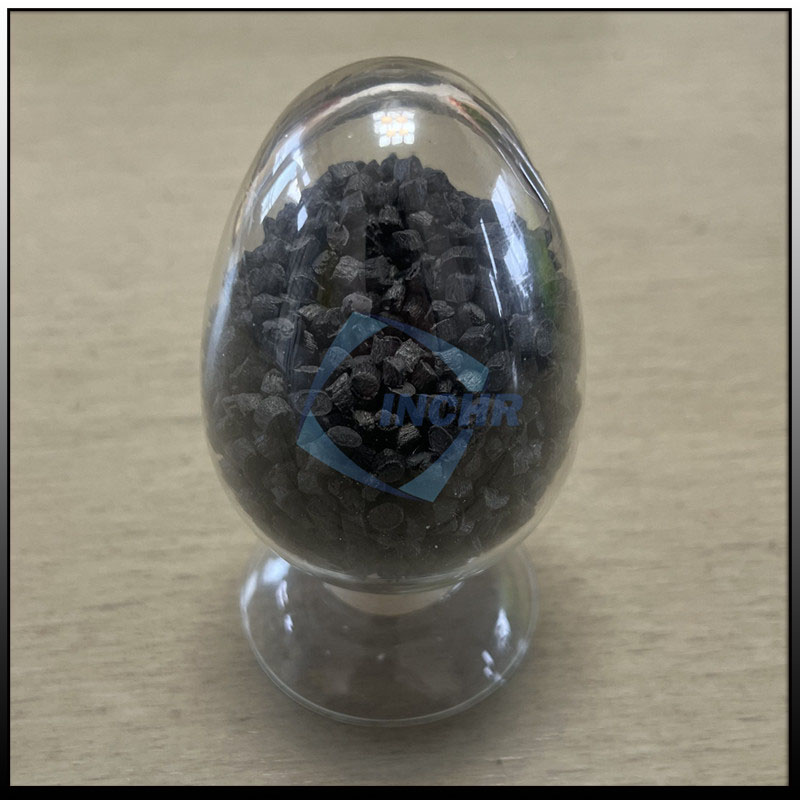
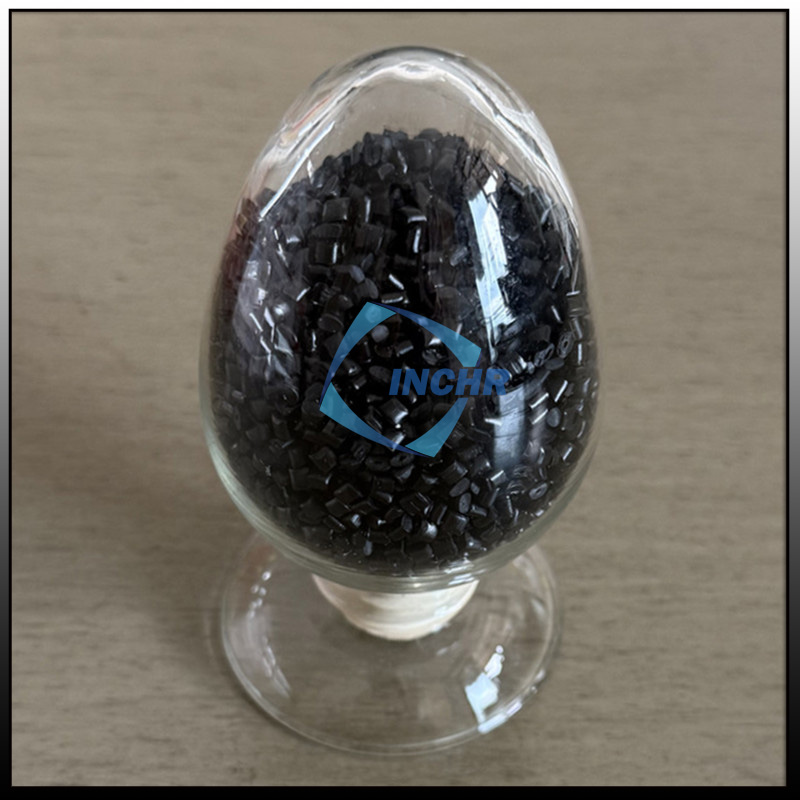
Electronic equipment housings and manufacturing fixtures do more than protect components or provide mechanical support. In electrostatic-sensitive environments, they can also influence how static charge develops, moves, and dissipates.
Carbon Fiber Reinforced Polycarbonate is a useful material to evaluate when a component needs increased rigidity, lightweight construction, and controlled electrical characteristics. It combines a polycarbonate (PC) matrix with carbon fiber reinforcement. Depending on the formulation, the compound can provide mechanical reinforcement and conductive behavior.
However, choosing a conductive plastic grade is only one part of an effective ESD design. The component’s geometry, electrical contact points, assembly method, and connection to ground also matter.
For manufacturers developing electronic equipment housings, inspection fixtures, and industrial handling components, these factors should be considered together.
2. How Carbon Fiber Reinforced PC Supports Static Control
Carbon fibers can create conductive pathways within a polymer matrix. When the formulation and fiber distribution are properly controlled, these pathways can help reduce electrical resistance and provide a route for charge movement.
INCHR lists carbon fiber reinforced PC grades including 1100CF20, 1100CF30, and 1200CF30. Its published product information identifies polycarbonate as the base polymer and lists the following properties:
| Product information | Published specification |
|---|---|
| Material | Carbon fiber reinforced polycarbonate |
| Listed grades | 1100CF20 / 1100CF30 / 1200CF30 |
| Carbon fiber content | 20%–30% options listed |
| Volume resistivity | < 1 × 10⁵ Ω·cm |
| Surface resistance | < 1 × 10⁶ Ω/sq |
| Processing | Injection molding / extrusion |
| Applications | Injection-molded parts and 3D printing filaments |
These figures describe the listed INCHR product information, not a universal specification for all carbon fiber reinforced PC materials. Confirm the exact grade, test conditions, and current technical datasheet before using these values in a design specification.
See the INCHR carbon fiber reinforced PC product page for product details.
3. Design the Electrical Contact Path, Not Just the Housing
A conductive or static-control material does not automatically create a complete grounding system. A housing may have suitable electrical properties but still fail to provide a reliable path to ground if its mounting points, fasteners, or interfaces are poorly designed.
During product development, engineers should review several structural details:
- Grounding interfaces: Identify where the component connects to a grounded structure or other conductive elements.
- Fastener locations: Check whether screws, inserts, coatings, or insulating washers interrupt the intended electrical path.
- Contact surfaces: Evaluate whether surface finishes, contamination, or mechanical wear affect electrical contact.
- Assembly variation: Confirm that resistance remains acceptable across different assembled units.
- Part geometry: Consider thin walls, ribs, bosses, and complex features that may influence material flow and fiber orientation.
A practical approach is to define the intended electrical path in the component drawing and include relevant contact points in the validation plan.
4. Where Carbon Fiber Reinforced Polycarbonate Can Be Considered
Carbon fiber reinforced PC may be considered for components that need a combination of mechanical support and controlled electrical behavior.
| Application | Component examples | Design priority |
|---|---|---|
| Electronics manufacturing | Equipment housings and handling fixtures | Static control and mechanical stability |
| Semiconductor equipment | Selected supports and positioning components | Electrical performance and dimensional accuracy |
| Industrial automation | Protective covers and equipment brackets | Rigidity and reliable assembly |
| Inspection systems | Fixture bases and instrument components | Repeatable positioning and charge management |
| 3D printing applications | Functional prototype parts | Grade compatibility and process consistency |
The material is generally dark and opaque after carbon fiber reinforcement, so it is not normally selected when optical transparency is essential. If a component requires a viewing window, engineers can consider a separate transparent section rather than expecting the reinforced PC body to remain clear.
For additional material options, explore INCHR’s carbon fiber reinforced plastic product category.
5. Validate Electrical Performance on the Finished Component
Material datasheets provide an important starting point, but molded components can behave differently from laboratory specimens. Fiber orientation, wall thickness, molding conditions, surface contamination, and assembly details may influence measured electrical results.
A useful validation plan should include:
- Incoming material checks: Confirm grade identification, batch information, and supplier documentation.
- Specimen testing: Review surface and volume electrical measurements using methods appropriate for the material’s conductivity range.
- Finished-part testing: Measure representative locations on the actual molded component.
- Assembly testing: Check electrical continuity or resistance across the intended contact and grounding interfaces.
- Environmental evaluation: Consider temperature, humidity, cleaning, and wear conditions relevant to the product’s service environment.
For reference, ASTM D257 describes test methods for DC resistance or conductance measurements of insulating materials. Its scope has limitations for moderately conductive materials, so the laboratory should select a method suitable for the compound being evaluated.
For the wider ESD control program, consult IEC 61340-5-1:2024. Material selection alone does not establish compliance with an organization’s complete ESD control program.
6. Choosing the Right PC Compound for Production
Not every electronic housing needs carbon fiber reinforcement. Some products may prioritize impact performance, appearance, or antistatic behavior rather than the higher stiffness and conductive characteristics associated with a carbon fiber reinforced formulation.
INCHR also provides antistatic polycarbonate compounds, offering another option when the application requires an antistatic PC material rather than a carbon fiber reinforced grade.
Before requesting a recommendation, prepare the following information:
- Component drawings and critical dimensions.
- Required mechanical properties and expected loads.
- Target surface resistance or volume resistivity.
- Injection molding, extrusion, or other processing requirements.
- Operating temperature and environmental conditions.
- Grounding and assembly requirements.
INCHR was established in Dongguan, China, in 2012, and specializes in ESD plastics and modified polymer compounds. Its product range includes carbon fiber reinforced compounds, conductive compounds, antistatic compounds, and ESD masterbatches.
Visit the INCHR product center to explore material options for your next engineering project.
Conclusion
Carbon Fiber Reinforced Polycarbonate can be a practical option for electronic housings and industrial fixtures that require mechanical reinforcement alongside controlled electrical properties. Its successful use depends on more than selecting a grade with a suitable resistivity value.
Engineers should consider grounding interfaces, assembly details, processing consistency, and finished-part testing as part of the same design process. By evaluating the complete component rather than the raw material alone, manufacturers can make more reliable material decisions.
Looking for a carbon fiber reinforced PC compound for your application? Contact INCHR to discuss your material requirements and explore suitable ESD plastic solutions.
Frequently Asked Questions
1. What is Carbon Fiber Reinforced Polycarbonate?
It is an engineering thermoplastic made by combining polycarbonate resin with carbon fiber reinforcement. The fibers can improve stiffness and modify the electrical behavior of the compound.
2. Is carbon fiber reinforced PC suitable for ESD applications?
Selected formulations may be suitable for conductive or static-control applications. The actual surface resistance and volume resistivity must be confirmed for the specific grade and finished component.
3. Does carbon fiber reinforced polycarbonate need grounding?
If the component is intended to dissipate charge to ground, its electrical connection to the grounding system must be designed and verified. Conductive material alone does not guarantee an effective grounding path.
4. Is carbon fiber reinforced PC transparent?
Generally, no. Carbon fiber reinforcement normally gives the material a dark, opaque appearance. Applications requiring clear viewing areas may need a separate transparent component.
5. Can carbon fiber reinforced PC be injection molded?
Yes. INCHR lists injection molding as a processing option for its carbon fiber reinforced PC grades. Drying, molding temperatures, mold design, and processing conditions should follow the specific grade’s recommendations.
6. What is the difference between carbon fiber reinforced PC and antistatic PC?
Carbon fiber reinforced PC uses carbon fibers to modify mechanical and potentially electrical properties. Antistatic PC uses functional additives or other formulation technologies to control static charge. The appropriate choice depends on the required mechanical properties and electrical performance.
7. How can I select the right carbon fiber reinforced PC grade?
Define the mechanical requirements, electrical targets, component geometry, processing method, and operating environment. Then compare supplier datasheets and validate samples or finished parts under representative conditions.