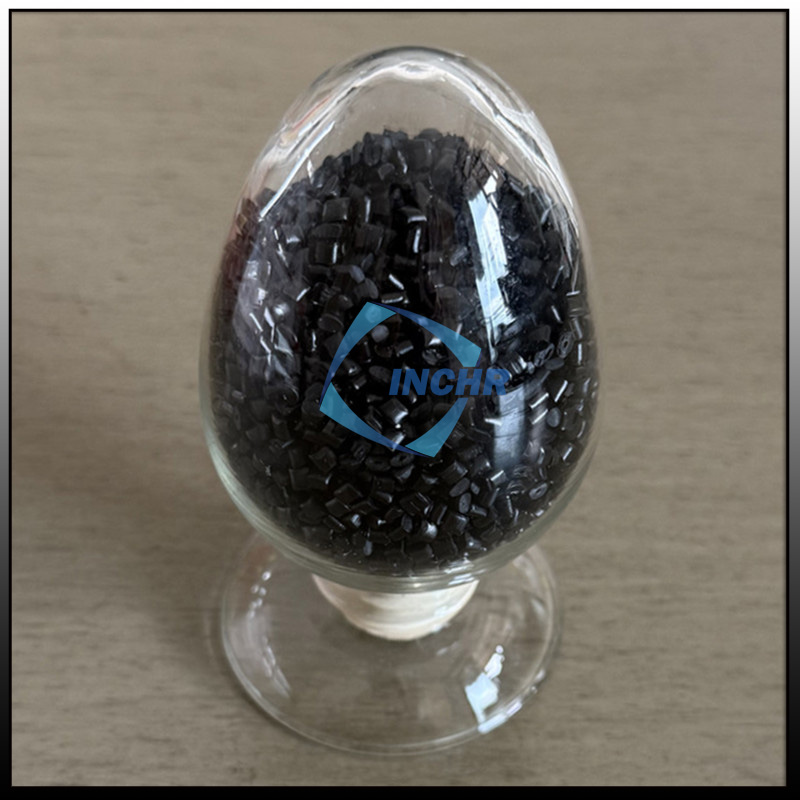
In semiconductor manufacturing, precision electronics production, and other advanced industrial environments, material selection involves more than mechanical strength. Components may need to withstand elevated temperatures, repeated handling, chemical exposure, and strict electrostatic discharge (ESD) requirements at the same time.
Carbon Fiber Reinforced PEEK is an engineering material worth considering for these demanding conditions. It combines the high-performance PEEK polymer matrix with carbon fiber reinforcement, which can improve stiffness, reduce deformation under sustained loads, and support dimensional stability.
However, an important distinction should be made: carbon fiber reinforcement does not automatically make every PEEK compound suitable for ESD protection. Electrical performance depends on the complete formulation, filler distribution, and the finished component.
For engineers designing high-temperature fixtures, equipment components, and precision handling parts, understanding this relationship is essential.

1. Mechanical Performance and Electrical Behavior Must Be Evaluated Together
Carbon fiber contributes to the mechanical performance of PEEK, but its electrical effect depends on how the fibers are incorporated into the polymer matrix.
A well-designed compound can offer a combination of rigidity, heat resistance, and controlled electrical behavior. This can be valuable when a component must maintain its shape while also helping manage static charge.
The following factors should be considered during material selection:
| Performance factor | Potential contribution | What to verify |
|---|---|---|
| High-temperature resistance | Supports demanding thermal environments | Actual service temperature and loading |
| Stiffness | Helps reduce component deflection | Finished-part mechanical performance |
| Creep resistance | Helps limit long-term deformation | Load duration and operating temperature |
| Electrical behavior | May support static dissipation or conductivity | Surface and volume resistivity |
| Chemical resistance | PEEK offers resistance to many industrial chemicals | Compatibility with the actual chemical |
| Dimensional stability | Carbon fiber can reduce thermal expansion | Fiber orientation and critical tolerances |
These properties are formulation-dependent. Engineers should request grade-specific technical data rather than assume that all carbon fiber reinforced PEEK materials deliver identical results.
For a broader introduction to material structures and grade considerations, see INCHR’s Carbon Fiber Reinforced PEEK material guide.
2. Why Carbon Fiber Content Alone Cannot Define ESD Performance
One common misconception is that adding more carbon fiber always produces better electrostatic performance.
In reality, electrical behavior depends on whether the conductive components form an effective network throughout the material. Fiber length, dispersion, concentration, polymer characteristics, and processing conditions can all influence the final result.
A material designed for structural reinforcement may therefore behave differently from a compound specifically formulated for static dissipation.
When evaluating Carbon Fiber Reinforced PEEK for ESD-sensitive equipment, consider three questions:
- What electrical range is required? Define the target surface or volume resistivity according to the application.
- Is performance consistent across the part? Test representative locations, especially around thin sections, molded features, and contact areas.
- Will performance remain suitable after use? Consider temperature exposure, mechanical wear, cleaning procedures, and chemical contact.
INCHR also offers an ESD PEEK compound with CA20/CA30 grades. Its published product information lists surface resistance of 10⁶–10⁹ Ω/sq and identifies carbon fiber and carbon nanotubes among the conductive fillers. These specifications belong to that particular product information and should not be applied to every carbon fiber reinforced PEEK formulation.
3. Applications Where Combined Performance Can Be Valuable
The combination of PEEK’s thermal and chemical characteristics with carbon fiber reinforcement makes this material relevant to several demanding applications.
| Application area | Example components | Key considerations |
|---|---|---|
| Semiconductor equipment | Wafer-handling fixtures, precision supports, equipment components | ESD behavior, cleanliness, thermal stability |
| Electronics manufacturing | Inspection fixtures, test equipment parts | Charge management, dimensional accuracy |
| Chemical processing | Selected pump and valve components | Chemical compatibility, temperature, mechanical loading |
| Industrial automation | Precision guides, structural supports | Rigidity, creep, wear, service life |
Not every application requires an ESD-grade material. For example, a structural support outside an ESD-controlled area may prioritize mechanical performance, while a component that contacts sensitive electronic assemblies may require defined electrical properties as well.
The correct choice starts with the component’s actual function and its position within the production environment.
4. Processing and Part Design: Where Performance Can Be Lost
Even a suitable compound can underperform if its processing conditions or component geometry are poorly controlled.
Injection molding: PEEK requires processing equipment and temperature control appropriate for high-performance thermoplastics. Mold design, filling behavior, cooling, and shrinkage should be assessed for the selected formulation.
Fiber orientation: Carbon fibers may align with the melt-flow direction during molding. This can create directional differences in stiffness, shrinkage, and thermal expansion. Critical dimensions should be checked on actual molded parts.
Machining: For machined components, tool selection, cutting conditions, and surface quality can influence dimensional accuracy and the finished surface. Machining allowances should account for the material’s behavior.
Electrical testing: If ESD performance is required, test the finished component rather than relying only on raw-material measurements. Include the relevant surface locations and contact conditions.
For ESD control program guidance, consult the EOS/ESD Association’s overview of ANSI/ESD S20.20. The standard addresses the development and maintenance of an ESD control program; selecting a material alone does not establish compliance for an entire facility or process.
5. A Practical Checklist for Selecting a PEEK Compound
Before finalizing a material, engineering and purchasing teams should align on the following requirements:
- Operating environment: Record continuous and peak temperatures, chemical exposure, and cleaning conditions.
- Mechanical demands: Define load direction, impact risk, allowable deformation, and expected service life.
- Electrical targets: Specify the required surface or volume resistivity and applicable test method.
- Manufacturing process: Confirm whether injection molding, extrusion, or machining is intended.
- Validation plan: Test samples or finished components under representative operating conditions.
- Supplier documentation: Request technical data, grade identification, processing recommendations, and batch quality information.
INCHR, established in Dongguan, China, in 2012, specializes in ESD plastics and modified polymer compounds, including carbon fiber reinforced materials and ESD compounds. Its product range provides options for manufacturers evaluating material solutions for demanding industrial environments.
Explore INCHR’s carbon fiber reinforced plastic product category or visit the INCHR product center to discuss material requirements.
Conclusion
Carbon Fiber Reinforced PEEK can help engineers address demanding combinations of temperature, mechanical loading, and dimensional stability. When electrostatic control is also required, the electrical formulation must be evaluated separately rather than inferred from carbon fiber content.
The most reliable selection process combines grade-specific data, application-focused design, appropriate manufacturing controls, and testing of the finished component. This approach helps manufacturers choose a material that meets both engineering and production requirements.
Looking for a PEEK compound for a high-temperature or ESD-sensitive application? Contact INCHR to discuss your component requirements and explore suitable material options.
1. What is Carbon Fiber Reinforced PEEK?
It is a high-performance thermoplastic compound made by reinforcing a PEEK resin matrix with carbon fibers. The reinforcement can improve stiffness and reduce deformation under certain loading conditions.
2. Is Carbon Fiber Reinforced PEEK electrically conductive?
Not necessarily. Electrical performance depends on the formulation, conductive filler network, and processing conditions. Request measured resistivity data for the specific grade.
3. Can Carbon Fiber Reinforced PEEK be used in semiconductor equipment?
It may be suitable for selected fixtures and equipment components where thermal stability, mechanical performance, and controlled electrical behavior are required. Cleanliness, particle generation, and ESD performance must be validated for the actual application.
4. Does a higher carbon fiber content always mean better performance?
No. Higher reinforcement levels may increase stiffness but can also affect toughness, processing behavior, surface quality, and directional properties. The optimal content depends on the component’s requirements.
5. Can Carbon Fiber Reinforced PEEK be injection molded?
Yes. PEEK compounds can be injection molded, provided the equipment, tooling, and processing conditions are suitable for the selected grade. Manufacturers should follow supplier-specific processing recommendations.
6. What information should I provide when requesting a PEEK material recommendation?
Provide the operating temperature, mechanical load, chemical exposure, manufacturing process, electrical requirements, component dimensions, and expected service life. These details help the supplier evaluate an appropriate compound.