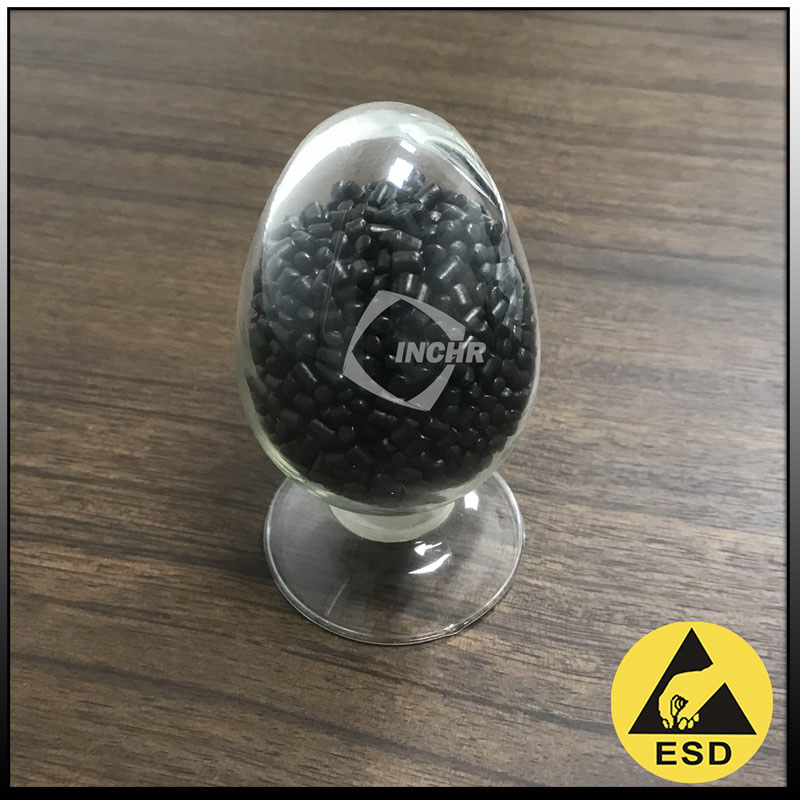
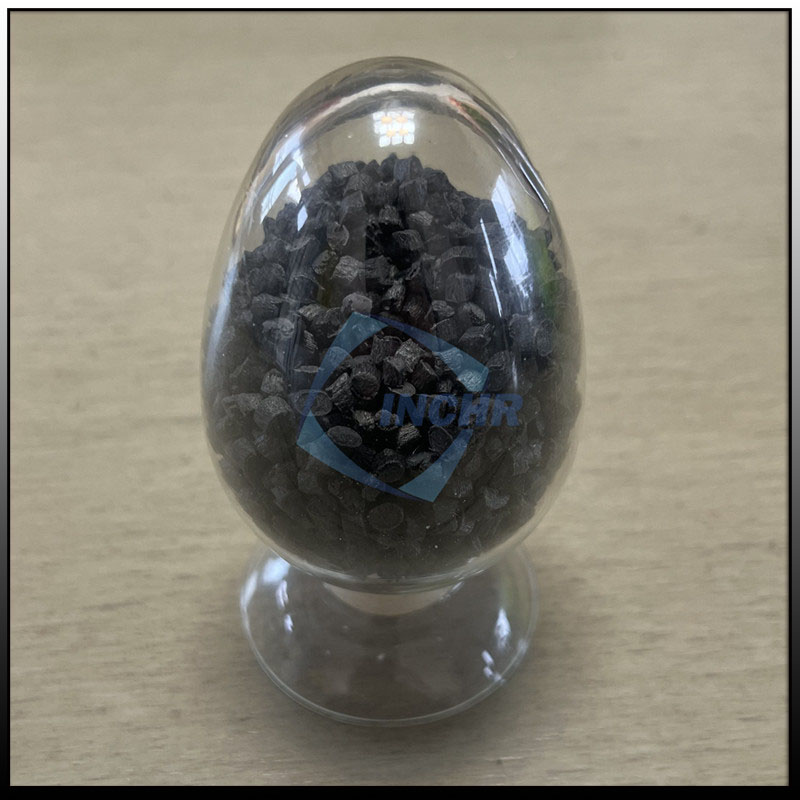
Carbon fiber reinforced nylon is an engineering plastic, not a commodity. Before you specify it, compare it against the materials your part could also use — glass fiber nylon, carbon fiber ABS, and aluminum. Each option wins in a different combination of stiffness, weight, wear, conductivity, and cost. This guide compares carbon fiber reinforced nylon with the most common alternatives on the same criteria, so you can choose the material your application actually needs instead of the one on the habit list.
What Carbon Fiber Reinforced Nylon Offers
Carbon fiber reinforced nylon is a polyamide matrix — PA6 or PA66 — reinforced with short or long carbon fiber. The fiber raises stiffness and strength far beyond unfilled nylon, improves dimensional stability, and adds a degree of electrical conductivity. Typical performance compared with unfilled nylon PA6:
- Tensile modulus — roughly 2–4 times higher, depending on fiber loading.
- Tensile strength — up by 50–100% at typical loading.
- Creep resistance — substantially improved under sustained load and at elevated temperature.
- Wear resistance — fiber reinforcement extends life in sliding contact, especially with internal lubricants.
- Weight — about 1.2–1.4 g/cm³, far lighter than aluminum (2.7 g/cm³).
- Surface resistivity — drops into a range that supports.
The catch is the price premium and the processing discipline: nylon absorbs moisture, carbon fiber is abrasive, and fiber orientation controls real part properties. Whether carbon fiber reinforced nylon beats the alternatives depends entirely on your load case.
Carbon Fiber Nylon vs. Glass Fiber Nylon
Glass fiber nylon is the budget workhorse; carbon fiber nylon is the upgrade for specific loads. Compare on the same axes:
- Stiffness vs. density — carbon fiber nylon reaches similar stiffness to glass-reinforced grades at lower density, or higher stiffness at the same density.
- Strength — both lift strength; carbon fiber grades generally show higher specific strength.
- Wear and abrasion — carbon fiber wears less against mating surfaces; glass fiber can polish the counterface more aggressively.
- Electrical behavior — carbon fiber gives useful conductivity; glass fiber is insulating.
- Dimensional stability — carbon fiber shrinks less and holds flatter, thinner sections better.
- Cost — carbon fiber compounds cost more per kilogram; the payback appears in weight, fatigue life, or part-count reduction.
Rule of thumb: if the design is driven by stiffness per gram or fatigue life, carbon fiber reinforced nylon earns the premium. If the part is thick, lightly loaded, and cost-sensitive, glass fiber nylon is usually the right answer.
Carbon Fiber Nylon vs. Carbon Fiber ABS
Both materials carry carbon fiber, but they answer different questions:
- Toughness — nylon keeps better impact energy and fatigue behavior; CF-ABS is tougher than unfilled ABS but below CF-PA in repeated loading.
- Moisture — nylon needs drying and its dimensions move with humidity; ABS is far more dimensionally stable in humid environments and does not require the same drying discipline.
- Temperature — carbon fiber reinforced nylon holds stiffness and creep resistance at higher service temperatures, thanks to the polyamide matrix.
- Surface quality — CF-ABS produces cleaner, more polishable surfaces; CF-nylon hides fiber more easily in textured or technical parts.
- Wear — nylon-based grades are the natural choice for gears and sliding components.
So carbon fiber ABS suits cosmetic, indoor, low-humidity enclosures; carbon fiber nylon suits mechanical duty — gears, brackets, housings under load — where temperature and fatigue matter.
Carbon Fiber Nylon vs. Aluminum
Metal replacement is where carbon fiber reinforced nylon earns its highest value. The honest comparison:
- Weight — a CF-PA part weighs roughly half of an equivalent aluminum part.
- Stiffness — aluminum is stiffer in absolute terms; CF-PA closes the gap partly, and wins on stiffness per weight in thin, ribbed designs.
- Fatigue — short-fiber composites show a finite fatigue life and can be sensitive to stress concentrations; design must avoid sharp features.
- Conductivity — aluminum conducts heat and electricity far better; CF-PA only offers limited static/EMI-relevant conductivity.
- Temperature ceiling — aluminum handles service temperatures that nylon cannot; the polyamide matrix limits the operating window.
- Integration — one molded CF-PA part replaces a multi-component metal assembly with bosses and snaps, cutting assembly cost.
The pattern across industries is consistent: replace aluminum where weight, part integration, and corrosion resistance dominate; keep metal where thermal duty, absolute stiffness, or raw conductivity is non-negotiable.
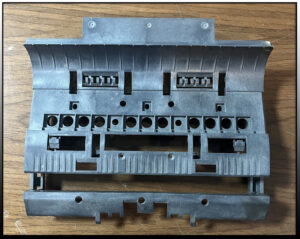
When Carbon Fiber Nylon Is the Wrong Choice
A balanced guide says where not to use it:
- High continuous temperatures above nylon’s heat deflection range — switch to PA46, PPA, or PPS families.
- Thick-section, lightly loaded parts — the fiber premium is wasted; glass-filled or unfilled nylon costs less.
- Parts needing true thermal or high-power electrical conductivity — no short-fiber plastic matches metal; instead.
- High-moisture environments with tight tolerances — humidity shifts dimensions; choose POM or another low-moisture material.
- Extreme impact loads — long-fiber compounds or ductile unfilled grades absorb energy better.
Understanding the boundaries prevents specifying a premium material into a losing application.
A Simple Material Selection Framework
Walk the decision in order:
- Define the load — stiffness target, cycle count, service temperature, environment.
- Check the thermal ceiling — if the part exceeds nylon’s heat range, the comparison stops before carbon fiber matters.
- Compare stiffness per weight — lay the candidate materials side by side on specific modulus.
- Decide on conductivity — ESD or EMI requirements narrow the field to carbon- and metal-filled options.
- Add the cost context — include system cost, assembly, and tooling, not just material price per kilogram.
- Validate on molded parts — property sheets describe coupons, not gates and weld lines.
With this framework, most engineers reach one of three conclusions: carbon fiber reinforced nylon because of weight-fatigue-wear, glass fiber nylon for cost, or aluminum because of thermal or conductivity limits.
Why INCHR Is Worth Comparing Too
INCHR has compounded ESD and performance plastics in Dongguan since 2012. Its product line — permanent antistatic additives, conductive compounds, antistatic compounds, carbon fiber reinforced compounds, ESD masterbatches, and graphene-reinforced plastics — is built around one discipline: making modifications that behave consistently from batch to batch. Carbon fiber reinforced nylon is produced in twin-screw granulation units under an ISO9001:2008 quality system, with professional ESD testing equipment on site and an R&D team supported by East China University of Science and Technology.
That matters for selection: the same grade number from different compounders can perform very differently because dispersion, fiber length preservation, and coupling differ. When you compare materials, compare suppliers on the same evidence — molded-part test data, lot-to-lot consistency records, and engineering support. Contact INCHR with your material selection brief