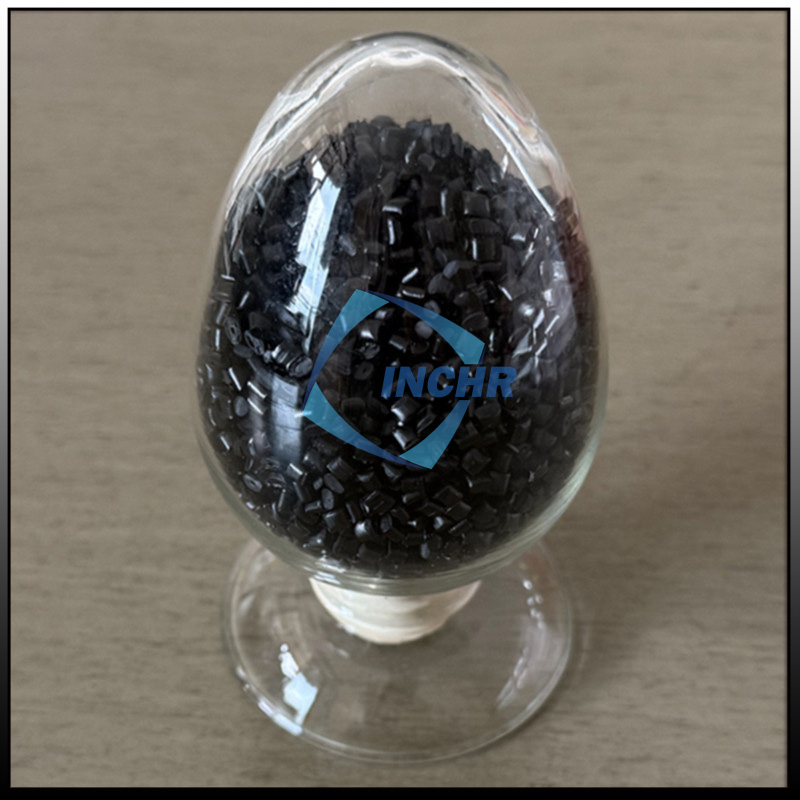
As industrial manufacturers race to achieve lightweight design, longer service life and higher production efficiency, carbon fiber reinforced nylon (CF-Nylon) has emerged as the most balanced high-performance composite for mass production. For many years, carbon fiber composites were seen as a premium material limited to aerospace and low-volume applications, while standard engineering plastics fell short on strength, stiffness and creep resistance for load-bearing parts. Carbon fiber reinforced nylon bridges this gap perfectly: it delivers metal-comparable mechanical performance at a fraction of the cost of high-end composites like CF-PEEK, and supports high-volume injection molding production with excellent design flexibility. For engineering and procurement teams, it offers the fastest path to replace metal parts, reduce component weight and cut total lifecycle costs without overinvesting in premium materials.
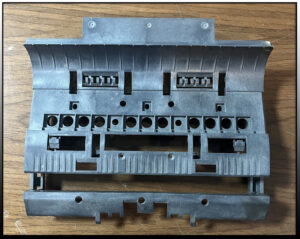
The core performance advantage of carbon fiber reinforced nylon lies in its exceptional strength-to-weight ratio and balanced mechanical properties. A standard 30% carbon fiber filled PA66 grade nearly doubles the tensile strength and triples the flexural modulus of pure nylon, delivering stiffness comparable to cast aluminum at only about one-quarter of the density. Unlike glass fiber reinforced nylon, CF-Nylon offers higher specific strength, lower friction coefficient, better creep resistance at elevated temperatures and superior wear resistance, making it suitable for long-term dynamic load applications. It also retains nylon’s inherent impact toughness, chemical resistance to oils and greases, and self-lubricating properties, which reduce noise and wear in moving mechanical components such as gears, bearings and pulleys. It maintains stable performance at continuous operating temperatures up to 120–150°C, covering the requirements of most automotive and general industrial applications.
Explore full carbon fiber reinforced nylon grades and specifications
What truly sets carbon fiber reinforced nylon apart from other carbon fiber composites is its outstanding suitability for industrial mass production. As a thermoplastic composite, it can be processed on standard injection molding equipment with short cycle times, making it highly scalable for high-volume production runs. Unlike thermoset CFRP which requires long curing cycles and labor-intensive layup processes, CF-Nylon can be molded into complex, integrated geometries in a single production step, consolidating multiple metal components into one part. This reduces part count, eliminates assembly labor and improves overall structural reliability. It also supports secondary processes including CNC machining, ultrasonic welding and surface coating, giving engineers full design flexibility to meet exact application requirements. For manufacturers, this means faster time-to-market, lower production costs and consistent quality across large production batches.
Carbon fiber reinforced nylon is already the material of choice across a wide range of high-volume industrial sectors. In automotive and new energy vehicle manufacturing, it is widely used for structural brackets, battery housing components, gears, pulleys, connector housings and pedal assemblies. Its 70–75% weight reduction compared to metal directly improves energy efficiency and extends driving range, while its corrosion resistance eliminates rust issues in under-hood and chassis components. In industrial automation, CF-Nylon is used for robotic end effectors, conveyor components, bearing cages and precision fixtures, enabling faster motion, lower vibration and longer service life in high-speed production lines. It is also extensively used in consumer electronics, sports equipment, fluid handling systems and power tools, where lightweight design, structural strength and surface finish are all critical requirements.
Selecting the right CF-Nylon grade is critical to achieving the best balance of performance and cost. Carbon fiber content typically ranges from 10% to 40%, with 30% being the most widely used general-purpose grade for metal replacement. Higher fiber content delivers greater strength and stiffness but reduces impact toughness and increases processing difficulty; it should only be specified for high-load structural applications. Short fiber grades are optimized for high-volume injection molding with consistent isotropic properties, while long fiber grades provide superior impact resistance and structural strength for heavy-load components. Manufacturers also offer specialized modified grades including toughened, wear-resistant, antistatic and UV-stabilized formulations to address specific industry needs. For best results, engineers should select the minimum fiber content that meets performance requirements, rather than over-specifying higher grades that add unnecessary cost.
Successful implementation also requires attention to processing details. CF-Nylon is hygroscopic, so pre-drying is essential before molding to avoid surface defects, bubbles and reduced mechanical performance. Processing temperature, injection pressure and mold design should be adjusted according to specific fiber content and resin grade to ensure uniform fiber dispersion and avoid excessive fiber breakage. For procurement teams, it is recommended to partner with suppliers that offer integrated services from material formulation to injection molding and precision machining, which reduces quality risks and management costs. Small-batch trial production and performance testing before full-scale rollout is strongly advised to verify that the material meets actual working conditions.
In conclusion, carbon fiber reinforced nylon is not just a lower-cost alternative to premium carbon fiber composites — it is a purpose-built material solution for industrial mass production. It combines metal-like strength, lightweight design, corrosion resistance and manufacturing efficiency at a highly competitive cost point, making it the most practical metal replacement solution for most load-bearing industrial components. For manufacturers looking to pursue lightweight design and improve product performance without overinvesting in high-end materials, CF-Nylon delivers the optimal balance of performance, processability and total lifecycle value. Working with an experienced composite supplier helps businesses select the right grade, optimize part design and achieve a smooth, cost-effective transition from metal to high-performance thermoplastic composites.