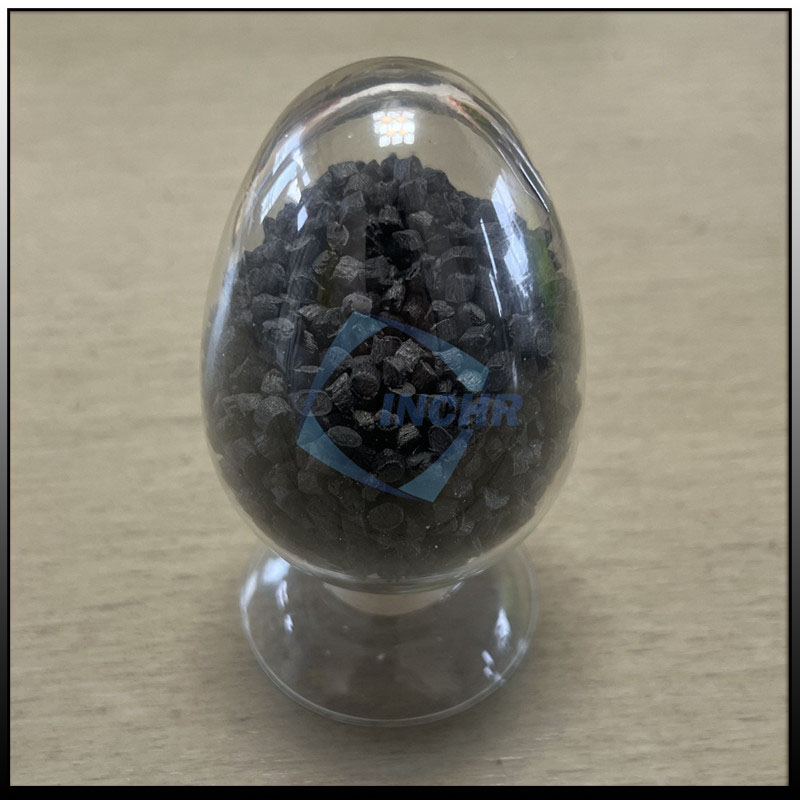
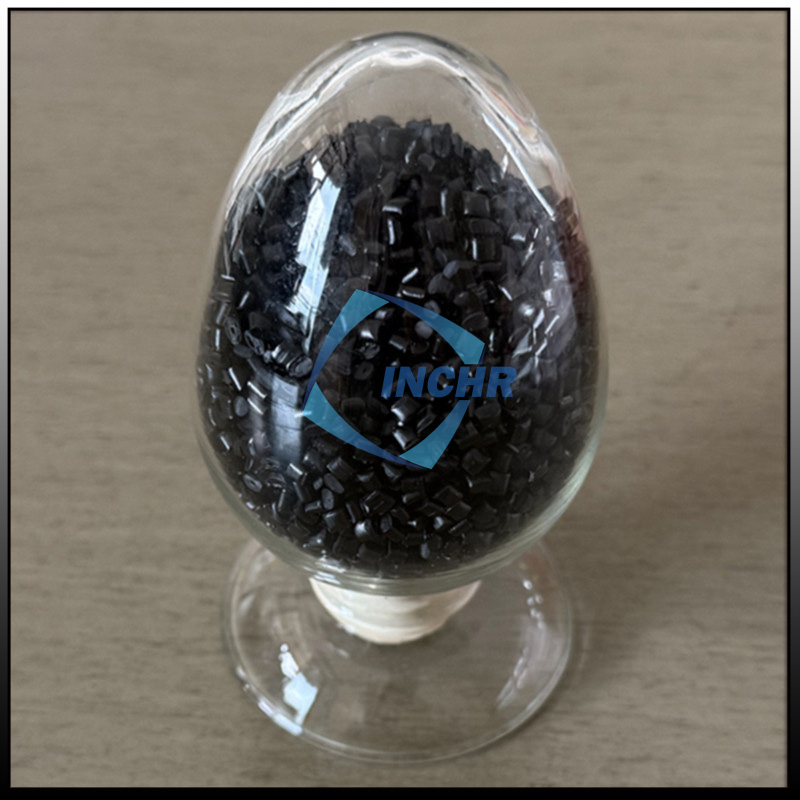
Carbon fiber reinforced ABS (CF-ABS) is a high-performance thermoplastic composite that combines the outstanding processability and surface quality of ABS resin with the exceptional mechanical reinforcement of carbon fibers. As a cost-effective engineering composite positioned between standard ABS and premium carbon fiber materials, it fills the gap for applications that require structural rigidity, tight dimensional tolerance and excellent surface aesthetics all at once. For manufacturers in electronics, automotive and precision engineering, CF-ABS delivers most of the performance benefits of advanced carbon fiber composites while retaining the manufacturing efficiency and design flexibility of a commodity engineering plastic.
The most notable advantage of carbon fiber reinforced ABS is its balanced upgrade of mechanical, thermal and aesthetic performance. Compared with unfilled ABS, a standard 30% carbon fiber filled grade can nearly double the tensile strength and increase flexural modulus by 2–3 times, delivering rigidity comparable to die-cast aluminum at roughly 80% lower density. It also significantly improves heat deflection temperature and creep resistance, maintaining dimensional accuracy under sustained load and elevated temperature conditions. Unlike glass fiber reinforced ABS, CF-ABS provides higher specific strength, lower weight, better fatigue resistance and a smoother, more premium surface finish with minimal fiber exposure. In addition, carbon fiber filling can be formulated to deliver inherent electrostatic discharge (ESD) protection, making it an ideal material for electronic and semiconductor applications where static control is critical.
View full CF-ABS material grades and technical datasheets
Carbon fiber reinforced ABS is available in multiple standard and custom grades to match specific application requirements. Carbon fiber content typically ranges from 10% to 30%, with 20% being the most widely used general-purpose grade that balances strength, toughness and surface finish. The 30% fiber grade delivers maximum rigidity and dimensional stability for high-load structural parts, while 10% fiber grades retain higher impact toughness and are suitable for semi-structural components. Manufacturers also offer specialized modified grades including ESD/antistatic, heat-resistant, impact-modified and UV-stabilized formulations to address specific industry needs. Short fiber grades are optimized for high-volume injection molding with consistent isotropic properties, while long fiber grades provide superior structural strength for heavy-load components. When selecting grades, engineers should prioritize the minimum fiber content that meets performance requirements, as over-specifying higher fiber content increases material cost and may reduce surface quality and impact resistance.
CF-ABS is widely adopted across industries where both structural performance and surface appearance matter. In consumer and industrial electronics, it is the material of choice for device housings, internal structural brackets, connector shells and semiconductor handling fixtures. Its inherent ESD capability protects sensitive electronic components from static damage, while its excellent dimensional stability and premium surface finish support thin-wall designs and high-quality cosmetic surfaces without secondary painting. In automotive manufacturing, CF-ABS is used for interior structural brackets, instrument panel supports, decorative trim components and under-hood structural parts. Its lightweight design reduces vehicle weight, while its excellent molding consistency and surface quality eliminate costly post-processing steps. It is also extensively used in industrial automation, medical device housings, sports equipment and consumer goods, where strength, dimensional precision and surface aesthetics are all critical requirements.
What makes carbon fiber reinforced ABS particularly suitable for mass production is its excellent processability on standard injection molding equipment. It retains ABS’s good melt flow and molding characteristics, allowing manufacturers to produce complex, thin-walled and integrated geometries with short cycle times and high dimensional repeatability. It also supports secondary operations including CNC machining, ultrasonic welding, painting, plating and surface coating, giving engineers full design flexibility. Proper processing is critical to achieve optimal performance: pre-drying is required to prevent surface defects and bubbles, and processing temperature and injection pressure should be controlled to ensure uniform fiber dispersion and minimize fiber breakage. For procurement teams, it is recommended to partner with suppliers that offer integrated services from material formulation to injection molding and precision machining, which reduces quality risks and streamlines the supply chain. Small-batch trial production and performance verification before full-scale rollout is strongly advised to confirm that the material meets actual working conditions and appearance requirements.
In conclusion, carbon fiber reinforced ABS is a highly practical and cost-effective composite solution for industrial mass production. It delivers a unique combination of structural rigidity, dimensional stability, ESD capability and premium surface finish that few other materials can match at a comparable cost point. For manufacturers looking to upgrade standard ABS parts for higher strength and precision, or replace metal components with lightweight plastic while maintaining surface quality, CF-ABS offers the optimal balance of performance, processability and total lifecycle value. Working with an experienced composite supplier helps businesses select the right grade, optimize part design and achieve reliable, high-quality mass production.