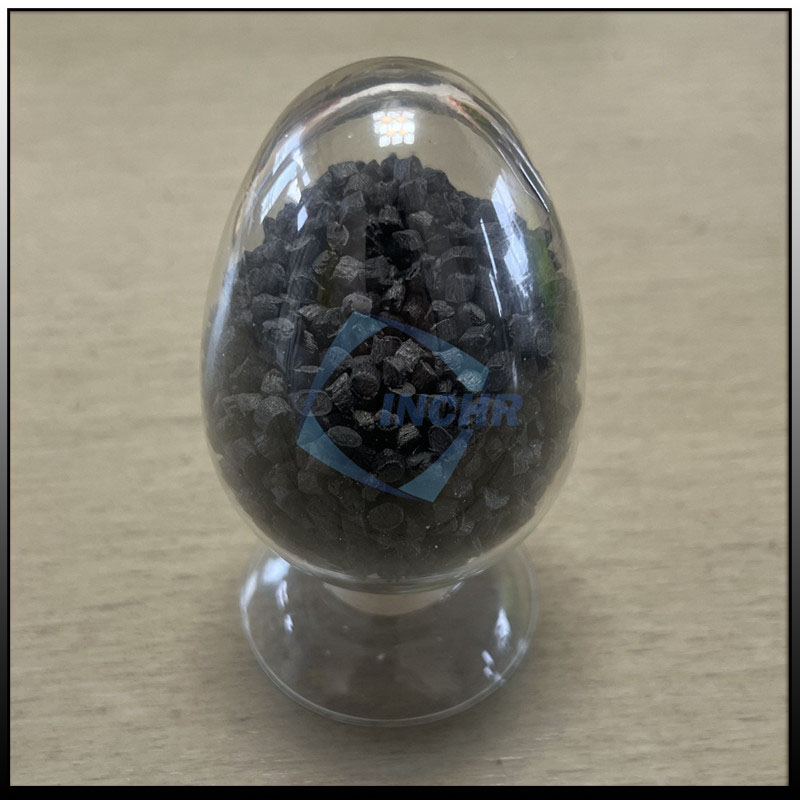
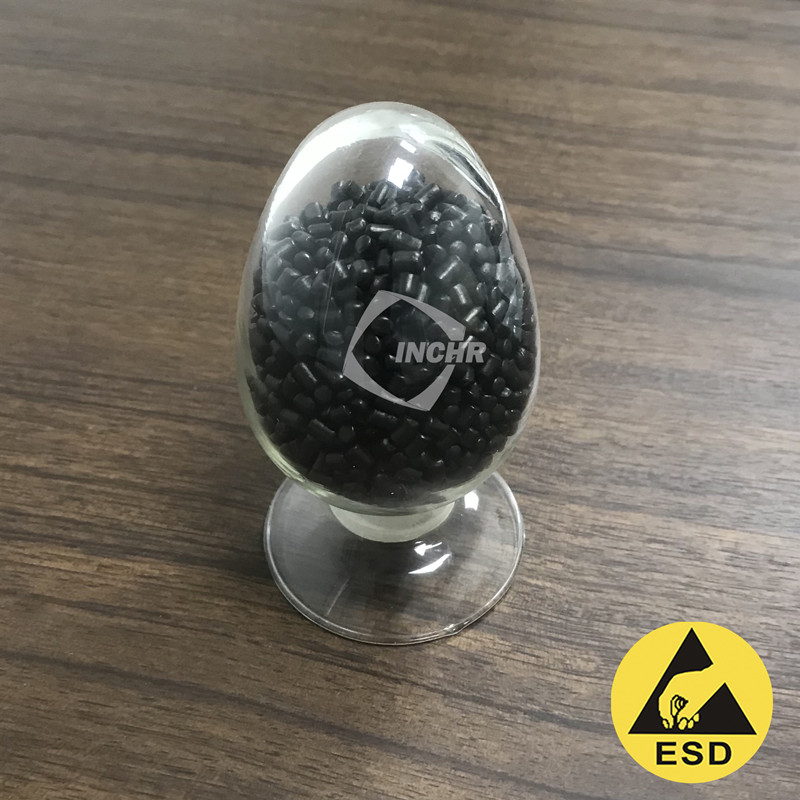
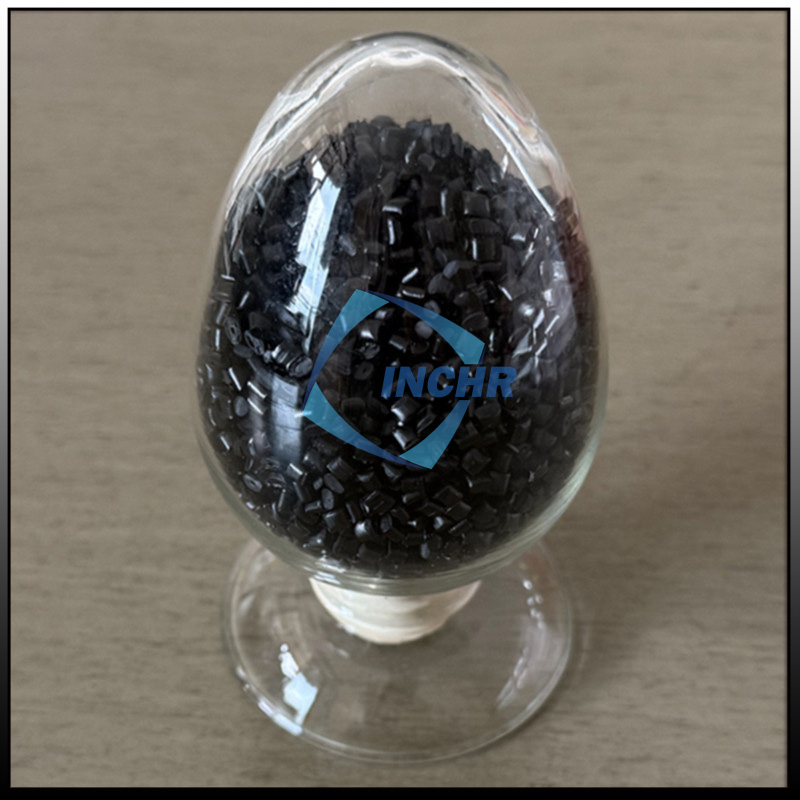
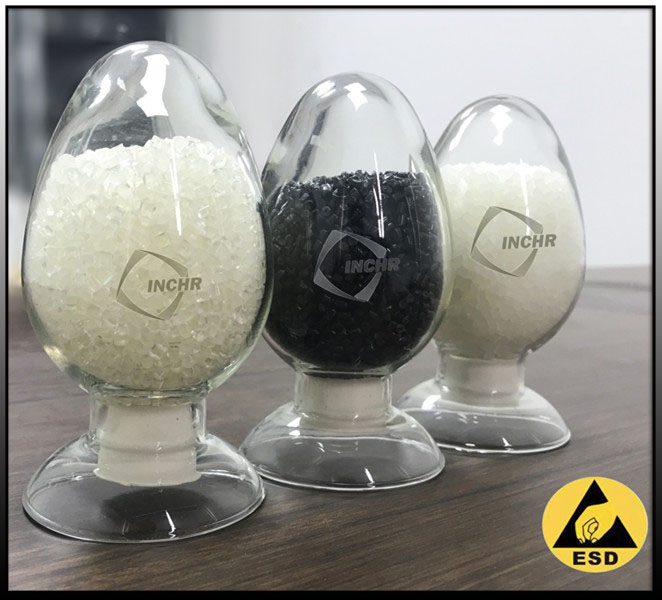
Carbon fiber reinforced ABS is not “ABS with a bit of carbon mixed in.” It is a different material system with its own rules for performance, processing, and cost. Even experienced plastics engineers carry assumptions from unfilled ABS that quietly ruin CF-ABS parts: quoting toughness from the base resin, expecting conductivity to follow fiber percentage, or treating regrind as harmless. This article walks through the seven misconceptions that cause the most specification and molding failures, and what to verify instead. If your parts need stiffness, dimensional control, and static dissipation from a moldable thermoplastic, these are the points that decide success.
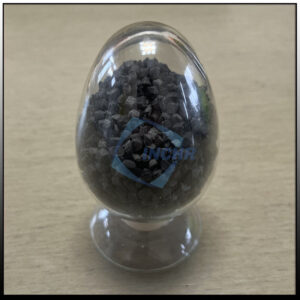
Misconception 1: CF-ABS Is Just ABS with Chopped Fiber
The parts count is similar, but the engineering is not. In carbon fiber reinforced ABS, the fiber-matrix interface controls the result: without correct fiber sizing and coupling, the compound has the fiber but not the strength. INCHR compounds short carbon fiber into ABS with the dispersion and coupling that make the fiber work, so the tensile and flexural improvements you specify actually appear in the molded part. Ask suppliers for interfacial evidence, not just fiber percentage.
Misconception 2: More Carbon Fiber Always Means Better Performance
Beyond the percolation and stiffening range, extra fiber buys little. Stiffness keeps rising with loading, but impact strength, elongation, and weld-line strength fall faster than most engineers expect. A 30% loading that looks great on paper can make a thin-wall housing brittle at the gate or weld line. For most parts, the design range is 10–20% fiber, chosen for the specific stiffness, toughness, and conductivity balance the application needs. Specify the property window you need, then let the compounder pick the loading — not the reverse.
Misconception 3: Fiber Content Alone Guarantees Conductivity
Carbon fiber is conductive, but a molded part is not automatically conductive. Conductive pathways form only where fibers touch — and injection molding orients fibers along the flow direction, breaks long fibers at gates and fillers, and leaves weld lines with weak or missing networks. The same compound can measure differently in a test bar and in a weld-line-bearing housing. If static dissipation matters, specify surface and volume resistivity measured on molded parts under controlled conditions, and confirm the supplier verifies the network, not just raw material conductivity.
Misconception 4: Data from One Test Bar Describes Every Batch
A single property sheet describes a snapshot, not a process. Fiber length changes with regrind, screw shear, and barrel residence time; dispersion changes with compounding equipment and operator settings. Two batches of the same nominal grade can differ by 10–20% in modulus or resistivity if compounding discipline is weak. INCHR runs twin–screw granulation and verifies properties lot by lot, so the window between “typical” and “guaranteed” stays narrow. Demand lot-to-lot data before qualifying a supplier.
Misconception 5: It Processes Exactly Like Unfilled ABS
CF-ABS flows like ABS but wears like a composite. Carbon fiber is abrasive: standard screws and gates erode faster, and a restrictive nozzle breaks fiber and raises back pressure, which hurts both properties and cycle stability. Practical corrections include:
- Drying — ABS absorbs moisture; dry below 0.1% to avoid splay and property loss.
- Screw design — gentler compression limits fiber breakage during plasticizing.
- Gates and vents — larger gates and better venting reduce weld-line weakness and trapped gas.
- Regrind control — scrap above 10–20% shortens fibers noticeably; agree on the limit with the molder.
Molders who treat CF-ABS as “ABS but stiffer” usually discover the difference in rejects.Read about processing carbon fiber reinforced compounds in production
Misconception 6: CF-ABS Is Only for Aerospace and Sporting Goods
The stereotype hides the highest-volume uses. Carbon fiber reinforced ABS earns its cost wherever thin walls, dimensional stability, and ESD behavior matter in consumer and industrial products:
- Electronics housings and frames that stay flat and stiff in thin sections.
- Battery and power-tool enclosures requiring creep resistance and static safety.
- Fixtures, trays, and carriers in electronics manufacturing that must not discharge into components.
- Sensor mounts, brackets, and covers in automotive that hold geometry under heat and vibration.
- Frames and structural shells in drones, cameras, and AR/VR devices demanding low weight with rigidity.
If the part is currently aluminum, sheet steel, or over-thick unfilled ABS, CF-ABS is usually worth an evaluation — not only in aerospace.
Misconception 7: Black, Streaky Surfaces Are Unavoidable
Carbon fiber shows on the surface, which is physically true — but visible fiber streaks and poor surface quality are a compounding and molding problem, not a law of physics. Textured finishes, optimized flow, and controlled mold temperature hide fiber orientation marks, and molded-in color can be stabilized to minimize streaking in visible parts. Set the surface expectation in the specification, and verify the supplier has demonstrated class-A or textured finishes, not just test plaques.
How to Specify CF-ABS Correctly
Replace vague requirements with a complete specification before quoting:
- Target modulus, strength, and impact window at the service temperature.
- Surface and volume resistivity targets, measured on molded parts.
- Welding, gate, and regrind constraints from your mold design.
- Compliance needs: RoHS, REACH, UL flammability, and customer-specific items.
- Lot-to-lot consistency requirements and the data you expect with each delivery.
A complete spec turns CF-ABS from a gamble into an engineered solution. The same discipline applies to every ESD-modified compound: define the window, verify the method, and qualify the supplier’s process, not just its brochure.
Why INCHR Delivers Carbon Fiber Reinforced ABS That Holds Its Promise
INCHR has compounded ESD plastics since 2012 in Dongguan, with a product line spanning conductive compounds, antistatic compounds, carbon fiber reinforced compounds, ESD masterbatches, and graphene-reinforced plastics. Carbon fiber reinforced ABS is made where that expertise lives: in twin-screw granulation units under an ISO9001:2008 quality system, with in-house ESD testing equipment and an R&D team supported by East China University of Science and Technology. The result is a compound whose fiber network, coupling, and consistency survive the trip from the hopper to the finished part.
If you are designing a part around carbon fiber reinforced ABS, send the geometry, the property targets, and the environment — INCHR will specify the grade, verify it on molded parts, and support the transfer to your molder.