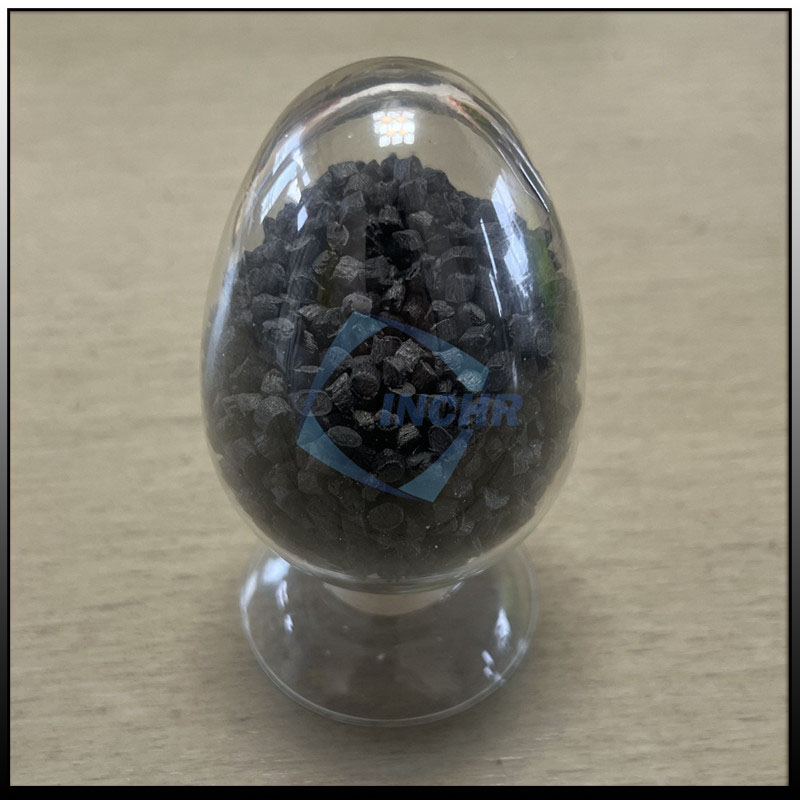
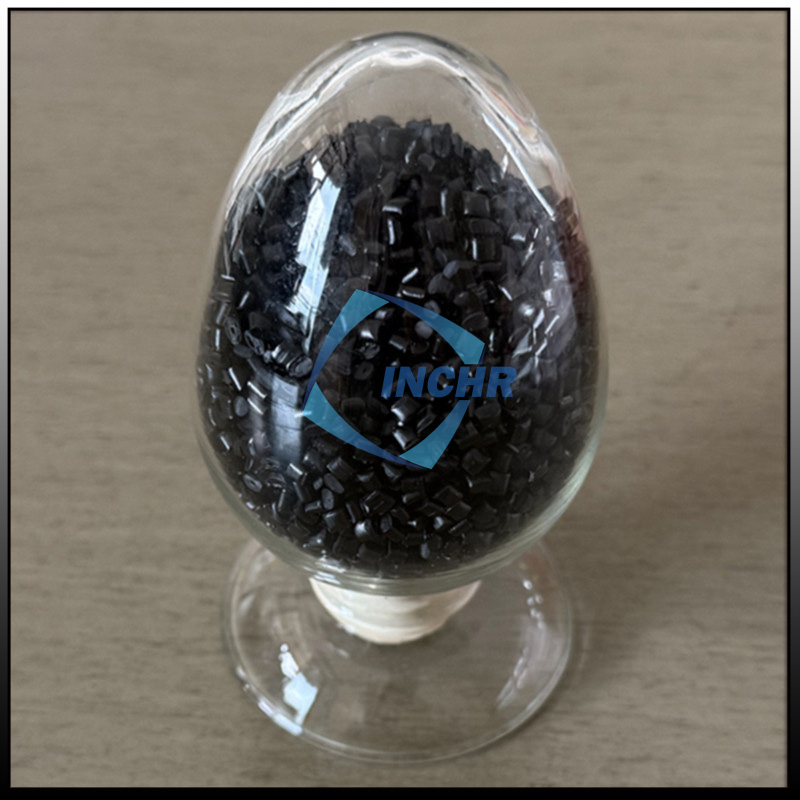
Static electricity is an invisible enemy in modern manufacturing. A single electrostatic discharge (ESD) can corrupt electronic components, ignite dust in chemical plants, or jam high-speed packaging lines, costing manufacturers millions in downtime and rejects. The most practical solution is to make the plastic itself conductive from the start, and that is exactly what a conductive masterbatch does. This article explains what conductive masterbatch is, how it works, where it is used, and why INCHR ESD masterbatches are trusted by manufacturers worldwide.
What Is Conductive Masterbatch?
A conductive masterbatch is a concentrated pellet blend in which a carrier resin is loaded with conductive fillers such as carbon black, carbon fiber, or graphene. When let down into a base polymer at a typical dosage of 10 to 30 percent, the fillers form a continuous conductive network inside the molded part, giving the finished product a stable, permanent path for static charges to dissipate.
Because conductivity is built into the material itself, it does not wash off, wear away, or degrade over time, unlike spray-on antistatic coatings that lose effectiveness after cleaning and handling. Masterbatch is also the simplest way to add conductivity to an existing production line: it is metered straight into the hopper together with the base resin, with no change to mold design, cycle time, or processing temperature.
How Does Conductive Masterbatch Work?
The key mechanism is the percolation network. Carbon-based fillers are dispersed throughout the polymer matrix; once the filler concentration reaches a critical threshold, the particles touch or come close enough to form continuous conductive pathways. At that point, surface resistivity typically drops from insulative levels above 10¹² ohm/sq to conductive or static-dissipative levels between 10³ and 10⁹ ohm/sq, depending on the formulation.
This is a different mechanism from permanent antistatic additives, which work by attracting moisture to the surface. Conductive masterbatches deliver conductivity regardless of ambient humidity, making them the preferred choice for clean-room environments, low-humidity climates, and applications that require consistently low resistivity.
Key Benefits of Conductive Masterbatch
- Permanent ESD protection that never fades, washes off, or needs reapplication
- A wide resistivity window, from 10³ ohm/sq for EMI shielding to 10⁹ ohm/sq for antistatic packaging
- Easy drop-in processing on existing injection molding, extrusion, and blow molding lines
- Consistent batch-to-batch quality when produced by an experienced compounder
- Custom color options through dedicated dyeing workshops
Common Applications of Conductive Masterbatch
Conductive masterbatch serves industries where static control is a matter of product quality or plant safety:
- Electronics: IC trays, carrier tapes, tote boxes, and workstations that protect sensitive components
- Packaging: antistatic bags, film, and protective foam for ESD-sensitive goods
- Automotive: fuel systems, fuel filler necks, and tank components where charge accumulation is a fire risk
- Industrial: hoses, rollers, conveyor components, and clean-room equipment
- Medical and chemical: equipment and containers for environments with flammable vapors or dust
Why Choose INCHR for Conductive Masterbatch?
INCHR was established in Dongguan, China, in 2012, and has grown into a professional ESD plastics manufacturer with a complete product family: permanent antistatic additives, conductive compounds, antistatic compounds, carbon fiber reinforced compounds, ESD masterbatches, and graphene-reinforced plastics. Whatever resistivity level your application requires, there is an INCHR formulation designed for it.
Our R&D team works in close partnership with East China University of Science and Technology, combining academic depth with real production experience. That capability is backed by hardware: advanced polymerization equipment, twin-screw granulation units for precise filler dispersion, a single-screw dyeing workshop for consistent color, and professional ESD testing equipment that verifies every batch before it ships.
Quality is not a claim but a system: INCHR has passed ISO9001:2008 quality system certification, so every production step, from raw material intake to final testing, follows documented and audited procedures.
How to Choose the Right Conductive Masterbatch
Start with the resistivity your product actually needs, because there is no point over-engineering a 10³ ohm/sq grade for an application that only requires static dissipation. Next, match the carrier resin to your base polymer so that the masterbatch disperses cleanly without sacrificing mechanical properties. Confirm the recommended let-down ratio and test it on your own line, because screw design and processing temperature both affect final conductivity. Finally, choose a supplier that tests and documents every lot, and ask for samples before committing to full production.
Conclusion
Static control is not an option in modern manufacturing, it is a specification. A well-formulated conductive masterbatch delivers permanent, humidity-independent protection with zero changes to your existing process. Since 2012, INCHR has helped manufacturers around the world achieve reliable ESD performance with materials that are consistent, testable, and certified.
Contact INCHR — request a sample or speak with our technical team about your application