1. Look Beyond Initial Material Performance
When manufacturers consider Carbon Fiber Reinforced Plastic (CFRP), the first questions often concern strength, stiffness, and weight reduction. These properties are important, but they do not tell the whole story.
A material must also meet the requirements of production, assembly, inspection, maintenance, and long-term use. A compound that performs well in a laboratory test may still create challenges if it is difficult to process, unsuitable for the component geometry, or inconsistent under actual operating conditions.
Carbon fiber reinforced plastic combines carbon fiber reinforcement with a polymer matrix. The fibers contribute mechanical reinforcement, while the polymer determines important characteristics such as chemical resistance, temperature behavior, and processing compatibility.
For manufacturers developing commercial products, the objective should be to select a material that performs reliably throughout the product’s intended lifecycle.
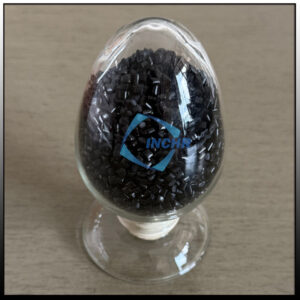
2. Choose the Material System Before Finalizing the Component Design
Carbon fiber reinforced plastic is not a single universal material. Its properties depend on the polymer matrix, fiber content, fiber length, and manufacturing method.
Two major material systems are thermoset and thermoplastic composites.
| Material system | Typical characteristics | Manufacturing considerations |
|---|---|---|
| Thermoset CFRP | Commonly uses epoxy or other curing resin systems | Layup, curing, tooling, and fiber orientation |
| Thermoplastic CFRP | Uses polymers such as PA, PC, PP, ABS, and PPS | Melt processing, injection molding, extrusion, and cooling |
| Continuous-fiber thermoplastic composites | Uses longer or continuous reinforcement | Specialized consolidation and forming processes |
| Short-fiber thermoplastic compounds | Uses dispersed short carbon fibers | Suitable for many injection-molded engineering components |
For manufacturers producing repeatable plastic components, thermoplastic carbon fiber compounds can offer processing flexibility.
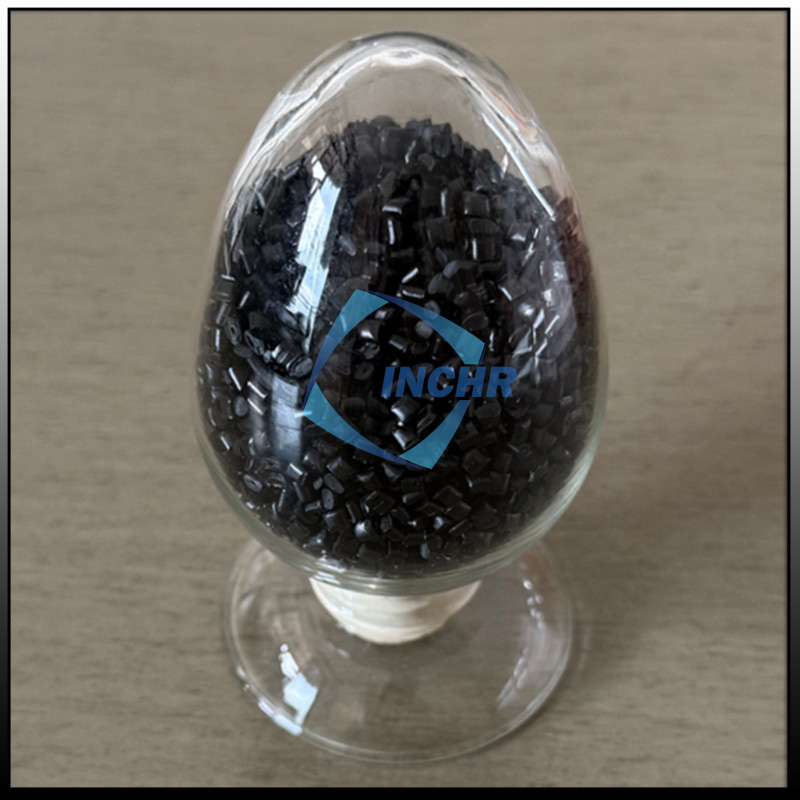
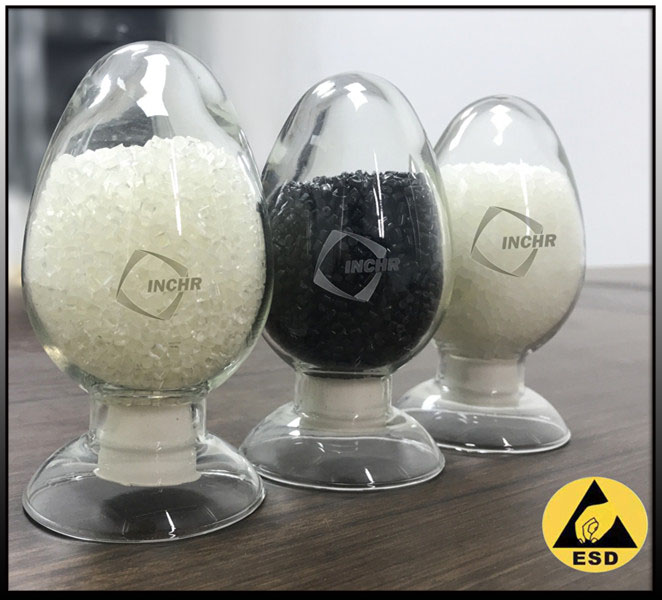
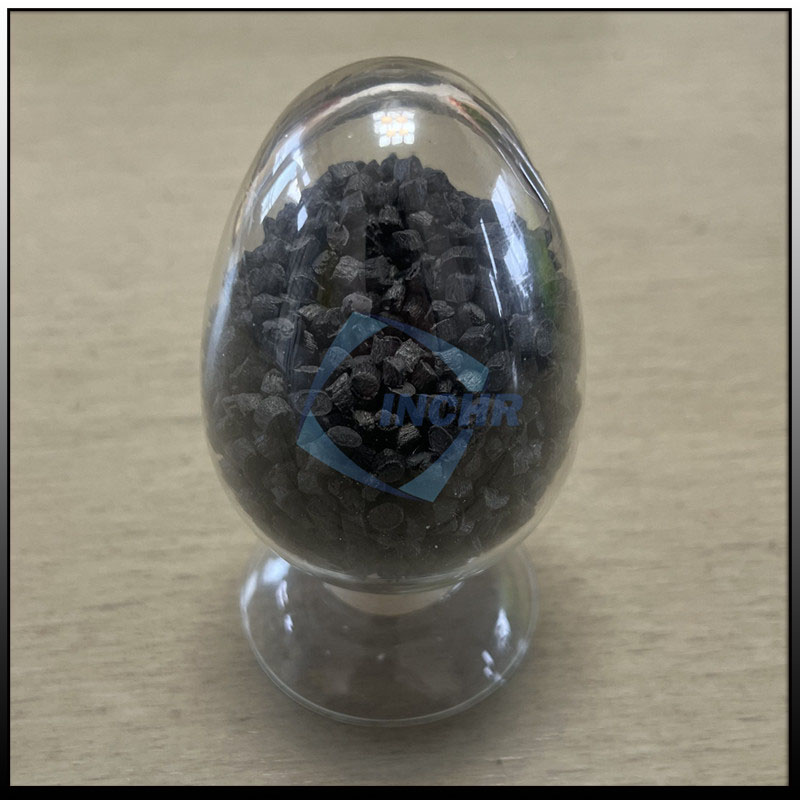
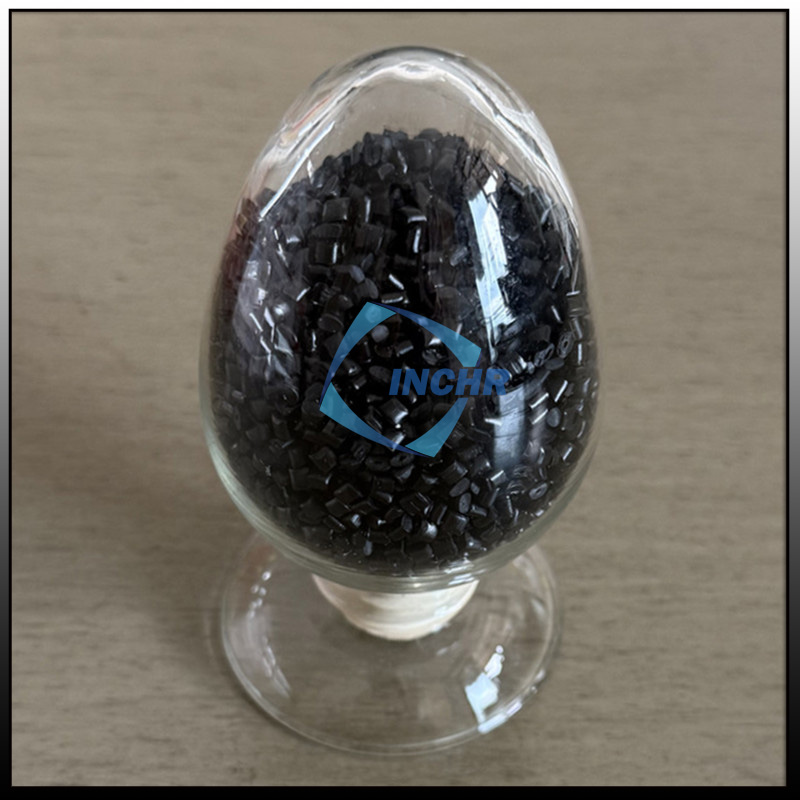
INCHR provides carbon fiber reinforced thermoplastic materials based on several polymer systems, including nylon, PC, PP, ABS, and PPS.
Explore the INCHR carbon fiber reinforced plastic product range to review available material categories.
3. Match the Polymer to the Product’s Service Environment
The carbon fiber reinforcement is only one part of the material-selection decision. The polymer matrix must also withstand the conditions encountered during actual use.
| Polymer matrix | General material characteristics | Potential component applications |
|---|---|---|
| PA (Nylon) | Mechanical strength, wear resistance, and engineering versatility | Connectors, reels, mechanical components |
| PC | Impact performance and dimensional stability | Equipment housings and structural components |
| PP | Low density and chemical resistance | Automotive and electrical components |
| ABS | Processing versatility and balanced mechanical properties | Industrial housings and molded parts |
| PPS | Heat and chemical resistance | Selected demanding industrial components |
| PEEK | High-temperature capability and chemical resistance | Specialized precision and industrial components |
These are general selection considerations. Actual properties depend on the specific resin grade, reinforcement content, additives, and processing conditions.
For example, a PA-based compound may be suitable for a mechanical component exposed to repeated contact, while a PPS-based formulation may be considered where higher thermal and chemical demands are involved.
See INCHR’s carbon fiber reinforced nylon product information for a specific example of reinforced PA66 material.
4. Evaluate Production Efficiency and Quality Stability
A successful material choice must also work within the manufacturer’s production system.
For thermoplastic carbon fiber compounds, processing conditions influence fiber distribution, orientation, surface appearance, and dimensional consistency.
Before approving a material for mass production, evaluate:
- Material handling: Follow the supplier’s storage and drying recommendations, particularly for moisture-sensitive polymers such as nylon.
- Molding conditions: Establish suitable melt temperature, mold temperature, injection speed, and cooling conditions.
- Fiber orientation: Consider how melt flow and gate location influence directional properties.
- Tooling wear: Carbon fiber reinforcement can increase abrasion on processing equipment and molds.
- Quality inspection: Check dimensions, surface defects, mechanical properties, and electrical behavior where required.
A production trial should use representative tooling and component geometry. Testing only simple laboratory specimens may not reveal issues associated with complex molded parts.
5. Consider Repair, Reuse, and End-of-Life Requirements
Lifecycle planning is becoming an important part of engineering material selection.
However, carbon fiber reinforced plastics should not automatically be described as environmentally friendly or easily recyclable. Their environmental impact depends on the polymer matrix, reinforcement, manufacturing energy, service life, and available recovery infrastructure.
Thermoplastic and thermoset composites also have different end-of-life considerations.
For a new product, manufacturers should examine the following questions:
- Can the component be separated from other materials during disassembly?
- Is the polymer matrix identifiable and compatible with available recovery processes?
- Can production scrap be collected and evaluated for potential reuse?
- Will the component’s service life justify the material and manufacturing investment?
- Are replacement parts or repair procedures available?
For thermoplastic compounds, some production scrap may be suitable for controlled reprocessing, but repeated thermal processing can affect material properties. Reuse should therefore be evaluated through testing rather than assumed.
For a structured environmental assessment, consult ISO 14040: Life Cycle Assessment — Principles and Framework. A lifecycle assessment considers more than raw-material weight or one isolated performance advantage.
6. Include Electrical Requirements in Material Qualification
In electronics manufacturing and industrial automation, some carbon fiber reinforced plastic components must provide specific electrical characteristics in addition to mechanical performance.
Carbon fibers can create conductive pathways in certain polymer formulations. However, carbon fiber reinforcement alone does not guarantee a particular resistance range or ESD suitability.
If the component is intended for static-control applications, define the electrical requirements before selecting a grade.
| Electrical requirement | What manufacturers should verify |
|---|---|
| Surface resistance | Measurements on representative component surfaces |
| Volume resistivity | Electrical behavior through the material |
| Electrical consistency | Variation between samples and production batches |
| Grounding interface | Contact and connection to the intended grounding system |
| Environmental stability | Performance after relevant temperature, humidity, and wear exposure |
For more information, explore INCHR’s conductive plastic compounds and ESD plastic materials.
7. A Practical Checklist Before Approving a CFRP Grade
A structured material qualification process helps engineering, purchasing, and quality teams make decisions using the same requirements.
Before mass production, confirm:
- Base polymer and carbon fiber content.
- Required tensile, flexural, and impact performance.
- Operating temperature and chemical exposure.
- Component dimensions and manufacturing process.
- Electrical specifications, if applicable.
- Supplier processing recommendations.
- Batch traceability and quality documentation.
- Testing requirements for finished components.
INCHR was established in Dongguan, China, in 2012, and specializes in ESD plastics and modified polymer compounds. Its portfolio includes carbon fiber reinforced materials, conductive compounds, antistatic compounds, and ESD masterbatches.
For material selection discussions, provide your component drawing, resin requirements, processing method, and target performance specifications.
Visit the INCHR product center to explore available materials.
Conclusion
Carbon Fiber Reinforced Plastic offers manufacturers a way to modify polymer performance for demanding engineering applications. However, successful adoption depends on more than achieving higher stiffness or lower component weight.
Polymer selection, processing stability, quality verification, electrical requirements, and lifecycle planning should all be considered during product development.
By evaluating these factors together, manufacturers can select a carbon fiber reinforced compound that is better aligned with actual production conditions and long-term product requirements.
Looking for a carbon fiber reinforced plastic compound for your next project? Contact INCHR to discuss your polymer, reinforcement, processing, and performance requirements.
Frequently Asked Questions
1. What is Carbon Fiber Reinforced Plastic?
Carbon fiber reinforced plastic is a composite material made by combining carbon fibers with a polymer matrix. It is used to improve selected mechanical properties, particularly stiffness and strength relative to weight.
2. What is the difference between thermoplastic and thermoset CFRP?
Thermoplastic CFRP uses a polymer matrix that can be softened through heating and processed using suitable thermoplastic manufacturing methods. Thermoset CFRP uses a resin system that cures into a permanent structure. Their processing and end-of-life considerations are different.
3. Which polymers can be reinforced with carbon fiber?
Common options include PA, PC, PP, ABS, PPS, and PEEK. The appropriate polymer depends on temperature, mechanical loading, chemical exposure, processing method, and component requirements.
4. Does a higher carbon fiber content always mean better performance?
No. Higher fiber content may increase stiffness but can also affect toughness, melt flow, surface finish, and processing stability. The optimal formulation depends on the finished component.
5. Can carbon fiber reinforced plastic provide ESD performance?
Some formulations can provide conductive or static-control properties. Actual electrical performance depends on the complete formulation and should be verified through appropriate testing.
6. Can thermoplastic carbon fiber compounds be recycled?
Some thermoplastic compounds and production scrap may be suitable for controlled reprocessing. However, recycling feasibility and retained performance depend on the material formulation, processing history, and available recovery technology.
7. How do I choose the right carbon fiber reinforced plastic grade?
Start with the base polymer, mechanical requirements, operating environment, processing method, component design, and any electrical specifications. Compare supplier technical data and validate representative finished parts before mass production.