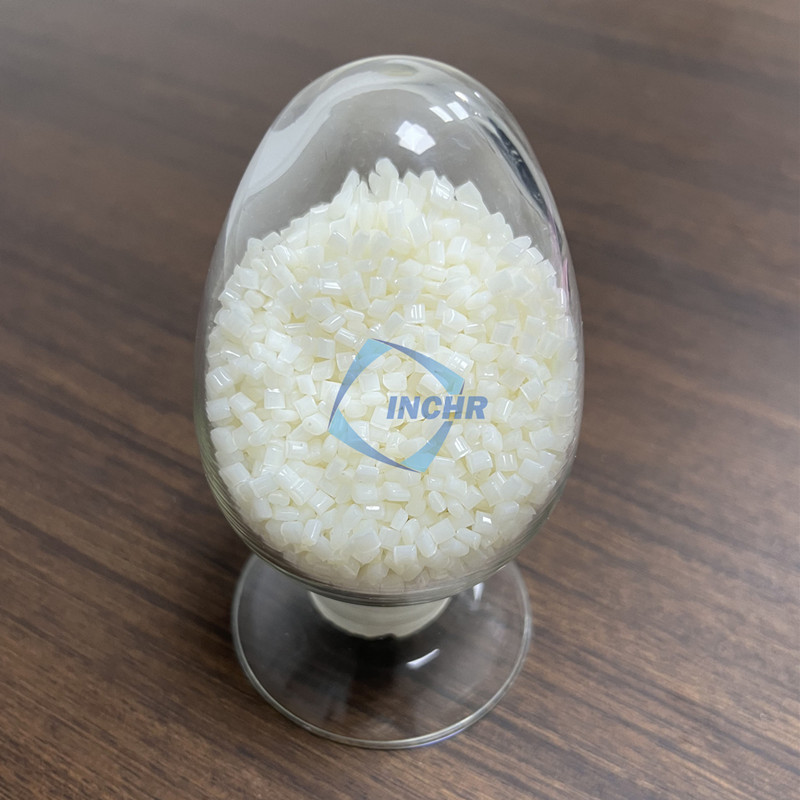
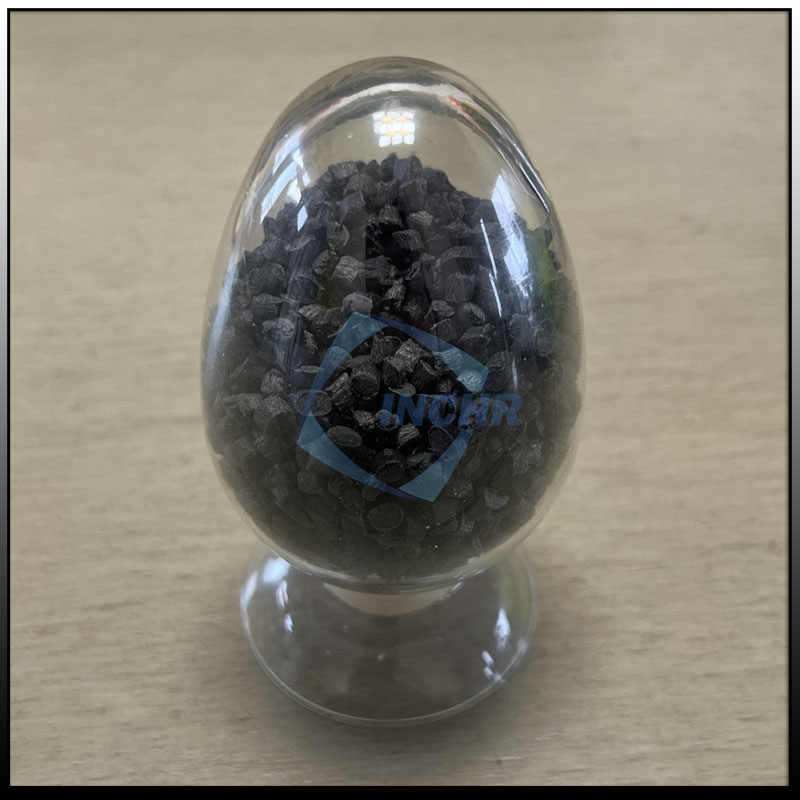
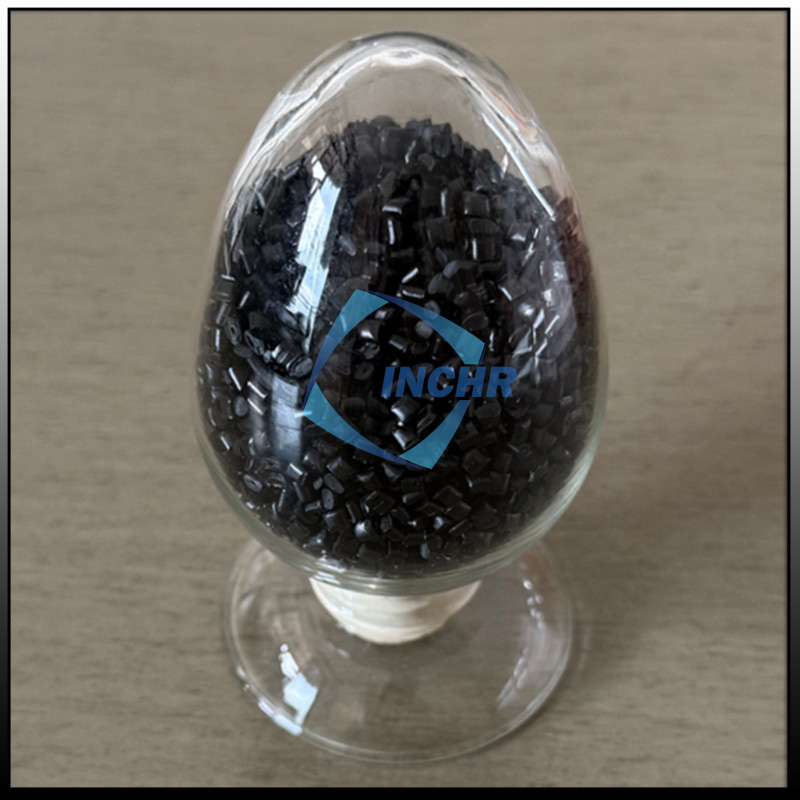
Polycarbonate (PC) is widely used in engineering applications because of its impact resistance, toughness, and processing versatility. However, some components require greater rigidity, reduced deformation, or specific electrical characteristics than standard PC can provide.
Carbon fiber reinforced PC combines a polycarbonate matrix with carbon fiber reinforcement to modify these properties. It can be a useful option for functional housings, industrial fixtures, electronic equipment components, and other applications where lightweight construction and increased stiffness are important.
But reinforcement also changes the material’s appearance, flow behavior, and electrical characteristics. Selecting the right grade means understanding these trade-offs before product design and mass production begin.
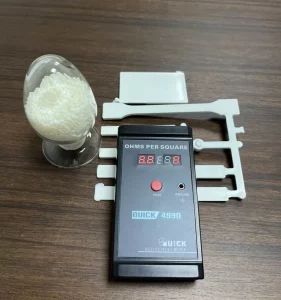
1. Understand What Changes When Carbon Fiber Is Added
Standard PC is available in transparent and opaque grades. Once carbon fibers are incorporated, the material generally becomes dark and opaque, so it is no longer suitable for applications that depend on optical clarity.
In return, carbon fiber reinforcement can increase stiffness and modify the material’s electrical and dimensional behavior.
| Performance factor | Standard PC | Carbon fiber reinforced PC |
|---|---|---|
| Appearance | Transparent or colored options | Commonly dark and opaque |
| Rigidity | Suitable for general engineering uses | Can provide increased stiffness |
| Impact behavior | Known for good impact resistance | Depends on fiber content and formulation |
| Electrical behavior | Generally insulating | May provide conductive properties |
| Dimensional behavior | Depends on grade and part geometry | Fiber orientation can influence shrinkage |
| Processing | Established injection molding and extrusion | Requires attention to fiber-related flow and processing |
These are general comparisons, not guaranteed values for every grade. Actual performance should be confirmed using supplier data and finished-part testing.
2. Decide Whether the Application Needs Optical Clarity or Structural Performance
One of the earliest design decisions is whether the component needs to transmit light or primarily provide mechanical protection.
If a product requires a transparent inspection window, display cover, or optical component, standard transparent PC may be more appropriate.
If the component is a structural enclosure, fixture, bracket, or equipment housing, carbon fiber reinforced PC may be worth evaluating when additional rigidity is required.
| Application requirement | Material direction to consider |
|---|---|
| Transparent protective cover | Transparent standard PC |
| Rigid electronic equipment housing | Carbon fiber reinforced PC |
| Lightweight industrial fixture | Carbon fiber reinforced PC |
| Optical inspection component | Optical-grade PC |
| Component requiring verified static control | A grade with confirmed electrical test data |
This distinction prevents a common material-selection mistake: choosing reinforcement based on mechanical advantages without considering the product’s appearance and functional requirements.
3. Evaluate Electrical Performance Before Designing ESD Components
Carbon fibers can form conductive pathways within a polymer matrix. As a result, selected carbon fiber reinforced PC formulations may be suitable for components requiring conductive or static-control properties.
However, electrical performance is not determined by the material name alone. It depends on factors such as:
- Carbon fiber concentration and distribution.
- Polymer formulation and compatibility.
- Processing conditions and fiber orientation.
- Component geometry and wall thickness.
- The electrical test method and specimen preparation.
INCHR lists carbon fiber reinforced PC grades including 1100CF20, 1100CF30, and 1200CF30. Its product information specifies volume resistivity below (1 \times 10^5) ohm·cm and surface resistance below (1 \times 10^6) ohm/sq for the listed product data.
These figures should not be assumed to apply to every grade or finished component. Manufacturers should request the relevant technical data and verify electrical performance on representative parts.
Learn more about ESD plastics and electrostatic-control material selection.
4. Match the Grade to the Manufacturing Process
Carbon fiber reinforced PC can be developed for different processing methods, but injection molding and extrusion do not necessarily require the same melt-flow characteristics.
For example, INCHR identifies 1100CF20 as an injection-oriented formulation, while 1200CF30 is described as more suitable for extrusion. The appropriate grade depends on the required processing behavior and product design.
Before selecting a compound, review these factors:
| Manufacturing factor | What to confirm |
|---|---|
| Processing method | Injection molding or extrusion |
| Melt flow | Suitability for the product’s geometry |
| Drying | Recommended moisture-control conditions |
| Tooling | Wear considerations associated with carbon fiber |
| Fiber orientation | Potential effects on directional properties |
| Cooling | Dimensional consistency and deformation |
Carbon fiber can increase wear on processing equipment and molds. Tooling materials, maintenance intervals, and processing parameters should therefore be evaluated with the material supplier.
5. Design the Component Around Real Operating Conditions
A material’s datasheet does not fully predict how a finished component will perform. Engineers should consider the actual loads, temperature, assembly method, and service environment.
For example, a rigid electronic housing may need to withstand fastening forces without cracking. A production fixture may require dimensional stability during repeated use. An industrial component may also need resistance to vibration or temperature changes.
A practical evaluation plan should include:
- Mechanical testing, such as tensile, flexural, and impact tests.
- Dimensional inspection after molding.
- Assembly and fastening evaluation.
- Electrical resistance testing when required.
- Performance checks under expected operating conditions.
For standardized tensile testing of plastics, manufacturers can consult ASTM D638 and select the appropriate specimen and test conditions.
6. When Is Carbon Fiber Reinforced PC the Right Choice?
Carbon fiber reinforced PC is worth considering when a component needs a combination of polycarbonate-based engineering performance and increased rigidity.
It may be suitable for:
- Electronic equipment housings and functional enclosures.
- Industrial brackets, fixtures, and supporting components.
- Precision molded parts requiring controlled deformation.
- Selected automotive and electrical components.
- Components requiring verified conductive or static-control properties.
It may be less suitable when transparency, very high impact toughness, or the lowest possible material cost is the primary requirement.
The best material decision comes from comparing the complete component requirements rather than choosing a reinforced grade simply because it offers higher stiffness.
Working with INCHR on Carbon Fiber Reinforced PC
Established in Dongguan, China, in 2012, INCHR specializes in ESD plastics and modified polymer materials. Its product portfolio includes carbon fiber reinforced compounds, conductive compounds, antistatic compounds, permanent antistatic additives, and ESD masterbatches.
INCHR offers carbon fiber reinforced PC formulations with different fiber contents and processing characteristics. Its R&D team receives support from East China University of Science and Technology, while its production facilities include twin-screw granulation equipment and professional ESD testing equipment.
When requesting a material recommendation, provide the base resin requirements, processing method, component drawings, target mechanical properties, and electrical specifications if applicable.
Frequently Asked Questions
1. What is carbon fiber reinforced PC?
It is a composite material made by combining polycarbonate resin with carbon fiber reinforcement. The material is commonly selected when greater stiffness or specific electrical properties are required.
2. Is carbon fiber reinforced PC transparent?
Generally, no. Carbon fiber reinforcement typically makes the material dark and opaque. Transparent standard PC is more appropriate when optical clarity is essential.
3. Does carbon fiber reinforced PC have better impact resistance than standard PC?
Not necessarily. Carbon fiber can increase stiffness, but impact performance depends on fiber content, formulation, and processing. Compare grade-specific impact data before selecting a material.
4. Can carbon fiber reinforced PC be injection molded?
Yes. Suitable grades are designed for injection molding. Material drying, melt conditions, mold design, and fiber orientation should follow supplier recommendations.
5. Is carbon fiber reinforced PC electrically conductive?
Some formulations provide conductive or static-dissipative behavior. Actual electrical performance must be confirmed through surface resistance or volume resistivity testing.
6. What carbon fiber contents are available?
Available contents depend on the supplier and formulation. INCHR lists PC grades with 20% and 30% carbon fiber content, including different options for injection molding and extrusion.
7. How do I choose the right carbon fiber reinforced PC grade?
Start with the component’s mechanical requirements, appearance, manufacturing process, operating environment, and electrical specifications. Then compare grade-specific technical data and validate representative samples.
Final Takeaway
Carbon fiber reinforced PC is not simply a stronger version of standard polycarbonate. It is a modified material that changes the balance between rigidity, appearance, impact behavior, processing, and electrical performance. Understanding these differences helps manufacturers select a grade that fits the real function of the finished component.