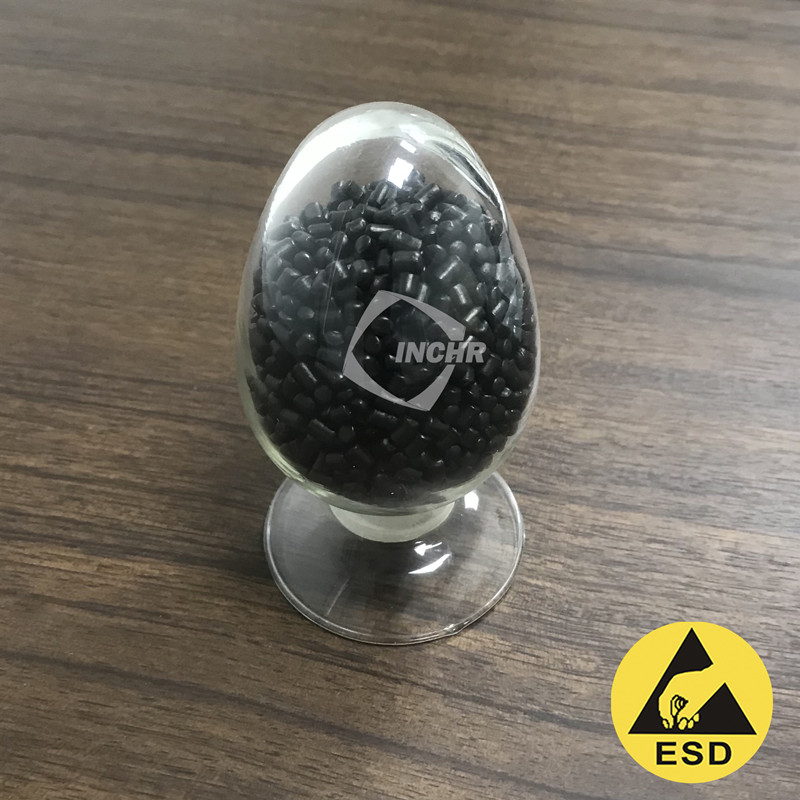
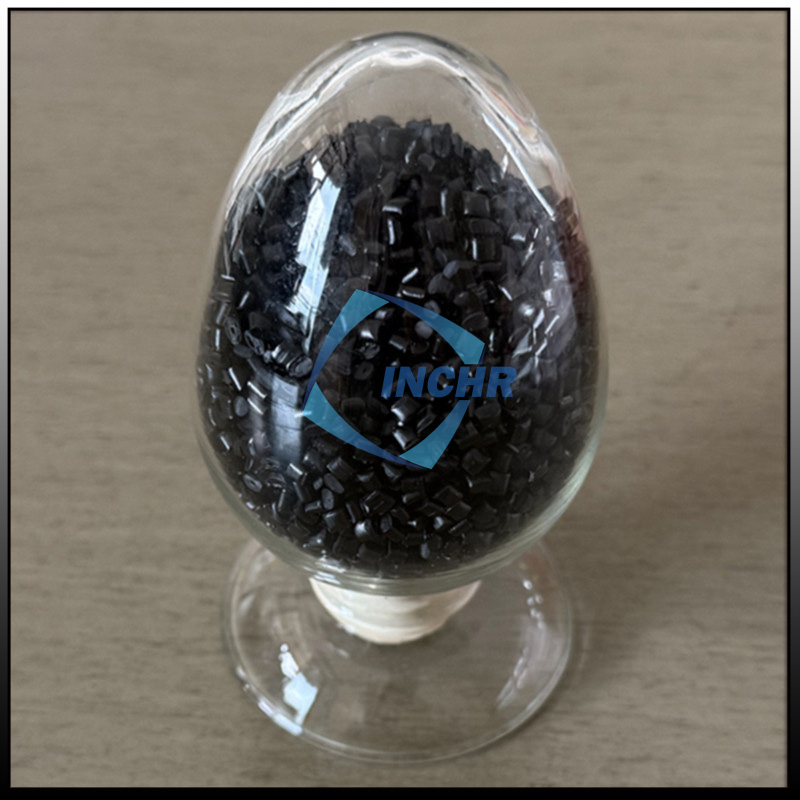
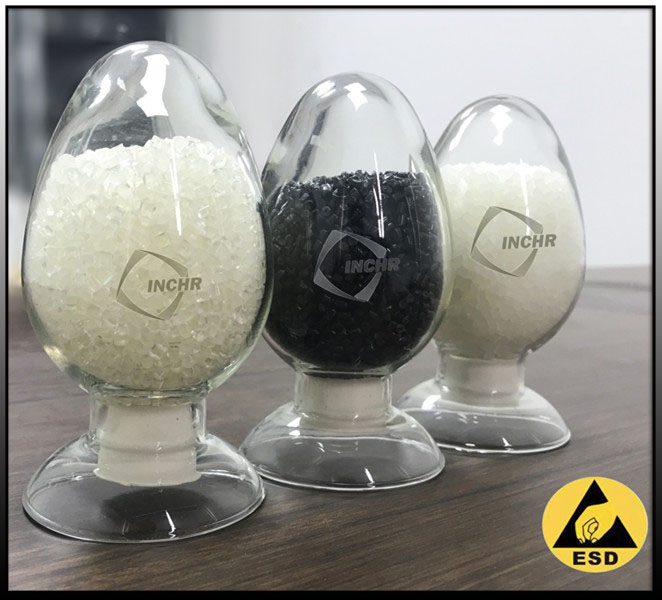
In today’s increasingly demanding fields such as electronics, footwear, and packaging, where antistatic and conductive properties are paramount, traditional conductive modification methods often struggle to balance the lightweight properties of foamed materials with stable conductivity. The advent of CNT-Filled EVA Conductive Masterbatch offers a new path for the conductive modification of EVA foamed materials. This superconducting composite material based on EVA (ethylene-vinyl acetate copolymer), with its core component CNT (carbon nanotubes) exhibiting excellent dispersibility, has become an ideal choice for conductive modification in the foaming field.
EVA CNT-Filled Conductive Masterbatch: A Highly Efficient Conductive System Compatible with Foaming
This product uses high-performance EVA resin as a carrier, precisely loading high-purity carbon nanotubes (CNTs) as the conductive functional phase. Through specialized interface modification and dispersion processes, CNTs can achieve uniform and stable molecular-level dispersion within an EVA resin matrix, forming a continuous and dense conductive network. This fundamentally solves the industry pain points of traditional conductive fillers, such as easy agglomeration and poor dispersibility.
The formula, specifically tailored for the foaming process, ensures that the internal CNT conductive network of this masterbatch maintains its integrity even after undergoing high-temperature, high-pressure foaming. It does not break down with the formation of cells, ensuring that the foamed products possess both lightweight foaming characteristics and reliable conductivity. Crucially, this masterbatch has minimal impact on the core performance of the finished foamed product. Whether it’s the abrasion resistance and resilience of shoe outsoles and midsoles, or the mechanical strength and appearance of other foamed products, it maintains the original level of the base material, perfectly meeting the modification requirements of high-end foamed products.

EVA CNT-Filled Conductive Masterbatch Foaming Process
The foaming production of EVA CNT-Filled conductive masterbatch must follow a standardized operating procedure of dry mixing, internal mixing, and injection molding foaming. Each step requires strict control of process parameters to ensure both conductivity and foaming quality meet standards:
- Dry Mixing: Initial Dispersion, Laying the Foundation
According to a preset ratio, EVA CNT-Filled conductive masterbatch and pure EVA resin particles are put into a high-speed mixer for dry mixing. Through the shear and centrifugal forces of mechanical stirring, the masterbatch particles and EVA substrate particles are fully contacted and evenly distributed, achieving initial dispersion of CNTs. This process does not require heating, effectively preventing premature melting and agglomeration of the masterbatch, creating favorable conditions for deep blending in the subsequent internal mixing stage.
- Internal Mixing: Deep Blending, Building the Network
The dry-mixed material is transferred to an internal mixer. Under precisely controlled temperature (typically 100-120℃) and shear force, the EVA resin and conductive masterbatch are completely melted and blended. At this stage, CNTs further depolymerize and disperse in the melt, ultimately forming a continuous conductive network structure within the EVA matrix. This step is crucial in determining the consistency of the final product’s conductivity and directly impacts the conductive stability of the foamed product.
- Injection Molding Foaming: Molding Foaming, Maintaining Performance.
The homogeneous melt after internal mixing is conveyed into the injection molding machine and thoroughly mixed with the foaming agent before being injected into a pre-set mold. Under the high temperature and pressure environment within the mold, the melt undergoes a foaming reaction, forming a product with a uniform cell structure. Throughout the foaming process, the previously constructed CNT conductive network remains intact, ultimately forming stable conductive pathways within the foamed EVA matrix, giving the product both lightweight foaming characteristics and excellent conductivity.

EVA CNT-Filled Conductive Masterbatch Addition Ratio
The amount of EVA CNT-Filled conductive masterbatch added is precisely positively correlated with the conductivity of the final foamed product. The addition ratio can be flexibly adjusted according to the performance requirements of the actual application scenario:
- Antistatic Grade: When the addition amount is 8%, the surface resistivity of the foamed product can reach 10⁹-10¹¹Ω, meeting the antistatic requirements of scenarios such as electronic packaging and general shoe materials, effectively avoiding problems such as dust adsorption and electrostatic discharge caused by static electricity accumulation.
- Conductivity Grade: When the addition amount is increased to 16%, the surface resistivity of the foamed product can be reduced to 10³-10⁵Ω, possessing excellent conductivity. It is suitable for scenarios such as work shoes and electronic device cushioning materials with extremely high requirements for static elimination, quickly dissipating static electricity, and ensuring safe use.
Core Advantages of EVA CNT-Filled Conductive Masterbatch
- Excellent Dispersion: Utilizing a proprietary dispersion process, CNTs do not agglomerate in the EVA substrate, exhibiting high dispersion uniformity. This ensures stable and consistent conductivity for each batch of products, significantly reducing the risk of performance fluctuations during the production process.
- Strong Foaming Compatibility: The formula is specifically designed for foaming processes, perfectly adapting to all process parameters of EVA foaming. The conductive network structure remains intact during foaming, maintaining excellent and stable conductivity after foaming.
- Minimal Impact on Substrate Performance: While achieving conductive modification, it almost completely preserves the core properties of EVA foam, such as cell structure, mechanical strength, and resilience, ensuring a superior user experience and durability.
- High Controllability of Addition Amount: By precisely adjusting the addition ratio, flexible switching between antistatic and conductive levels can be achieved, meeting diverse needs in different application scenarios and providing customers with cost-effective customized solutions.
- Wide Range of Applications: Not only suitable for foaming modification of shoe outsoles and midsoles, but also applicable to electronic packaging materials, antistatic flooring, cushioning foam materials, and many other fields, demonstrating strong application scalability.