1. Why Electrical Performance Matters in Carbon Fiber Reinforced ABS
Electronic equipment manufacturers increasingly require plastic components that combine mechanical reinforcement with controlled electrical properties. Equipment housings, internal supports, protective covers, and electronic fixtures may need to manage static charge while maintaining structural performance.
Carbon Fiber Reinforced ABS is a thermoplastic composite made by incorporating carbon fibers into an acrylonitrile butadiene styrene (ABS) resin matrix. Carbon fiber reinforcement can improve stiffness and modify the electrical behavior of the polymer.
However, two electrical requirements are often confused:
- ESD control: Managing electrostatic charge to reduce the risk of damaging sensitive electronic components.
- EMI shielding: Reducing electromagnetic interference passing through or affecting an enclosure or component.
A carbon fiber reinforced ABS formulation may be suitable for certain conductive or static-control applications, but its electrical conductivity alone does not prove that it provides adequate EMI shielding.
Understanding this distinction is essential when selecting materials for electronic products.
2. How Carbon Fiber Changes the Electrical Behavior of ABS
Standard ABS is generally an electrical insulating material. When carbon fibers are incorporated into its polymer matrix, they can create conductive pathways through the compound.
The resulting electrical behavior depends on several factors:
- Carbon fiber concentration and distribution.
- Fiber characteristics and formulation.
- Dispersion within the ABS matrix.
- Processing conditions and fiber orientation.
- Finished component geometry and wall thickness.
INCHR lists carbon fiber reinforced ABS grades 757CF15, 757CF20, and 757CF30. Its published product information identifies ABS as the base polymer and provides the following specimen-level specifications:
| Property | Published product information |
|---|---|
| Base polymer | ABS |
| Listed grades | 757CF15 / 757CF20 / 757CF30 |
| Volume resistivity | < 1 × 10⁵ Ω·cm |
| Surface resistance | < 1 × 10⁶ Ω/sq |
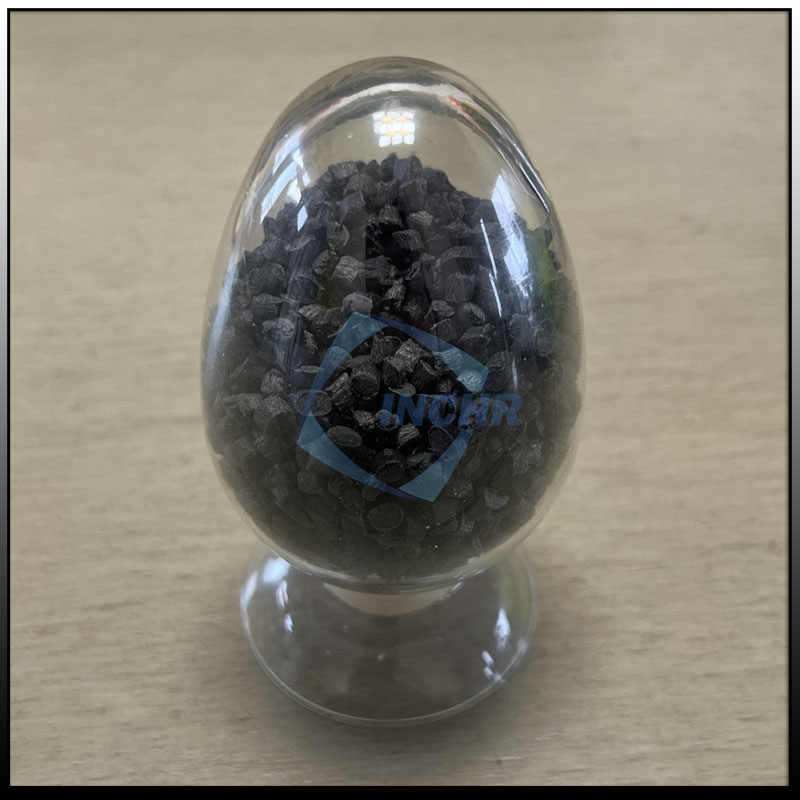
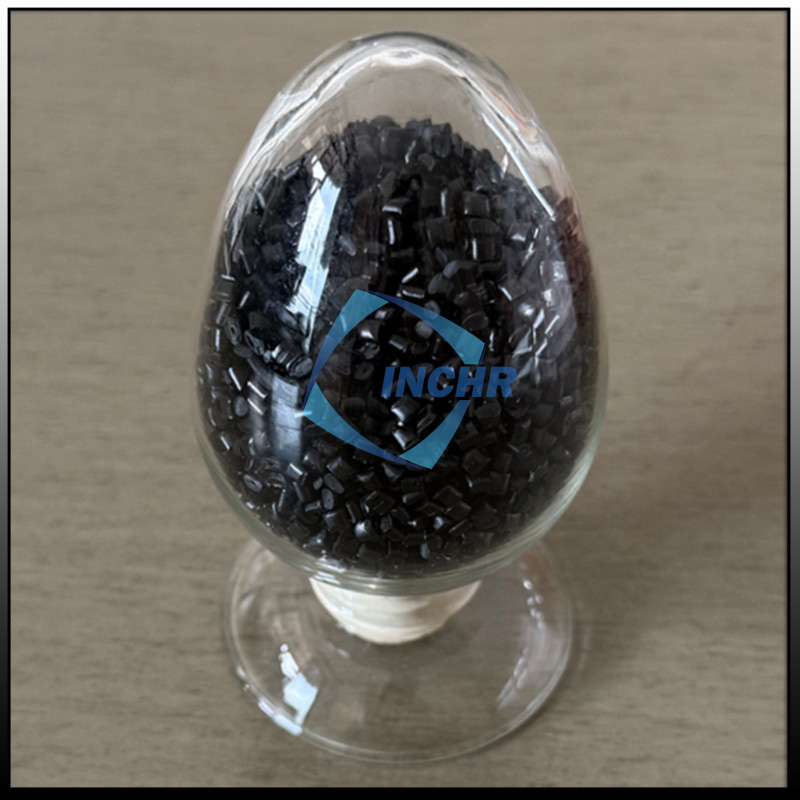
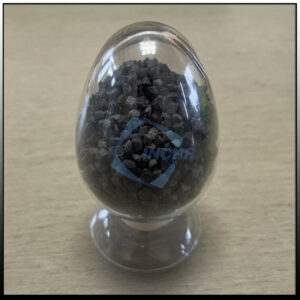
| Appearance | Black granules |
| Processing | Injection molding / extrusion |
| Applications | Molded parts and 3D printing filaments |
These values refer to the specified INCHR product information. They should not be assumed to apply to every carbon fiber reinforced ABS grade or every finished component.
For grade details, visit the INCHR carbon fiber reinforced ABS product page.
3. ESD Protection and EMI Shielding Are Different Requirements
Although ESD control and EMI shielding can both involve electrically conductive materials, they address different engineering problems.
| Design consideration | ESD control | EMI shielding |
|---|---|---|
| Main objective | Manage electrostatic charge | Reduce electromagnetic interference |
| Typical concern | Electrostatic discharge damaging sensitive components | Electromagnetic energy entering or leaving equipment |
| Key material evaluation | Surface resistance and volume resistivity | Shielding effectiveness |
| Structural considerations | Charge dissipation and grounding | Enclosure continuity, seams, openings, and electrical contacts |
| Validation | Appropriate ESD and electrical tests | Shielding effectiveness testing across relevant frequencies |
For ESD-sensitive manufacturing environments, the IEC 61340-5-1:2024 standard provides requirements for establishing and maintaining an ESD control program.
For EMI applications, ASTM D4935-18(2026) describes a test method for measuring the electromagnetic shielding effectiveness of planar materials under specified conditions.
These standards address different performance objectives. Passing a resistivity test does not establish that an ABS enclosure meets a required shielding effectiveness.
4. Designing an Electronic Enclosure Around Electrical Performance
When carbon fiber reinforced ABS is considered for an electronic enclosure, material selection should be integrated into the enclosure design.
Grounding interfaces: Identify how conductive sections connect to the intended grounding system. Mechanical fasteners, inserts, and contact surfaces may influence electrical continuity.
Seams and joints: Enclosure openings, panel joints, and gaps can affect electromagnetic leakage. Material conductivity alone cannot compensate for poor enclosure continuity.
Wall thickness: The geometry and thickness of a molded component can influence material behavior and electrical performance. Representative finished parts should be tested.
Connectors and openings: Cable entries, ventilation slots, display windows, and switches may require additional shielding design measures.
Surface finishes: Paints, coatings, labels, and other treatments can change the electrical behavior of contact surfaces.
5. Where Carbon Fiber Reinforced ABS Can Be Considered
Carbon fiber reinforced ABS may be considered for electronic and industrial components that require a combination of mechanical reinforcement and controlled electrical properties.
| Application | Potential component | Main design requirement |
|---|---|---|
| Electronics manufacturing | Equipment housings | Static control and mechanical protection |
| Industrial automation | Control equipment covers | Structural rigidity and electrical requirements |
| Inspection equipment | Internal supports and fixtures | Dimensional stability and charge management |
| Electronic assembly | Protective trays and molded fixtures | Appropriate electrical performance |
| Instrumentation | Selected enclosure components | Mechanical properties and electrical validation |
The correct material depends on whether the component needs antistatic behavior, conductive performance, mechanical reinforcement, or verified electromagnetic shielding.
For applications requiring a different conductive ABS formulation, INCHR also offers conductive ABS compounds. The appropriate product should be selected according to the required electrical range and processing method.
6. How to Validate the Material Before Production
A reliable material qualification process should evaluate both the compound and the finished component.
Recommended checks include:
- Confirm the ABS grade, carbon fiber content, and supplier technical data.
- Measure surface resistance and volume resistivity using appropriate methods.
- Test representative molded parts rather than relying exclusively on raw-material specimens.
- Evaluate electrical contacts and grounding interfaces in the assembled component.
- If EMI shielding is required, measure shielding effectiveness across the relevant frequency range.
- Repeat testing after representative environmental exposure or product conditioning.
This approach helps manufacturers avoid selecting a material based on one electrical specification when the finished product has several different requirements.
7. Working with an Experienced ABS Compound Supplier
Choosing carbon fiber reinforced ABS involves balancing mechanical properties, electrical behavior, processing requirements, and component design.
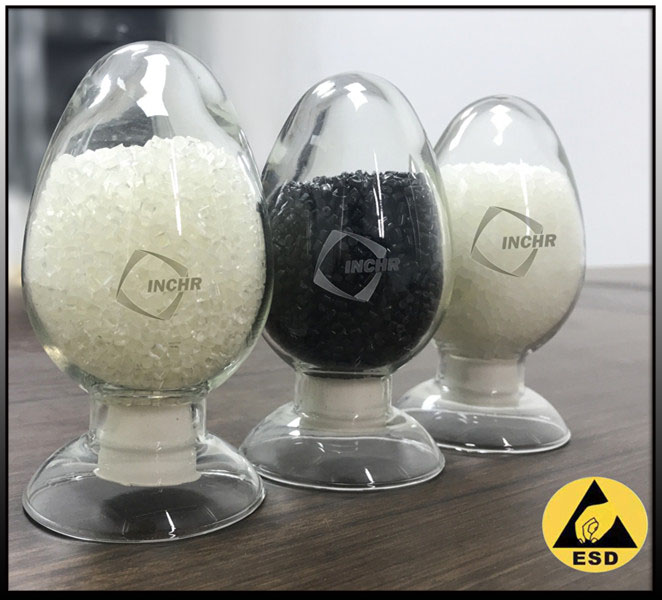
INCHR was established in Dongguan, China, in 2012, and specializes in ESD plastics and modified polymer compounds. Its portfolio includes carbon fiber reinforced materials, conductive compounds, antistatic compounds, and ESD masterbatches.
When requesting a material recommendation, provide the component drawing, processing method, target electrical properties, mechanical requirements, and whether ESD control or EMI shielding is required.
Explore the INCHR product center to review available material solutions.
Conclusion
Carbon Fiber Reinforced ABS can be a useful material for electronic and industrial components requiring mechanical reinforcement and controlled electrical behavior.
However, ESD protection and EMI shielding should be treated as separate engineering requirements. Surface resistance and volume resistivity help characterize electrical behavior, while electromagnetic shielding must be verified through appropriate testing and enclosure-level design.
By defining the intended electrical function before material selection, manufacturers can make better decisions and develop more reliable electronic components.
Looking for carbon fiber reinforced ABS for your electronic or industrial application? Contact INCHR to discuss your material and performance requirements.
Frequently Asked Questions
1. What is Carbon Fiber Reinforced ABS?
It is a thermoplastic composite made by adding carbon fibers to an ABS resin matrix. The reinforcement can improve stiffness and modify the electrical properties of the material.
2. Is carbon fiber reinforced ABS electrically conductive?
Selected formulations can provide conductive or static-control properties. Actual performance depends on the grade, fiber distribution, and processing conditions.
3. Is ESD protection the same as EMI shielding?
No. ESD protection focuses on controlling electrostatic charge and discharge, while EMI shielding reduces electromagnetic interference. They require different design considerations and validation methods.
4. Can carbon fiber reinforced ABS be used for electronic housings?
Yes. It may be considered for selected housings and internal components where mechanical reinforcement and electrical performance are required. The final design must be validated for its intended function.
5. Does conductive ABS automatically provide EMI shielding?
No. Electrical conductivity alone does not guarantee a particular shielding effectiveness. The complete enclosure, including seams, openings, grounding, and material thickness, must be evaluated.
6. Can carbon fiber reinforced ABS be injection molded?
Yes. Suitable grades can be processed through injection molding. Material preparation, equipment settings, mold design, and processing recommendations should follow the supplier’s technical data.
7. What information is needed to select the right grade?
Provide the component design, mechanical requirements, target surface resistance or volume resistivity, processing method, operating environment, and whether the application requires ESD control or EMI shielding.