Why Modify ABS With Carbon Fiber?
Selecting a plastic for an industrial component often involves balancing stiffness, weight, processability, surface quality, and production cost. Standard ABS is widely used because it offers a practical combination of toughness, appearance, and manufacturing flexibility. However, some applications require additional reinforcement or more specialized material characteristics.
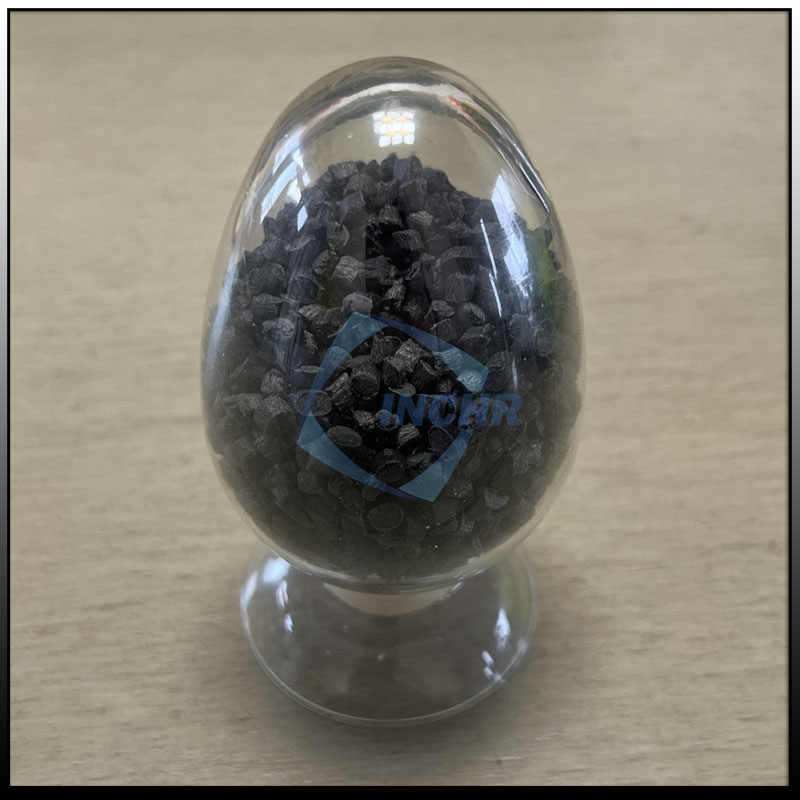
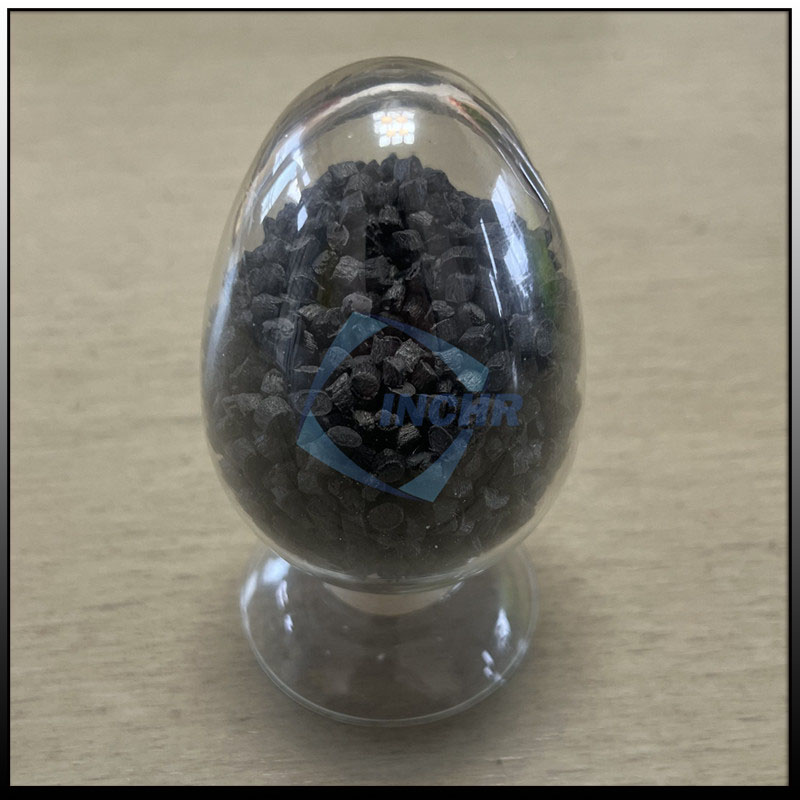
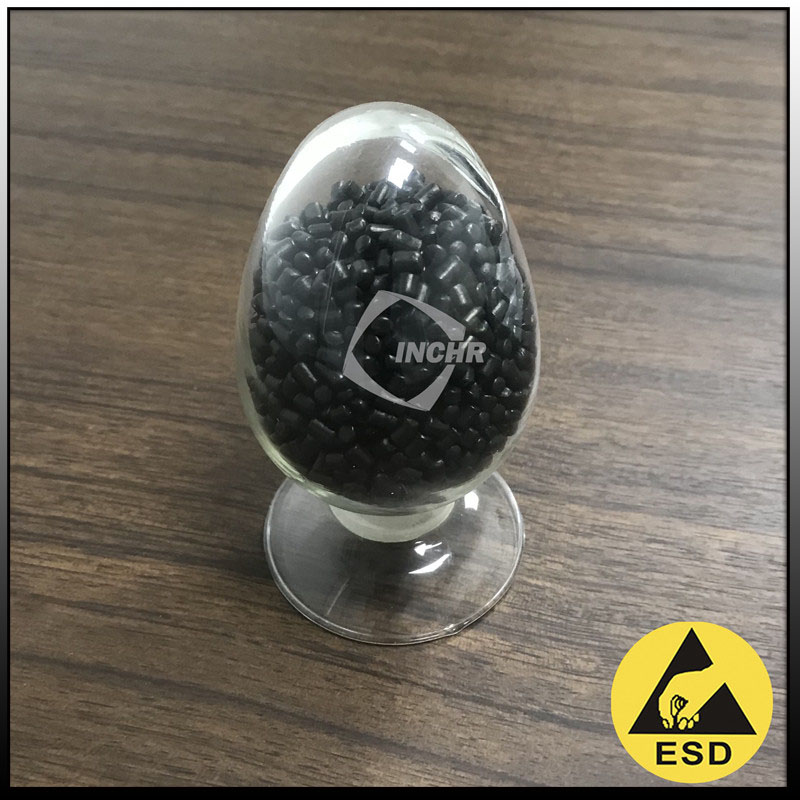
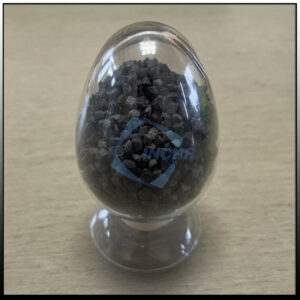
Carbon fiber reinforced ABS is developed by incorporating carbon fibers into an ABS polymer matrix. The reinforcement changes the behavior of the original resin and can improve selected mechanical properties, particularly stiffness. Depending on the formulation and processing conditions, it may also modify dimensional behavior and electrical characteristics.
This material is not intended to replace every standard ABS grade. Its value lies in applications where the performance of unreinforced ABS does not fully meet the design requirements.
Material Design: Getting the Balance Right
Developing carbon fiber reinforced ABS involves more than increasing the amount of reinforcement. The formulation must balance the requirements of the finished part with the practical limitations of plastic processing.
Reinforcement Content
Carbon fiber content influences stiffness, flow behavior, surface appearance, and other material characteristics. Higher loading may improve certain mechanical properties, but it can also make processing more demanding and affect impact performance.
The appropriate concentration should therefore be determined by the component’s actual requirements rather than by maximizing fiber content.
Fiber Distribution and Orientation
Carbon fibers need to be distributed appropriately throughout the polymer matrix. During injection molding, fibers may align with the direction of material flow, creating directional differences in stiffness and shrinkage.
For parts with tight dimensional tolerances, engineers should consider gate placement, wall thickness, and the geometry of the molded component during material selection.
ABS Grade Compatibility
ABS formulations vary in impact resistance, flow characteristics, and thermal behavior. A carbon fiber reinforced compound must be evaluated as a complete material system because the properties of the base resin and reinforcement interact.
What Problems Can Carbon Fiber Reinforced ABS Help Address?
Material modification should solve a defined engineering problem. The following examples illustrate where this type of compound may be worth evaluating.
| Design Challenge | Potential Contribution of Carbon Fiber Reinforced ABS | Important Consideration |
|---|---|---|
| Insufficient component stiffness | Carbon fibers can increase stiffness | Verify performance under actual loading conditions |
| Dimensional variation | Reinforcement may change shrinkage and deformation behavior | Fiber orientation can create directional variation |
| Weight-sensitive design | May offer a useful balance of reinforcement and component weight | Compare the complete design rather than material density alone |
| Specialized electrical requirements | Some formulations may provide conductive pathways | Test electrical resistance against the required specification |
| Inconsistent production results | A properly controlled compound may support repeatable material properties | Processing and quality control remain essential |
These benefits are formulation-dependent. Prototype testing is necessary before adopting a material for large-scale manufacturing.
Is Carbon Fiber Reinforced ABS Suitable for ESD Applications?
One reason manufacturers investigate carbon fiber reinforced polymers is the electrical behavior of carbon fibers. Under suitable conditions, carbon fibers can form pathways that allow electrical charge to move through a polymer material.
However, carbon fiber reinforced ABS is not automatically an ESD-safe material. Its electrical performance depends on fiber concentration, distribution, orientation, and the geometry of the finished part.
Before using the material for electronic component handling or static-control equipment, manufacturers should establish whether the application requires antistatic behavior, controlled charge dissipation, or electrical conductivity.
Surface resistance and volume resistance are different measurements. The appropriate test method should match the intended application and relevant specifications.
For applications that require verified static control, material selection should be part of a broader ESD protection strategy rather than the only protective measure.
Carbon Fiber Reinforced ABS and Other Engineering Materials
Carbon fiber reinforced ABS is one of several options available to product designers. Comparing alternatives helps clarify whether it is the right solution.
| Material Option | When It May Be Considered | Main Selection Factor |
|---|---|---|
| Standard ABS | General-purpose housings and molded components | Cost, appearance, and balanced mechanical properties |
| Carbon fiber reinforced ABS | ABS-based parts requiring additional reinforcement or specialized properties | Stiffness, moldability, and electrical requirements |
| Glass fiber reinforced polymer | Components requiring reinforcement with a different cost-performance balance | Mechanical targets and fiber-related surface effects |
| Carbon fiber reinforced engineering thermoplastics | More demanding applications that require a different resin system | Temperature, chemical resistance, and mechanical specifications |
No single material is ideal for every application. Resin selection should account for operating temperature, chemical exposure, mechanical loading, manufacturing method, and expected service life.
Processing Considerations for Consistent Production
Even a suitable compound can produce unsatisfactory results when processing conditions are poorly controlled. Manufacturers should review several production factors before finalizing a carbon fiber reinforced ABS grade.
- Drying and material handling: Follow the supplier’s recommended drying and storage instructions for the specific compound.
- Molding parameters: Confirm appropriate melt temperature, mold temperature, injection speed, and residence time through technical guidance and production trials.
- Fiber-related wear: Reinforced compounds can be more abrasive than unfilled plastics. Equipment suitability should be assessed for the selected grade.
- Molded-part appearance: Fiber exposure and flow patterns may affect surface finish, particularly on visible components.
- Quality verification: Evaluate dimensions, mechanical properties, surface quality, and electrical characteristics where required.
A controlled trial using the actual mold and production conditions is more informative than relying on generic material descriptions alone.
How to Evaluate a Carbon Fiber Reinforced ABS Supplier
A qualified supplier should help buyers translate component requirements into measurable material specifications.
Before placing an order, consider asking the supplier:
- Is the compound specifically formulated with an ABS matrix?
- What carbon fiber content and material properties are documented for the grade?
- Are technical data sheets and relevant test reports available?
- What processing recommendations apply to the intended manufacturing method?
- Can the supplier provide samples for trial molding and validation?
- If ESD performance is required, what electrical test results are available?
- Can the supplier maintain consistent quality across production batches?
These questions help distinguish a suitable engineering material from a compound that merely contains carbon fiber.
INCHR: Supporting Modified Polymer Material Development
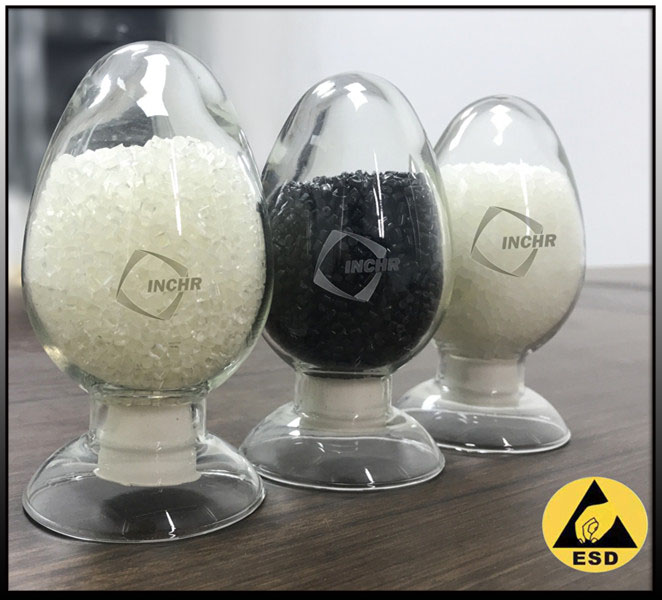
Established in Dongguan, China, in 2012, INCHR specializes in ESD plastics and modified polymer materials. Its portfolio includes carbon fiber reinforced compounds, conductive compounds, antistatic compounds, permanent antistatic additives, ESD masterbatches, and other ESD-modified plastics, including graphene-reinforced materials.
INCHR’s R&D team receives support from East China University of Science and Technology. The company operates polymerization equipment, twin-screw granulation units, single-screw processing equipment, and professional ESD testing equipment.
These capabilities support polymer processing, material development, and the evaluation of electrical properties relevant to suitable applications.
For projects involving carbon fiber reinforced ABS, buyers should confirm whether a compatible ABS-based formulation is available and request the relevant technical documentation. Material suitability should be established according to the required mechanical properties, processing conditions, and any electrical specifications.
Frequently Asked Questions
1. Why add carbon fiber to ABS plastic?
Carbon fiber can reinforce ABS and improve selected properties, particularly stiffness. The actual improvement depends on the formulation, fiber content, and processing conditions.
2. Is carbon fiber reinforced ABS suitable for precision components?
It may be suitable for precision-molded parts, but fiber orientation and molding conditions can influence shrinkage and dimensional accuracy. Prototype testing is recommended when tight tolerances are required.
3. Does carbon fiber reinforced ABS always provide ESD protection?
No. Electrical performance varies by formulation. The material must be tested to confirm that its resistance or resistivity meets the requirements of the intended ESD application.
4. Can carbon fiber reinforced ABS be injection molded?
Suitable grades can be injection molded. Processing parameters, mold design, and equipment compatibility should follow the material supplier’s recommendations.
5. What information should be included in a material inquiry?
Provide the intended application, component design requirements, molding process, mechanical targets, operating environment, expected order volume, and any required electrical performance.
6. How can buyers verify material quality?
Review the technical data sheet, available test reports, batch documentation, and processing recommendations. Validate samples under representative production conditions before mass production.
7. Does INCHR manufacture carbon fiber reinforced ABS?
INCHR offers carbon fiber reinforced compounds and other modified polymer materials. Buyers should contact the company to confirm the availability of an ABS-based grade and its application suitability.
Conclusion
Carbon fiber reinforced ABS can help manufacturers address specific engineering challenges when standard ABS does not provide the required balance of stiffness, dimensional behavior, and other functional properties.
Successful implementation depends on formulation quality, mold design, processing control, and validation of the finished component. For projects involving conductivity or ESD protection, electrical performance must be independently verified.
INCHR provides a range of carbon fiber reinforced and ESD-modified polymer materials to support industrial material selection and development.