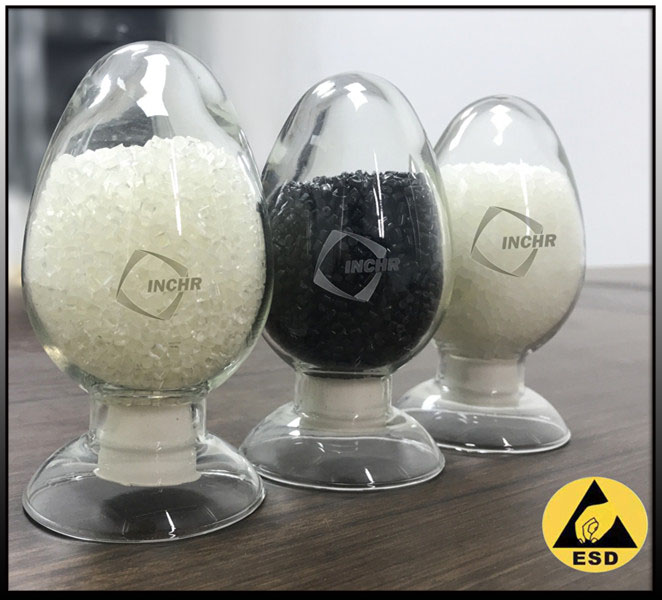
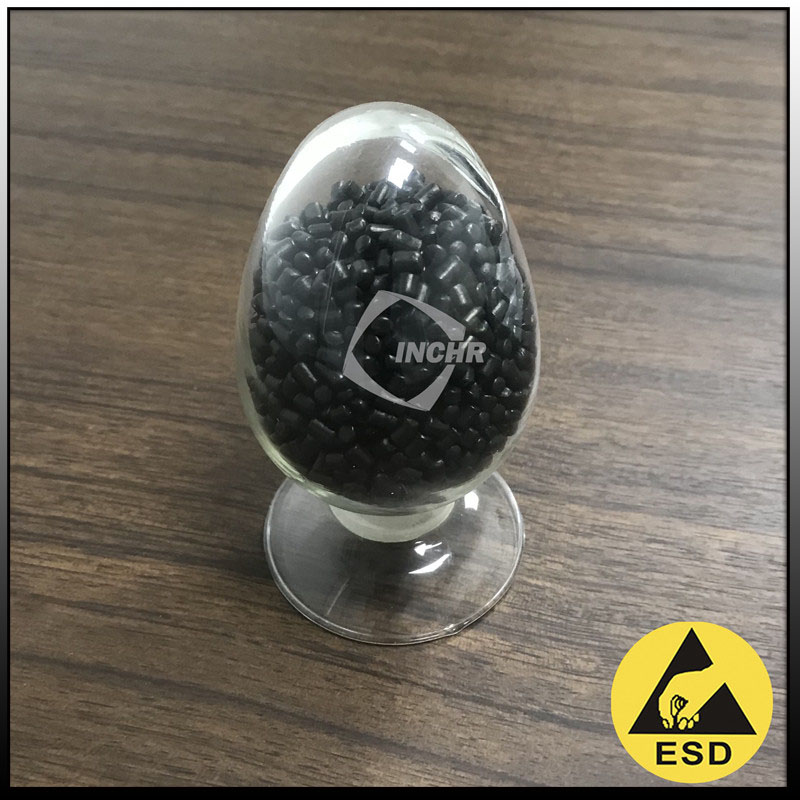
ESD plastics are polymer materials engineered to control electrostatic charge and reduce the risk of electrostatic discharge (ESD). Unlike conventional plastics, which are often electrically insulating, ESD-modified plastics can dissipate static charges or provide controlled electrical conductivity, depending on their formulation.
Electrostatic discharge occurs when accumulated electrical charges move suddenly between objects with different electrical potentials. This event can damage sensitive electronic components, disrupt manufacturing processes, attract dust, and create handling problems in certain industrial environments.
ESD plastics are widely used in electronics manufacturing, semiconductor handling, industrial equipment, protective packaging, and other applications where electrostatic control is important.
How Do ESD Plastics Work?
ESD plastics control electrical charge through carefully selected additives, fillers, or conductive materials incorporated into a polymer matrix.
Depending on the formulation, the material may allow static charges to dissipate gradually or provide a more conductive pathway for electrical charge movement.
Common modification approaches include:
- Antistatic additives: Help reduce the accumulation of static charges on plastic surfaces.
- Conductive carbon black: Can create conductive pathways within a polymer when appropriately formulated.
- Carbon fiber reinforcement: Can improve electrical conductivity while potentially enhancing mechanical properties.
- Graphene-based materials: May provide electrical and functional benefits in specialized polymer formulations.
- Permanent antistatic systems: Are designed to maintain antistatic performance over time, depending on the formulation and environmental conditions.
The appropriate material depends on the required electrical properties, base resin, manufacturing process, and application environment.
Main Types of ESD Plastics
Not all ESD plastics provide the same level of electrical protection. Understanding their differences helps manufacturers select materials that meet application requirements.
| Material Type | Main Function | Typical Applications |
|---|---|---|
| Antistatic plastics | Reduce static charge accumulation | Packaging, covers, general industrial components |
| Static-dissipative plastics | Allow charge to dissipate at a controlled rate | Electronics handling equipment, work surfaces, component trays |
| Conductive plastics | Provide relatively low electrical resistance | Conductive containers, specialized housings, industrial components |
| Carbon fiber reinforced plastics | Combine conductive functionality with potential mechanical reinforcement | Engineering components and industrial equipment |
| ESD masterbatch-modified plastics | Introduce antistatic or conductive properties into compatible base polymers | Injection-molded parts, films, and customized plastic products |
The boundaries between antistatic, static-dissipative, and conductive materials depend on the classification system and measured electrical properties. Buyers should confirm the required performance with the supplier rather than relying on product labels alone.
Key Benefits of ESD Plastics
1. Protection for Sensitive Electronics
Electrostatic discharge can damage electronic components, including integrated circuits and semiconductor devices. Properly selected ESD plastics help control charge during storage, transportation, and handling.
2. Reduced Static-Related Contamination
Static electricity can attract dust and airborne particles to plastic surfaces. ESD materials can help reduce static buildup, supporting cleaner handling environments where contamination control matters.
3. Flexible Material Design
ESD properties can be incorporated into various polymer systems, allowing manufacturers to develop components with different shapes, mechanical properties, and processing requirements.
4. Integration With Existing Production Processes
Depending on the formulation, ESD plastics can be processed through methods such as injection molding, extrusion, and other conventional polymer manufacturing techniques.
5. Potentially Improved Product Reliability
Consistent electrostatic control can reduce certain handling-related risks. However, ESD plastics must be selected and tested as part of a complete electrostatic protection program; the material alone does not guarantee product safety.
Common Applications of ESD Plastics
ESD plastics support a wide range of industrial and commercial applications.
| Industry | Typical Products | Primary Purpose |
|---|---|---|
| Electronics manufacturing | Component trays, bins, tool holders | Control static charge during handling |
| Semiconductor industry | Wafer carriers, process containers | Support electrostatic control in sensitive workflows |
| Industrial manufacturing | Equipment housings, machine components | Manage static-related operational risks |
| Protective packaging | Trays, containers, selected packaging materials | Protect sensitive products during storage and transport |
| Automotive electronics | Component carriers and selected electronic housings | Reduce static-related risks during manufacturing and handling |
Material selection should consider the complete application, including contact with sensitive components, grounding arrangements, humidity, cleaning methods, and relevant industry requirements.
permanent antistatic additives
How to Choose the Right ESD Plastic Material
Choosing an ESD plastic requires more than identifying a material as antistatic or conductive. The following factors should be evaluated before production.
Define the Electrical Performance
Determine whether the application requires antistatic behavior, static dissipation, or conductivity. Surface resistivity and volume resistivity are commonly used measurements, but they describe different properties and should not be treated as interchangeable.
For relevant materials, IEC 61340-2-3 provides methods for determining resistance and resistivity of solid materials used to avoid electrostatic charge accumulation.
Check Base Resin Compatibility
ESD additives and conductive fillers must be compatible with the base polymer. Common choices may include PP, PE, ABS, and selected engineering plastics, depending on the formulation.
Compatibility affects processing stability, filler dispersion, mechanical strength, and final electrical performance.
Evaluate Mechanical and Environmental Requirements
Consider impact resistance, stiffness, temperature exposure, chemical contact, moisture, and dimensional stability. These factors can influence the long-term suitability of an ESD plastic component.
Verify Testing and Quality Consistency
Ask the supplier for technical data sheets, relevant test results, recommended processing conditions, and batch consistency information. Validate performance using representative samples and application-specific testing.
Consider Total Cost
Compare not only material prices but also processing efficiency, scrap rates, service life, and the potential cost of electrostatic damage.
Why Choose INCHR for ESD Plastics?
Established in Dongguan, China, in 2012, INCHR specializes in ESD plastics and modified polymer materials. Its product portfolio includes conductive compounds, antistatic compounds, permanent antistatic additives, carbon fiber reinforced compounds, ESD masterbatches, and other ESD-modified plastics, including graphene-reinforced materials.
INCHR’s R&D team receives support from East China University of Science and Technology, contributing to its polymer research, formulation development, and material innovation capabilities.
The company operates polymerization equipment, twin-screw granulation units, single-screw processing equipment, and professional ESD testing equipment. These facilities support material development, processing, and evaluation for different industrial applications.
For manufacturers seeking ESD plastic solutions, INCHR can discuss material requirements based on the target polymer, desired electrical properties, processing method, mechanical specifications, and end-use environment.
Frequently Asked Questions About ESD Plastics
1. What are ESD plastics used for?
ESD plastics are used to control electrostatic charge in applications such as electronic component trays, semiconductor handling equipment, industrial components, and protective packaging.
2. What is the difference between ESD plastics and conductive plastics?
ESD plastics is a broad term for plastics designed to control electrostatic charge. Conductive plastics are a category that provides relatively high electrical conductivity. Some ESD applications require static-dissipative rather than highly conductive materials.
3. Are all ESD plastics electrically conductive?
No. Some ESD plastics reduce charge accumulation or dissipate static charges without providing the conductivity required for applications such as electrical grounding. Selection should be based on measured electrical properties.
4. Can ESD properties be added to ordinary plastics?
Yes. Depending on the base resin and target performance, manufacturers can incorporate antistatic additives, conductive fillers, or ESD masterbatch into compatible plastics. Processing and testing are necessary to confirm the final properties.
5. How are ESD plastics tested?
Common methods include surface resistance or resistivity measurements and volume resistance or resistivity measurements. The appropriate method depends on the material, specimen geometry, test conditions, and application requirements.
6. How long do ESD properties last?
Durability depends on the formulation, filler or additive system, environmental exposure, cleaning, wear, and processing conditions. Permanent antistatic formulations are designed for longer-lasting performance, but their durability should be verified through testing.
7. How do I select an ESD plastics manufacturer?
Evaluate the manufacturer’s material development capabilities, testing facilities, technical documentation, product consistency, resin compatibility expertise, and ability to support application-specific requirements. Request samples and validate them before mass production.
Conclusion
ESD plastics play an important role in controlling electrostatic charge across electronics manufacturing, industrial processing, and protective packaging. Selecting the right formulation requires balancing electrical performance, mechanical properties, processing compatibility, and environmental durability.
With its ESD-modified polymer portfolio, R&D resources, and material processing capabilities, INCHR supports manufacturers seeking solutions for a variety of electrostatic control requirements.
Contact INCHR to discuss your ESD plastic project and identify a suitable material for your application.